Bearings burned out every 40 days on average, and the plant had written the duty off as unsolvable. With the right grease and the right way of applying it, the same bearings ran nine months and are still in service.
Bearings burned out every 40 days on average, and the plant had written the duty off as unsolvable. With the right grease and the right way of applying it, the same bearings ran nine months and are still in service.
 FIELD · SCHH-2026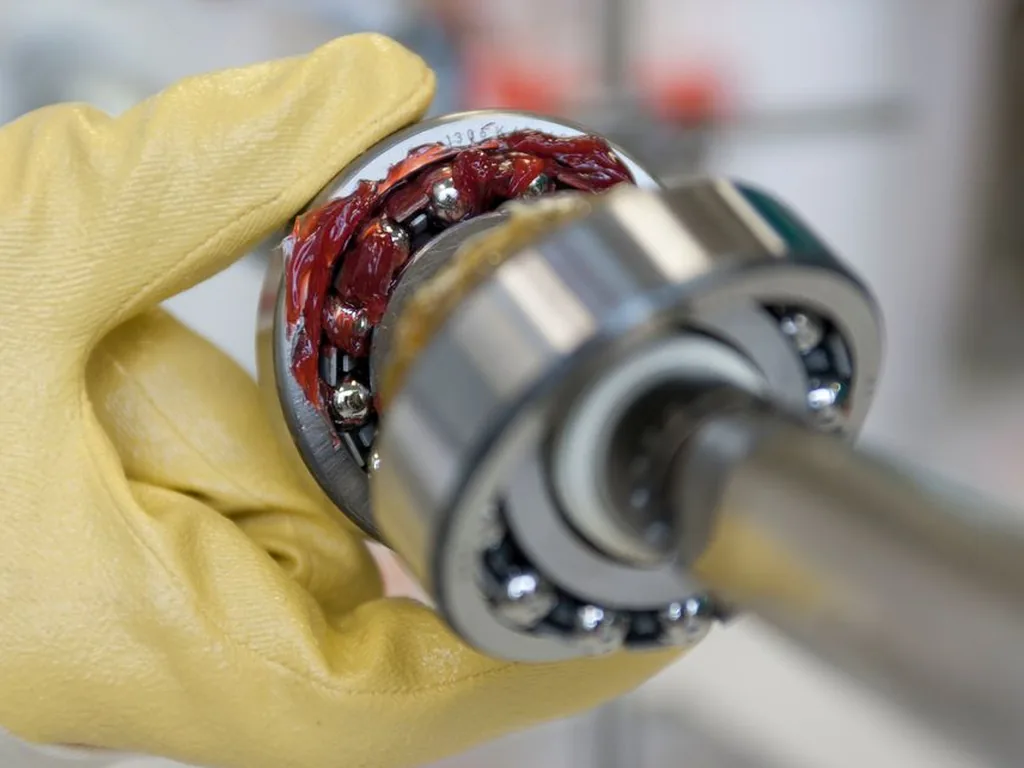
Die-ring bearings on a biomass pellet line run in harsh conditions: the chamber stays above 90°C for long periods and the sawdust is fine and hard. The general-purpose lithium grease supplied as standard softens and runs off at that temperature, and once dust gets in it turns into a grinding paste that pits the bearing raceways quickly.
The plant's response was to pack in more grease, which only forced it out past the seals and drew in more dust — a vicious circle.
 FIELD · SCHH-2026
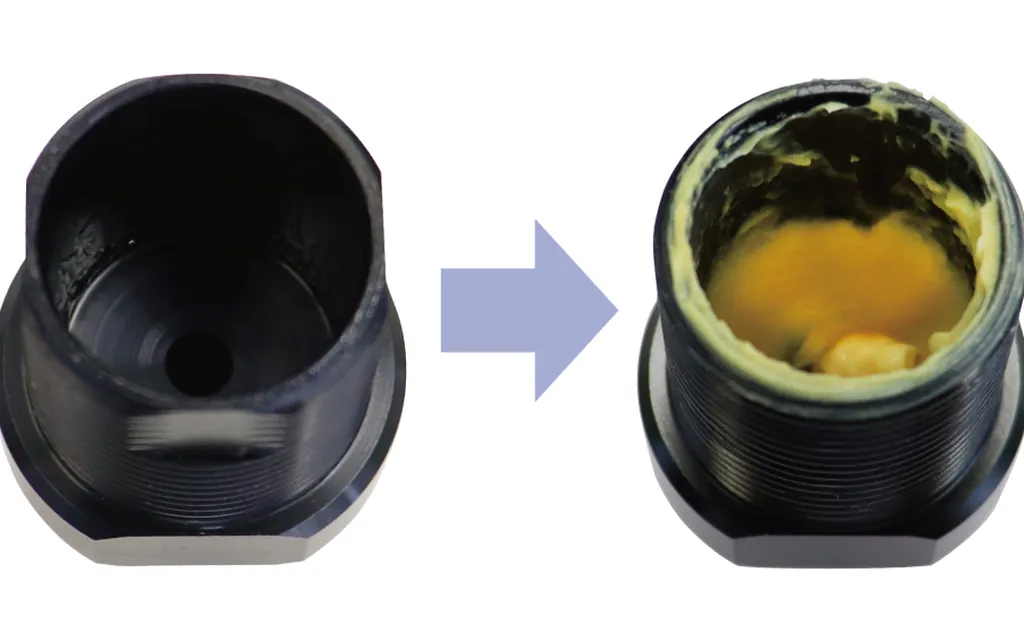
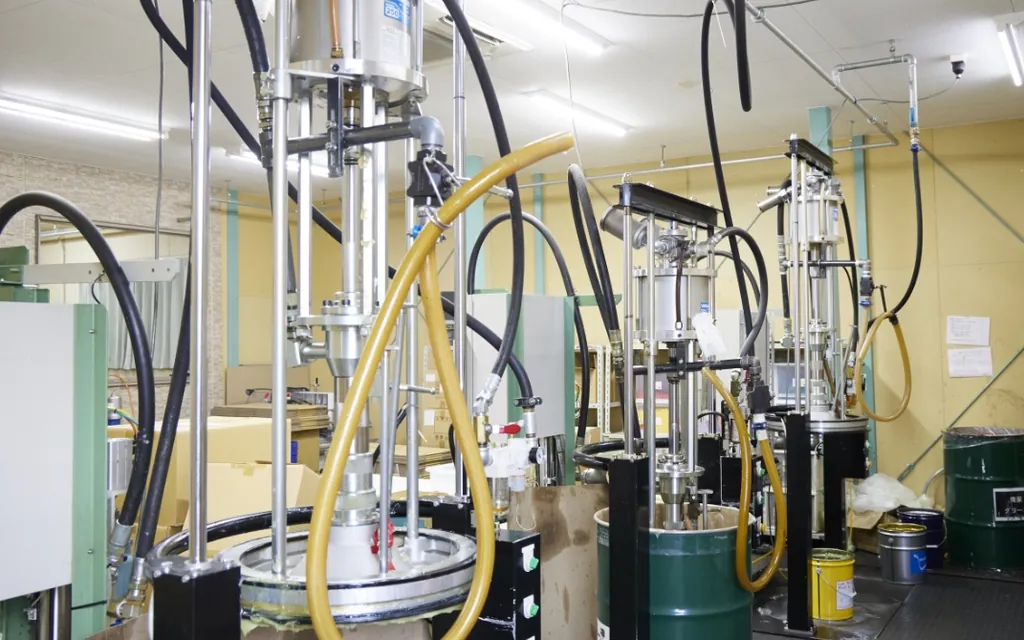
We made two small changes. First, we reselected the grease for the conditions: a high-temperature calcium sulphonate complex grease whose dropping point and water wash-out rating match the chamber temperature. Second, we changed how it is applied — from full cavity packing to a measured, timed dose, with a single-point automatic lubricator adding just 0.8 g each time.
At the same time we upgraded the seal: a labyrinth seal with an added fluoroelastomer lip to cut off the dust path. The first set of bearings after the change was tracked for 270 days; on strip-down the raceways showed no pitting and the grease had not hardened.
Lubrication is not about buying expensive oil; it is about matching the oil's ratings to the temperature, load and type of contamination in the conditions. I still keep the selection table — one page for each of five classes of special duty.
The value of an automatic lubricator is not the labour saved but turning the dose from guesswork into a fixed value. In the cases I have seen, over-lubrication causes no fewer failures than under-lubrication.
A 40-day die-ring bearing life is not unusual in the biomass-pellet industry, and most plants put it down to "the conditions are just that harsh." Our judgement was different: the conditions really are harsh, but 40 days is far below the life this bearing should have under the same conditions - the gap hid in three details: lubricant selection, the greasing method and the seal. This case did not fit a more expensive bearing and did not change the equipment structure; everything we did was about "getting the existing things right," and the life increased sevenfold.
 FIELD · SCHH-2026
A single-point lubricator costs a few hundred yuan per point, and fitting out all the key points on one pellet mill comes to the order of a thousand yuan. Compared with the bearing cost of a change every 40 days plus downtime losses, the investment pays back within one cycle. More importantly, metered greasing removes the arbitrariness of manual greasing: how much each time and how often, executed by the machine without variation.
 FIELD · SCHH-2026
The approach can be copied, but the parameters cannot. The 0.8 g dose was measured for that plant's cavity temperature and bearing model; your equipment needs to be re-assessed: measure the actual cavity temperature, check the gap between the original grease and the conditions, and inspect the current state of the seal. When we come in we do these three assessments first and set the parameters to your conditions. Copying the parameters verbatim is the one way this solution will fail.
If your die-ring bearings also don't last more than two or three months, checking three things is enough: what is the dropping point of the grease you use now, and does it match your measured cavity temperature? Is greasing metered or "until it's full," and is there a record of how many grams each time? How many seal stages are there, and did the last teardown show any sign of dust entering the cavity? These three items map to the three improvement paths - grease selection, greasing and sealing. In the similar plants we have worked on, the problem was almost always in one or two of these, and fixing it isn't a big investment.
Tell us the symptoms, and we will run the same diagnostic approach on your equipment.
 Scan to add Engineer Man on WeChat
 Guangzhou Yujihang Computer Technology Co., Ltd. · www.accpc.com.cn
 Guangzhou Henghuan Technology Co., Ltd. · www.hhrobotics.cn
 Nanchong Henghuan Robotics Co., Ltd. · www.hhrobots.cn