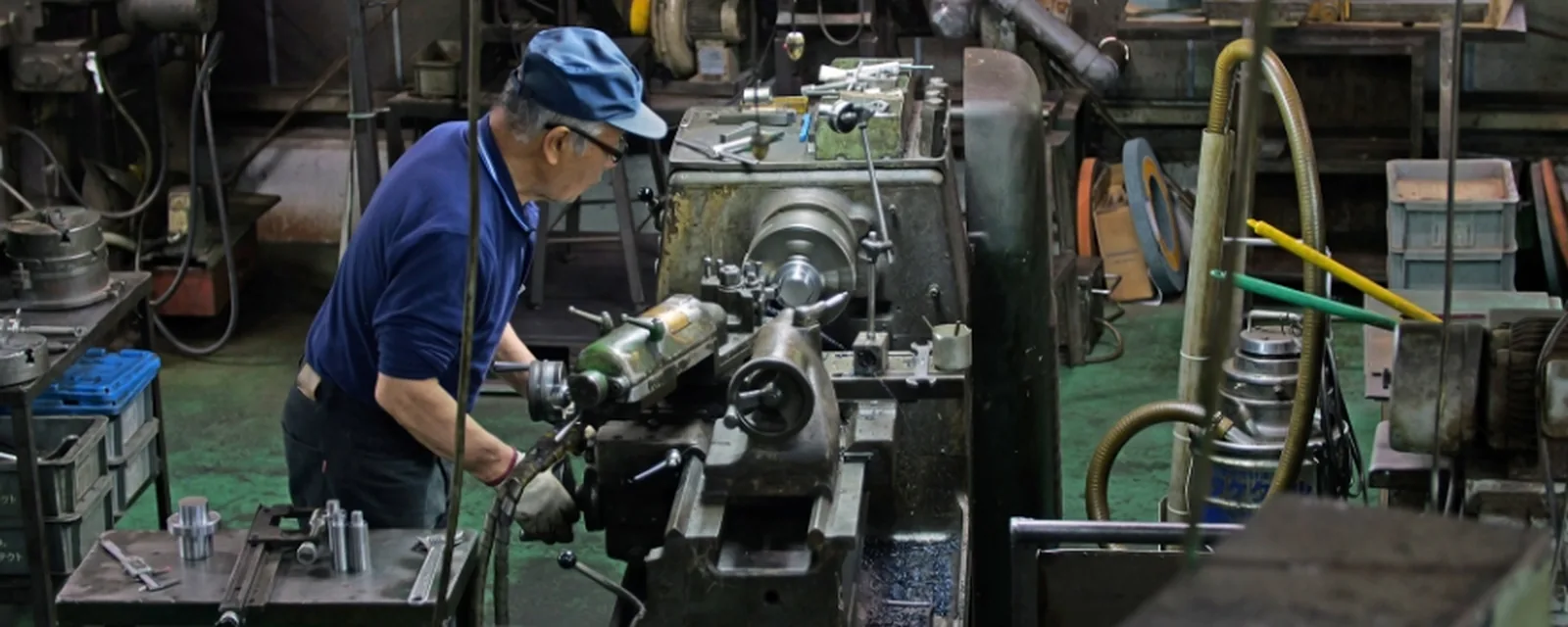
For new plants and for plants that have equipment but no management, we provide the full build-out: management structure, system documents and register standards. Plans are tailored, and we own the rollout — not just the documents, but making the system run.


 FIELD · SCHH-2026
 FIELD · SCHH-2026
These are the key control points and acceptance criteria we hold to on site — standards first, data does the talking, and you can check us against the list.
A one-off job fixes a one-off problem; systemic problems need the modules working together. This module works directly with:
Not every plant needs a system built from scratch. The situations below are where we most often find problems concentrated once we take a project on.
Machines arrive one by one, but nobody can say how many there are in total, who is responsible, or how often they are maintained. Waiting until three months after start-up to add a system means rebuilding the register from scratch with the baseline data already lost - double the cost. The best moment to build the system is before the equipment arrives.
When the veteran with fifteen years on the job retires or leaves, the equipment's whole history goes with him: which machine has an innate weak point, what has been modified, what was done at the last overhaul - nobody knows. Rebuilding the file at this point is not about passing an audit; it is so that the next fault has a reference to check against.
The sheet is covered in ticks while the shop still fails. The problem is usually the sheet itself: no decidable values, unreasonable frequency, unclear responsibility. We redesign the inspection standard cards, changing 'check the bearing' into 'bearing housing temperature no higher than 70°C, no abnormal noise' - only then can the team actually judge.
Customer plant audits, system certification audits and safety inspections all look at the equipment management system and its execution records. Records backfilled at the last minute fall apart easily. We build the system documents and forms up to the audit requirements and accompany a period of actual execution, so the records are worked out rather than written up.
New lines, shop relocation, equipment transfers - the old management approach can no longer hold. Equipment grades need re-drawing, inspection frequencies adjusting, maintenance plans rescheduling, and ownership and acceptance standards for the new equipment made explicit.
The annual repair bill is large but there is no classified accounting: how much was parts, how much contracted out, which machines swallowed the bulk, and whether faults repeat or occur once. Only once the register and repair records exist can this account be done - and only then do you know where the money should go.
Our approach is 'establish the facts first, then design, then roll out' - not issuing documents straight away. Documents that cannot be executed once issued are the same as nothing done.
Yes, but a reduced version. A small plant does not need dozens of regulation documents; the core is three things: an equipment list with grading, a set of inspection and maintenance standards that can actually be executed, and one repair file per machine. These three take less than a month and cost very little, yet they stop the equipment history from breaking off and stop faults being investigated from scratch every time.
They can, provided training and assessment are in place. Our delivery includes management training and team coaching, with the key standards written as cards the team can read. We coach on site during rollout, handing execution over to your people step by step; a review and revision can then be done quarterly or half-yearly, charged separately.
It depends on scale. A few dozen machines are perfectly served by spreadsheets and cards, and software would only add a reporting burden; with several hundred machines, multiple sites and a need for statistical analysis, a system is worth considering. Our advice is to make the standards and the data solid first - software is only a carrier, and with unsound data the software is empty too.
This is the most common resistance, and it is usually not an attitude problem but a standards problem: forms too complex, criteria unclear, time taken from production. Our approach is to simplify first until the team is willing to do it, then tighten gradually, while linking execution results to assessment so that good work is visible. Forcing it only produces a pile of false ticks.
 FIELD · SCHH-2026
Tell us about your equipment and we will issue a diagnostic opinion and a cooperation plan.
 Scan to add Engineer Man on WeChat
 Guangzhou Yujihang Computer Technology Co., Ltd. · www.accpc.com.cn
 Guangzhou Henghuan Technology Co., Ltd. · www.hhrobotics.cn
 Nanchong Henghuan Robotics Co., Ltd. · www.hhrobots.cn