
The register was one Excel sheet, and maintenance records were scattered across three notebooks and a WeChat group. Ninety days later every machine had its own file.
The register was one Excel sheet, and maintenance records were scattered across three notebooks and a WeChat group. Ninety days later every machine had its own file.
 FIELD · SCHH-2026
The original register held no file per machine: repair history, part replacements and accuracy records could not be traced, and repeat repairs and misjudgements were frequent. The most complete history sat in the WeChat group's repair-request photos, but nobody had organised it.
The difficulty in rebuilding was not the format but the salvage collection of historical data.
 FIELD · SCHH-2026
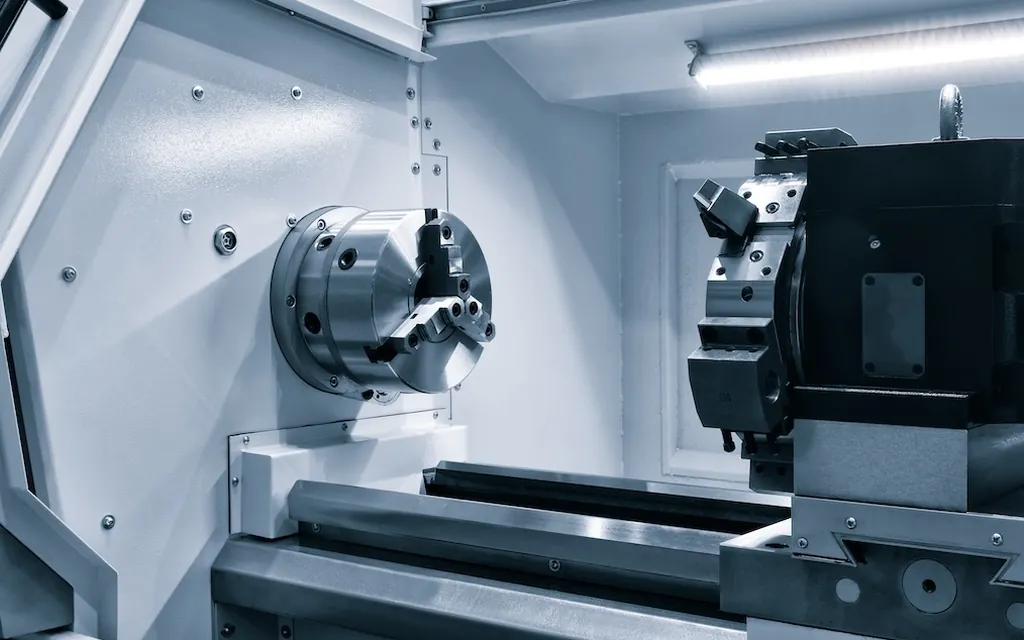
The file structure was set at four layers: basic information (nameplate, location, asset number), technical archive (drawings, manuals, acceptance records), repair history (faults, parts, labour hours) and condition records (inspection and test data).
The historical data salvage ran on three fronts: going through the maintenance notebooks and the WeChat group records, interviewing the veteran fitters, and measuring baseline data to fill in from the equipment's present condition. Three hundred files were completed in 90 days, and a simple electronic register went live so that every repair request is filed as it is raised.
Rebuilding a register means rescuing the history first, then building the system. The experience in the veteran fitters' heads and the photos in the group chat are the assets most easily lost for good.
The value of one file per machine shows up at decision time: overhaul or replace, how many spares to hold — the answers are in the file.
Building a ledger for 300 machines, the hardest part was not the workload but the historical data: repair records were scattered across a few notebooks and WeChat groups, and the experience in the old technicians' heads had never been put on paper. The solution to this project was "structure first, rescue in parallel": first fix the four-layer filing structure so that new data has somewhere to go, while simultaneously rescuing historical data along three fronts and, where it couldn't be recovered, substituting fresh measurements of the current state. The filing rate reached 100% in 90 days, and a simple electronic ledger went live along the way - a repair request is filed the moment it's made.
 FIELD · SCHH-2026
The input is 90 days of archiving work; the output is three ongoing benefits: spare parts no longer suffer duplicate purchases alongside stock-outs, repairs have records to rely on instead of memory, and equipment-condition trends can be analysed to support overhaul decisions. In our experience, in the first year after the ledger is built, both spare-part inventory funds and repair hours fall noticeably. A ledger is not a cost - it is a tool for making hidden losses visible.
 FIELD · SCHH-2026
Scale it to your size: for a plant with a few dozen machines, the four-layer structure can be simplified to two layers - basic information plus repair history - with just enough fields. What matters is not how thick the ledger is but holding to three principles: one ID number per machine, repairs and part changes filed as they happen, and a place to record condition data. A lightweight ledger in a small plant still delivers eighty percent of the benefit - don't be put off by the thickness of a big plant's version.
Tell us the symptoms, and we will run the same diagnostic approach on your equipment.
 Scan to add Engineer Man on WeChat
 Guangzhou Yujihang Computer Technology Co., Ltd. · www.accpc.com.cn
 Guangzhou Henghuan Technology Co., Ltd. · www.hhrobotics.cn
 Nanchong Henghuan Robotics Co., Ltd. · www.hhrobots.cn