
Eighty per cent of belt conveyor faults sit in four places: the loading point, the idlers, the scraper and the splice. Get the care right and one belt lasts five years; get it wrong and you go through three a year.
First separate the no-load and loaded states. If the belt tracks off even unloaded, the problem is installation: frame not level, pulleys not square, or a crooked belt splice. If it runs true empty and only wanders loaded, the problem is material: the load point is off the belt centerline. This one distinction saves half the troubleshooting time.
Drift follows a rule: the belt runs toward the tight side and toward the high side. Before you adjust anything, work out whether it is uneven tension or a tilted frame.
Training idlers help, but they treat the symptom. If the drop point is 100 mm off centre, ten training idlers are worth less than fixing the chute. Treat the cause first.
 FIELD · SCHH-2026
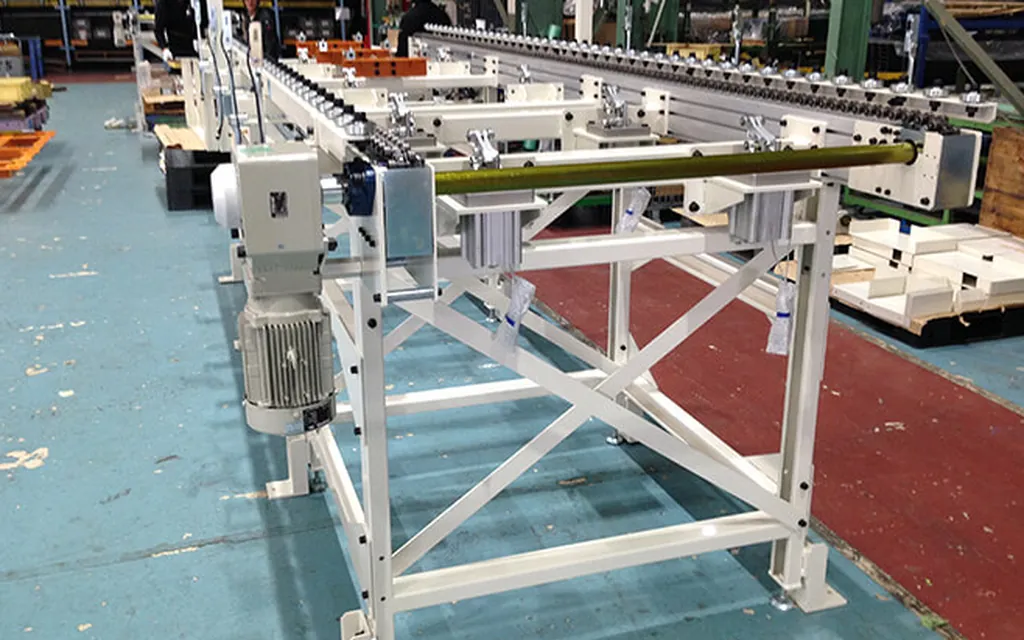
Idler life shows in two signals: does it turn freely (a seized idler gets ground flat by the belt), and is the shell wearing evenly (local wear means drift or foreign objects). Walk the line monthly, spin each idler by hand and listen; tag the sticky and noisy ones for replacement on the spot.
Return-side idlers usually fail faster than carry-side ones, because spillage lands on the return belt and gets carried into the idlers. That is why the cleaners must actually work. A head cleaner (primary alloy blade) combined with a secondary cleaner (polyurethane blade) performs far better than a single blade.
A worn blade must still follow the belt automatically. On spring-tensioned cleaners check the spring force; on counterweight types check that they move freely. Once the blade stands 2–3 mm off the belt it has all but stopped working.
 FIELD · SCHH-2026
The splice is the weakest point of the belt. Keep a process record for vulcanised splices (temperature, pressure, time); check bolts and clips on mechanical splices regularly. Once you see peeling or delamination at the splice, schedule the replacement — do not wait for it to part.
The culprit behind a longitudinal tear is usually a foreign object — rebar, a big chunk of iron — wedged in the chute or on an idler. Fitting a magnet separator and metal detector ahead of the drop point is far cheaper than replacing a torn belt afterwards.
For edge wear, look at impact protection at the drop point. Without an impact bed or impact idlers, large lumps slam straight onto the belt, and neither the edges nor the covers last.
| Maintenance item | Interval | Method | Acceptance criteria |
|---|---|---|---|
| Idler patrol | Weekly | Spin by hand and listen; visual wear check | Free rotation, no flat-spot wear |
| Drift status check | Every shift | Observe once empty, once loaded | Edges stay within the idler ends |
| Cleaner blade contact | Weekly | Gap between blade and belt | <2 mm, and self-conforming |
| Chute and impact protection check | Monthly | Liner wear; impact idler / bed condition | No wedged material; impact protection working |
| Splice check | Monthly | Peeling, delamination, bolts and clips | No signs of delamination |
| Belt tension adjustment | Quarterly | Sag, or tensioner travel | Within the designed sag |
The worst habit in mistracking troubleshooting is "adjust wherever it wanders": bending training idlers at the sight of drift, so this end corrected and that end wanders - whack-a-mole. Systematic troubleshooting walks five suspects in order of probability: first the load point (the number-one source of mistracking, where off-center material creates lateral force); second the belt splice (a crooked splice wanders even unloaded, in a fixed direction); third the frame and idler stands (installation level, idler axis squareness); fourth the take-up unit (uneven tension or one side binding); fifth the belt itself (aging deformation, edge damage).
There is a simple rule of thumb: wandering unloaded points to the belt and frame; wandering only loaded points to the load point; drift in a fixed direction points to the splice; drift in random directions points to take-up and idlers. Use the rule to classify first, then inspect the corresponding suspect in detail - troubleshooting efficiency doubles. Treating an off-center load point was covered in an earlier case: flow-guiding chutes plus an impact bed pulling the drop point back to center - the root-cause fix.
The cost of mistracking has to be counted clearly: edge wear down to the cord scrapping the whole belt (a long belt costs tens of thousands of yuan), spillage adding cleanup labor and material loss, and in severe cases the belt edge curling, jamming and tearing - or even friction fire. Against that, the cost of investigating and correcting it is a few chutes and half a day of labor. Mistracking is not a minor annoyance; it is the highest-return correction item among all conveyor faults. Fix it when you find it - don't let it ride.
Mechanical fastener splices: check the fasteners for deformation or fracture, pin wear and tearing at the belt end - visually and by touch, once a month. Vulcanized splices: check for surface cracks, peeling and edge delamination, and schedule a redo where cracks propagate quickly. The criterion for redoing a splice is the area and depth of damage: more than one row of broken fastener teeth, or delamination of the vulcanized face extending beyond a certain distance from the edge, means redo it. The splice is the belt's weakest point - inspection records must be kept on file, because it is the first thing examined after an incident.
 FIELD · SCHH-2026
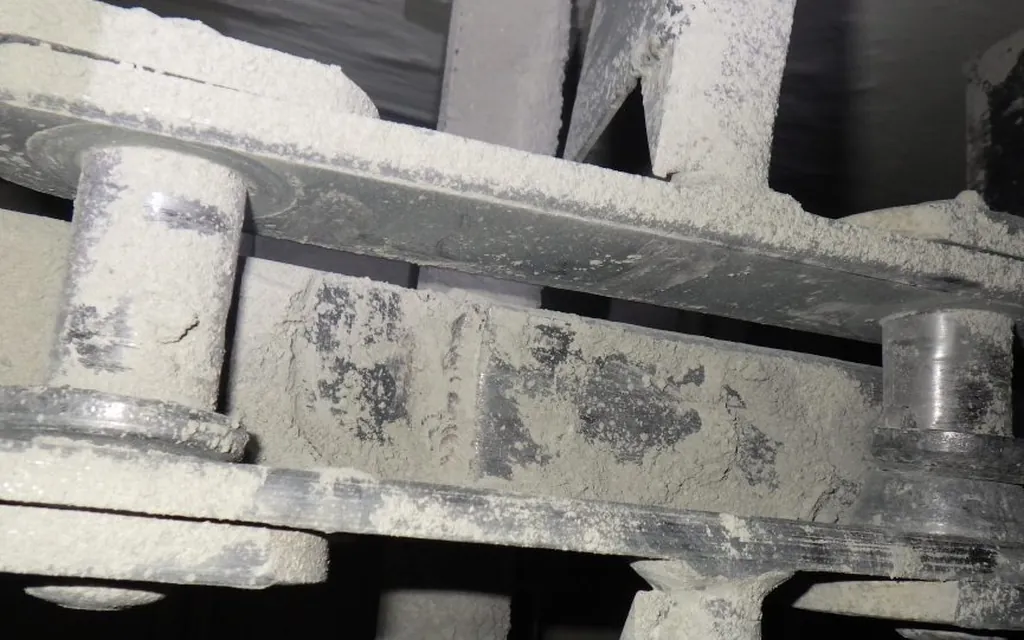
The cost of cleaner failure is widely underestimated: carryback accelerates wear on idlers and the belt's underside, accumulated spillage grinds through the belt, and cleanup labor rises. Handle it in three steps: check blade wear (polyurethane blades are consumables - replace at the wear limit mark), check contact pressure (whether the spring or counterweight tensioner still works and the blade bears evenly on the belt), and check installation position (the primary cleaner sits below the head pulley, the secondary on the return side - wrong position halves the effect). A cleaner costs a few hundred yuan and protects a belt worth tens of thousands. Every conveyor system should do that arithmetic.
Belt is one of the most expensive consumables in a conveying system - a long-distance belt runs to tens of thousands of yuan - so the line between "repair, patch, or must replace" has to be clear. Repairable: local cuts that have not reached the carcass, light edge wear, a few deformed fastener teeth - handled with cold-repair compound or repair strips, low cost and effective. Usable but to be watched: cover rubber worn close to the carcass, or shallow surface cracks on a vulcanized splice with no delamination - put these on the watch list and increase inspection frequency. Must replace: carcass exposed or broken, edge damage beyond a certain width, splice delamination spreading, or a longitudinal tear that is too long. In those cases the belt's load capacity is no longer reliable, and continuing to run it is a bet on a whole-line stoppage.
The economic test is simple: does the cost of repair plus its risk come in below replacement? A few hundred yuan of local patching that buys another six months is worth it. But when the same belt, already aged to its limit, has been patched so often that cumulative repair cost approaches the price of a new belt - and it could tear at any moment - it is time to replace. That judgment needs data: a belt register recording installation date, cumulative tonnage, the location and cost of every past repair, and the current damage state. With a register, repair-versus-replace stops being guesswork.
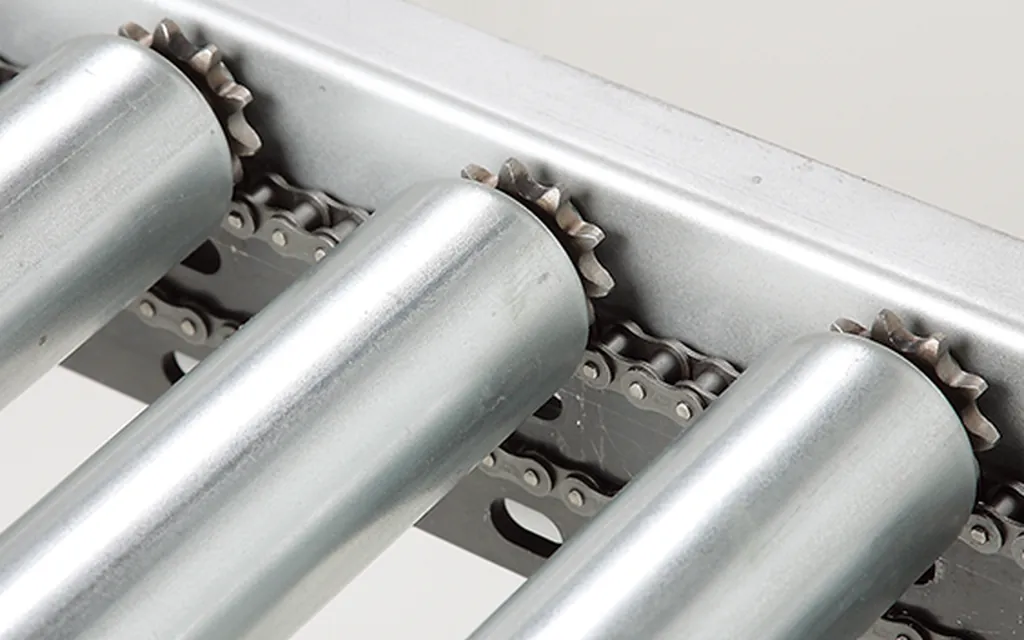
Four things extend belt life, ranked by value for money: centering the load point (treating the root of mistracking and impact wear), effective cleaners (stopping carryback from grinding the underside), idlers in good condition (preventing seized idlers from burning through the belt), and moderate tension (over-tensioning worsens both wear and power draw). All four are small investments, yet they decide whether a belt lasts three years or six. Belt replacement is an unavoidable cost, but the replacement cycle is manageable - and every lever for managing it sits in these routine items.
 FIELD · SCHH-2026
This article was written in-house by the Industrial Equipment Services Division. The thresholds, intervals and scrap criteria are field-experience values; in practice follow the equipment manufacturer's technical documents, current national standards and special-equipment safety regulations. Inspection and testing of special equipment (cranes, pressure vessels, etc.) must be carried out by a qualified body.
Send us your equipment list and operating conditions, and we will give you a workable inspection and maintenance standard.
 Scan to add Engineer Man on WeChat
 Guangzhou Yujihang Computer Technology Co., Ltd. · www.accpc.com.cn
 Guangzhou Henghuan Technology Co., Ltd. · www.hhrobotics.cn
 Nanchong Henghuan Robotics Co., Ltd. · www.hhrobots.cn