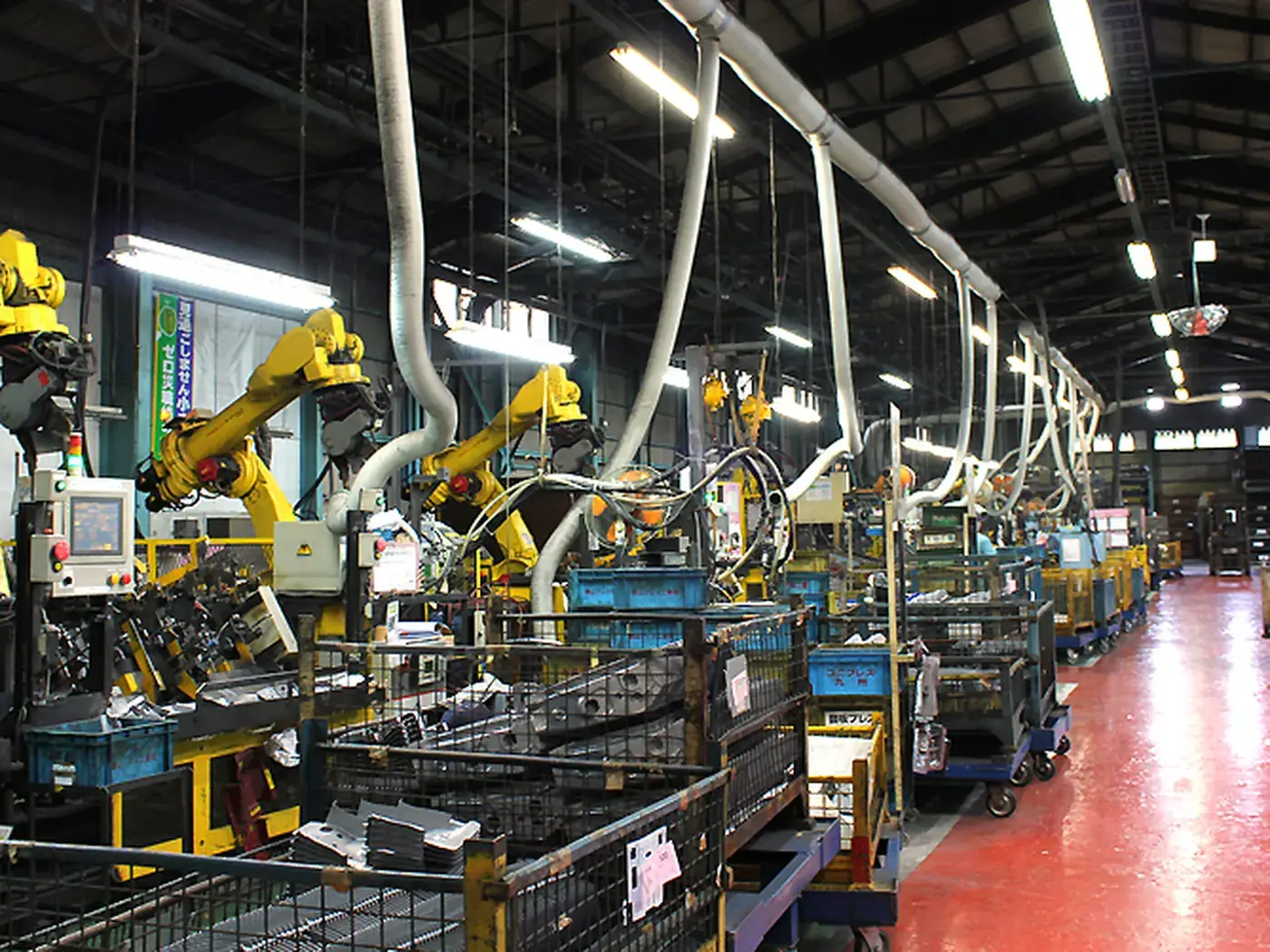
Motor burn-out and welded contacts both give warning signs beforehand. The value of periodic testing is turning those signs into planned maintenance shutdowns instead of unplanned production incidents.
For LV motors (380 V) measure insulation resistance with a 500 V megger, phase-to-phase and phase-to-earth. Cold, it should exceed 1 MΩ; a healthy running motor typically reads tens of megohms or more. Below 0.5 MΩ the motor needs drying or overhaul — do not run it as-is.
Isolate, prove dead and discharge the motor before testing. On VFD-fed motors, disconnect the drive first — the megger's high voltage will destroy it otherwise.
A damp motor (rainy season, long idle) must have its insulation tested before starting. Any motor idle for over three months gets an insulation test and an idle trial run before returning to service — that is procedure.
Where possible run a polarisation index (PI) or absorption ratio test — they reveal insulation condition far better than a single resistance reading. On large motors, do the full test yearly and keep the records for comparison.
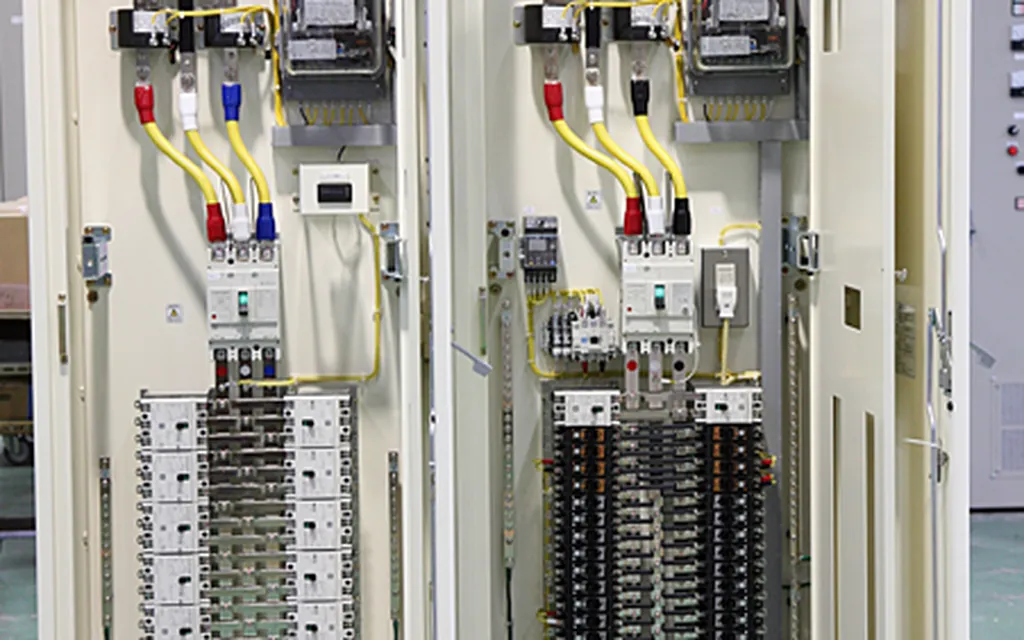 FIELD · SCHH-2026
Three-phase currents must be balanced. Beyond 10% imbalance, investigate supply voltage imbalance, inter-turn winding shorts and poor contacts. Current imbalance is a common precursor to burnt neutrals and burnt motors.
Running current must not exceed the nameplate rating for extended periods. Sustained overload accelerates insulation ageing and life falls exponentially. If the load genuinely needs more power, change the motor — do not limp along by raising the protection settings.
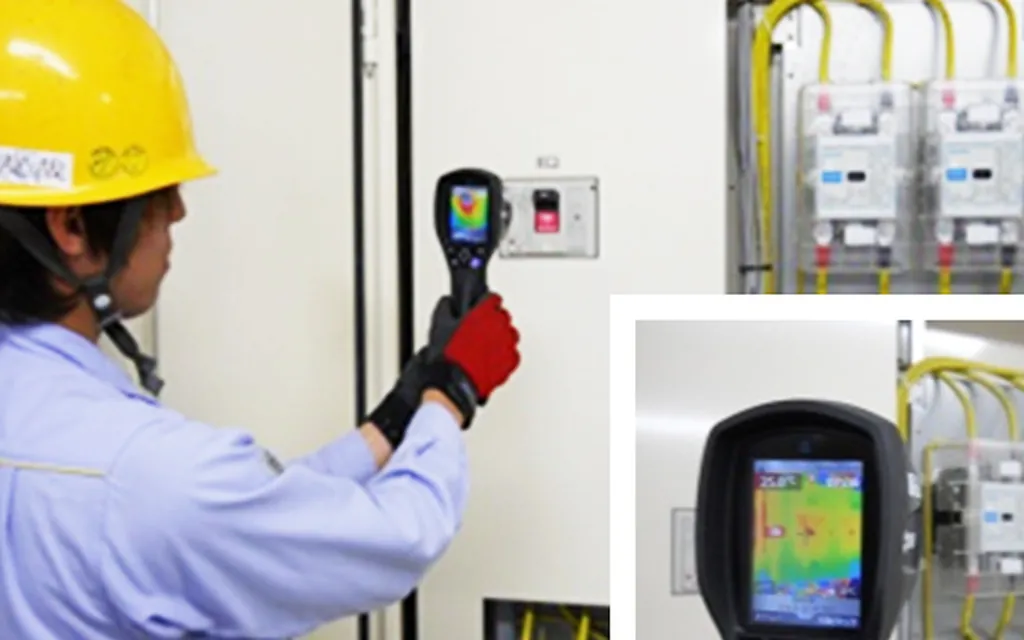
Log frame temperature periodically with an IR thermometer. Among identical motors on identical duty, one running clearly hot (say 15 °C above the others) has a cooling problem, an overload, or a winding fault.
Keep cooling passages and fan cowl clean. Many motor burnouts have an almost comically simple cause: a fan cowl plastered over with lint and dust, with the heat going nowhere.
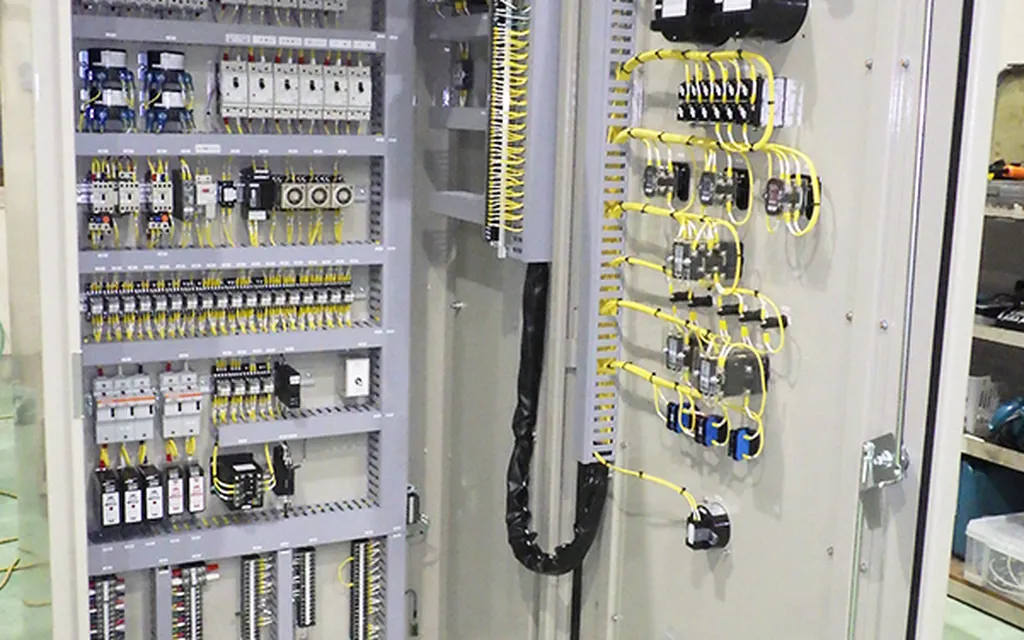 FIELD · SCHH-2026
Inspect contactor contacts quarterly: burning pits, welding marks, discolouration. Replace contacts once eroded past one third of their original thickness. Rising contact resistance generates heat, which speeds the erosion further.
Arc chutes must be complete. A contactor without its arc chute throws an arc when breaking heavy current — dangerous, and it burns neighbouring components.
Test thermal relays periodically. A relay that never operates drifts in characteristic and may already be dead. Where test facilities exist, verify on interval; where not, replace the relay at each motor overhaul. A failed thermal relay is more dangerous than none at all, because it creates the illusion of protection.
Keep breaker mechanisms exercised: a breaker that sits closed for years should be manually opened and closed periodically to stay free. Press the RCD test button monthly — that is standard practice.
| Maintenance item | Interval | Method | Acceptance criteria |
|---|---|---|---|
| Insulation resistance measurement | Yearly / before restarting after 3+ months idle | 500 V megger, after isolation and discharge | > 1 MΩ (tens of MΩ is good) |
| Three-phase current balance | Quarterly | Clamp meter | Imbalance <10% |
| Running current vs nameplate | Monthly | Clamp meter reading | No sustained excess over rating |
| Frame temperature log | Monthly | IR thermometer | Under the same duty, <15 °C between identical units |
| Cooling passage cleaning | Quarterly | Compressed air on the fan cowl | No lint or dust blockage |
| Contactor contact inspection | Quarterly | Visual: erosion, welding, discolouration | Erosion <1/3 of the original thickness |
| Thermal relay test / replacement | Yearly, or at motor overhaul | Verify trip current | Settings accurate, operation reliable |
| RCD test button | Monthly | Press the test button | Trips reliably |
Motor testing has three levels of depth. Most plants do only the first, while faults often hide in the second and third. Level one is insulation resistance measurement (megger), which finds damp insulation, severe aging and breakdown - the most basic check, at minimal cost. But a megger measures the overall condition of the insulation and cannot detect local defects: weak turn-to-turn insulation or partial discharge in internal voids read normal on a megger yet develop into failures in service.
Level two is DC resistance and no-load testing. Three-phase winding DC resistance unbalance reflects inter-turn shorts and poor joints; the measurement is cheap (a micro-ohmmeter or bridge) and high in value - unbalance beyond a certain ratio calls for vigilance on turn-to-turn problems. The no-load test measures no-load current and three-phase balance, revealing uneven air gaps, rotor defects and core problems. Both tests are especially useful for acceptance after maintenance.
Level three is professional diagnosis: withstand-voltage and surge comparison tests (mandatory after rewinding or major overhaul), vibration spectrum analysis (bearings and air-gap eccentricity), current spectrum analysis (the signature of broken rotor bars and stator problems), and insulation dissipation-factor and partial-discharge tests (large high-voltage motors). This level needs professional instruments and personnel - not every motor needs it, but critical motors, motors after overhaul, and motors showing anomalies should get it. The logic of tiered testing: screen with cheap methods, diagnose with professional ones.
The value of test data lies in accumulation. Record one motor's insulation resistance, DC resistance, no-load current and vibration annually into a trend sheet, and its degradation curve reads at a glance. A single passing value does not mean safe; a healthy trend means reliable - this is what predictive maintenance concretely looks like for motors.
Minimum permissible values correspond to rated voltage and temperature. The common rule of thumb for low-voltage motors (380 V class) is cold insulation resistance not below the specified floor, with absorption ratio or polarization index in the healthy range. But the more practical criterion is trend: for the same motor at similar temperature, the year-on-year rate of decline tells you more than any single reading. Temperature matters greatly - insulation resistance falls markedly as winding temperature rises, so comparisons must be made under comparable conditions (record the temperature at measurement). After maintenance and for new motors, a withstand-voltage test is also required - passing the megger does not mean passing the hi-pot.
 FIELD · SCHH-2026
Work three ledgers. First, cost: rewinding (winding, insulation, varnishing, testing) versus the price of an equivalent new motor - rewinding is usually clearly cheaper for large motors, while for small motors replacement often wins. Second, performance: a rewound motor's efficiency may fall short of a factory-new one, and the electricity difference over long running must be counted - for continuous-duty applications, a new high-efficiency motor is worth choosing. Third, reliability: rewind quality depends on workmanship - use a shop with test capability, and surge and withstand-voltage tests after rewinding are mandatory. Our rule: large power, special models and long new-motor lead times favor rewinding; small power, standard models and high efficiency requirements favor replacement.
Low-voltage distribution failures concentrate in three places: joints, protection devices and load distribution. Joints are hot spots - poor crimps, loose bolts, direct copper-to-aluminum connections and oxidation all raise contact resistance; current flow generates heat, heat accelerates oxidation, and the vicious cycle runs until burnout. The inspection tools are infrared thermography (possible live, highly efficient) and tightness re-checks (during shutdowns). For important circuits we recommend quarterly infrared scans of joints with image records kept, and tracked treatment of any abnormal hot spot.
Protection devices must be kept "alive": breaker trip-characteristic testing, RCD trip tests, motor-protector setting verification, and fuse rating checks (never substituted with copper wire or oversized fuses). Protection devices sit idle until the moment they must operate reliably - and that reliability can only be assured by periodic testing. Keep test records on file - date, result, settings - forming a protection register.
Load balance is a health indicator of a three-phase system. In shops where single-phase loads grow year by year (every new device hung on whichever phase is convenient), three-phase unbalance keeps worsening, driving excessive neutral current, joint heating and voltage shift. The check is simple: measure the three phase currents periodically, compute unbalance, and redistribute single-phase circuits when over limit. The work is not hard - what is hard is getting someone to do it regularly. Write it into the annual electrical inspection sheet and it will not be missed.
 FIELD · SCHH-2026
This article was written in-house by the Industrial Equipment Services Division. The thresholds, intervals and scrap criteria are field-experience values; in practice follow the equipment manufacturer's technical documents, current national standards and special-equipment safety regulations. Inspection and testing of special equipment (cranes, pressure vessels, etc.) must be carried out by a qualified body.
Send us your equipment list and operating conditions, and we will give you a workable inspection and maintenance standard.
 Scan to add Engineer Man on WeChat
 Guangzhou Yujihang Computer Technology Co., Ltd. · www.accpc.com.cn
 Guangzhou Henghuan Technology Co., Ltd. · www.hhrobotics.cn
 Nanchong Henghuan Robotics Co., Ltd. · www.hhrobots.cn