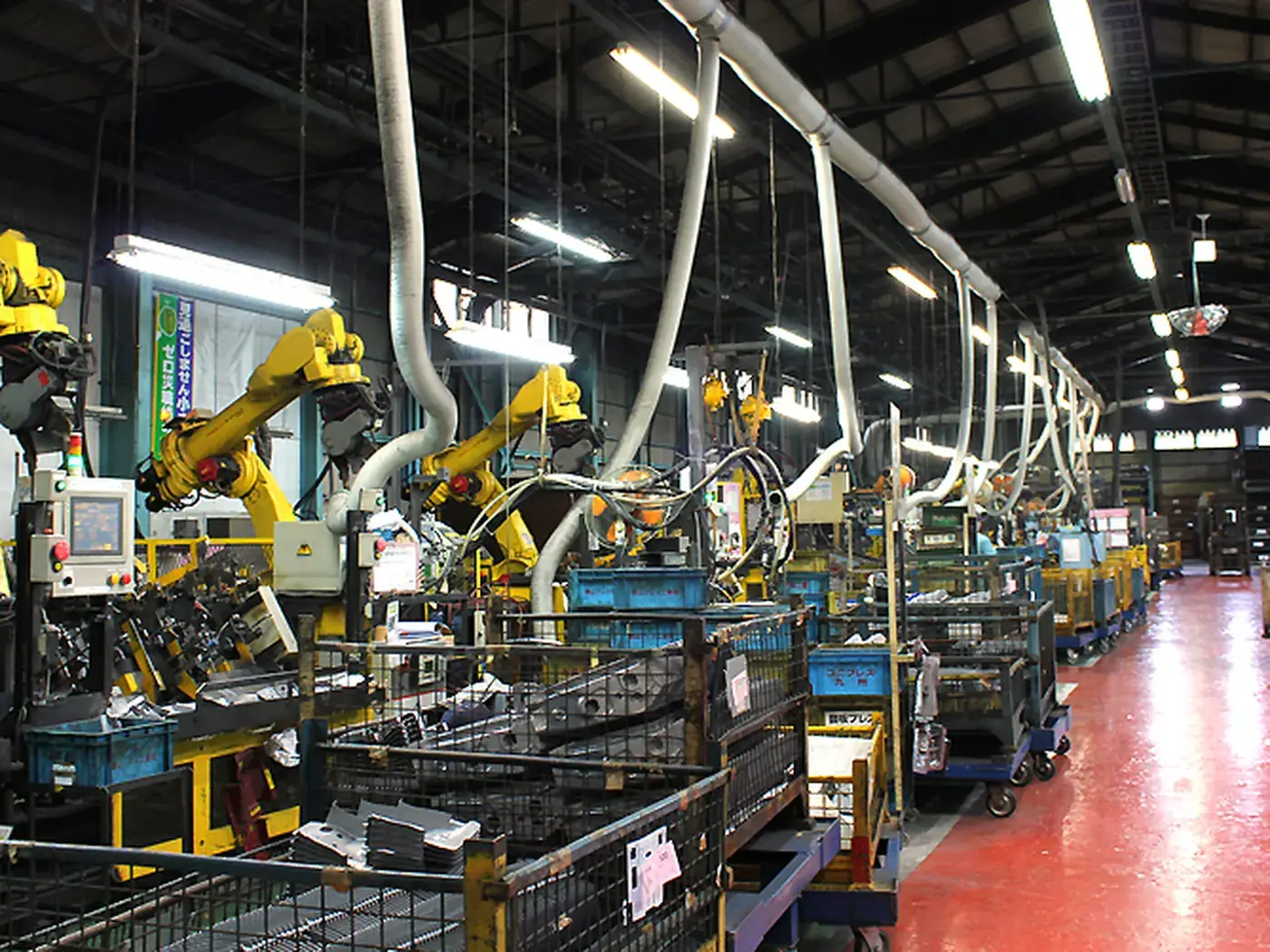
The PLC itself is reliable. What actually causes trouble is three things: no programme backup, poor power quality and messy earthing. All three are management problems, not technical ones.
Every machine's PLC program, HMI project, VFD parameters, servo parameters and temperature-controller settings must have a complete backup — and the backup must be proven usable. One restore test is worth ten backups.
Label every backup with version and date. If the program is changed on site and the backup is not updated, you effectively have no backup. Make it a rule: any program change is backed up the same day, with the file name stating what changed.
Keep backups in two places: an offline computer on site (or dedicated storage), and an off-site archive at the works office. Ageing batteries lose the program in RAM — do not count on the machine remembering it for you.
Replace PLC batteries (where fitted) on interval — generally every 3–5 years — and change them with power on, or the program and retentive register data are lost. Write this detail into the maintenance procedure.
 FIELD · SCHH-2026
PLC power supply input voltage must stay within spec; beyond ±10% fluctuation, add voltage regulation. In areas with unstable grids, the odds of PLC misoperation and module damage rise sharply.
Mind the cooling and life of switching power supplies. In hot cabinets they fail first, and usually by slow decay — output voltage sagging while still "working", causing intermittent module faults. Measure every output rail every six months; replace once more than 5% off nominal.
Fit surge protective devices (SPDs) on PLC power circuits, especially in lightning-prone areas and plants with overhead service lines. Small money, big protection.
Keep control power and force power separate. Interference from VFDs, motors and solenoid valves couples into the PLC through a shared supply — a common source of baffling faults.
 FIELD · SCHH-2026
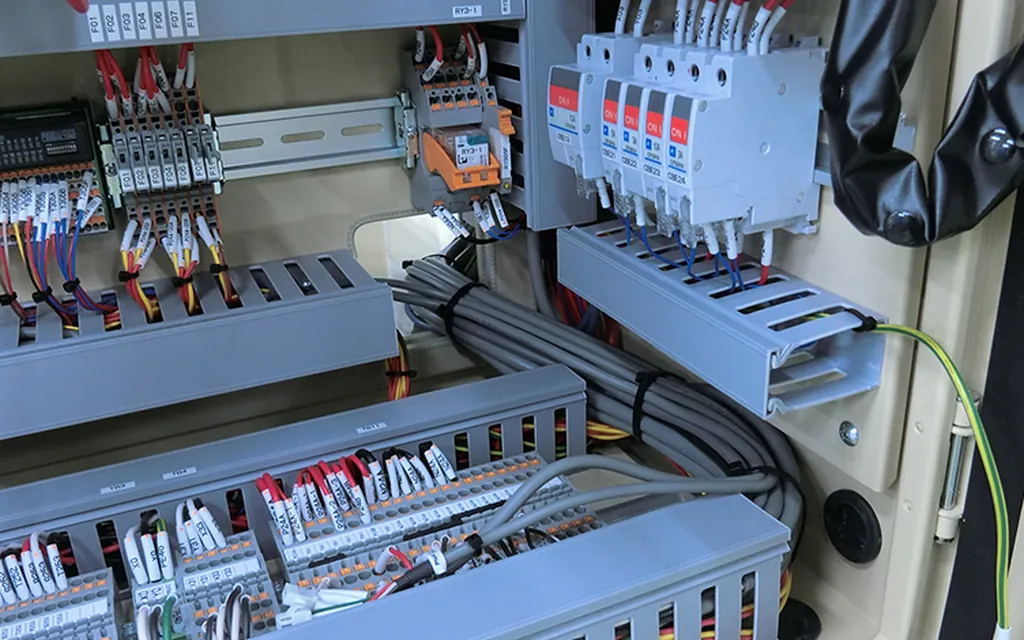
Earth the PLC system at a single point; multiple earth points create ground loops. Analogue signal shields are normally earthed at one end only (usually the cabinet side); earthing both ends invites interference.
Earth resistance must meet spec — generally below 4 Ω — measured yearly. Poor earthing shows a classic signature: jumping analogue values, intermittent comms errors, and a tingling feel when touching the cabinet door.
Run signal and power cables in separate trays, crossing at right angles where they must cross. The wider the parallel separation the better; if that is impossible, add divider plates. Getting this right once during a retrofit is ten times cheaper than hunting the faults after start-up.
| Maintenance item | Interval | Method | Acceptance criteria |
|---|---|---|---|
| Program and parameter backup refresh | Same day as every change | Complete project files, version labelled | Recoverability verified yearly |
| Off-site backup archive | Monthly | Two copies: on site + works office | Both copies at the same version |
| PLC battery check / replacement | Check yearly; replace every 3–5 years | Replace with power on | No low-battery alarm |
| Switching PSU output measurement | Semi-annual | Multimeter on every output rail | Within <5% of nominal |
| Cabinet temperature and cooling check | Monthly | IR thermometer; filter condition | Inside the cabinet <40 °C; filter mats clear |
| Earth resistance measurement | Annual | Earth resistance tester | < 4Ω |
| Terminal tightness and cable check | Semi-annual | Torque screwdriver; visual cable check | No looseness, no damage or discolouration |
Most plants say they have PLC program backups, but few have ever verified them. A backup's credibility rests on three things: right version, complete files, and restorable. Version mismatch is the most common problem - the program on site has been changed (sequence timing adjusted for a new material, interlocks added, logic corrected) while the backup is still three years old. Restoring that old backup after a failure wipes out three years of process improvement and may directly cause a production incident. File completeness is also often overlooked: some backups export only the program blocks, missing hardware configuration, symbol tables and HMI screens - after restoring, the machine will not come up and nobody can find out why.
The only way to verify a backup is a restore drill: take a PLC of the same model (or simulation software), restore the backup completely, and confirm that hardware configuration is correct, the program downloads and the logic runs. The drill need not be done on production equipment, so the risk is contained. Only a drill-tested backup is a backup; an unverified one is just a file. We recommend one drill a year, plus one after every major program change.
The management system around backups matters more than the technology, and it has three cores: back up on every change (the same day the program is changed on site, with date and change description in the filename); two copies in separate places (one on site, one off site or in the cloud - against fire, theft and media failure); and named responsibility (who backs up, who verifies, where the register lives). Written into the equipment management system, these three rules work better than any technical measure - the technology is not hard, keeping it up is.
The replacement interval follows the manufacturer's specification - usually three to five years, shorter in hot environments. The method is what matters: most PLCs support live replacement (swapping the battery while powered, with the program held by the supply), which must be completed within the time limit stated in the manual. For models without live replacement, confirm the program is backed up before changing the battery, or commit the data to non-volatile storage before power-down (some models have EEPROM or memory-card commit functions). Record the battery change date and the new battery's model in the register - this is the item most often left out.
 FIELD · SCHH-2026
It depends. If the PLC itself survives (only the RAM content was lost on power-down) and the program was committed to a memory card or EEPROM, it can be restored from the card. If the unit is destroyed and no backup exists, the chance of recovery is very low - the only path is rewriting the program from electrical drawings, machine motion descriptions and operating experience, which is neither quick nor cheap and requires commissioning every motion on site. This is exactly why we keep stressing backups: writing a program has a controlled cost, while rewriting after a loss costs several times as much - before counting downtime.
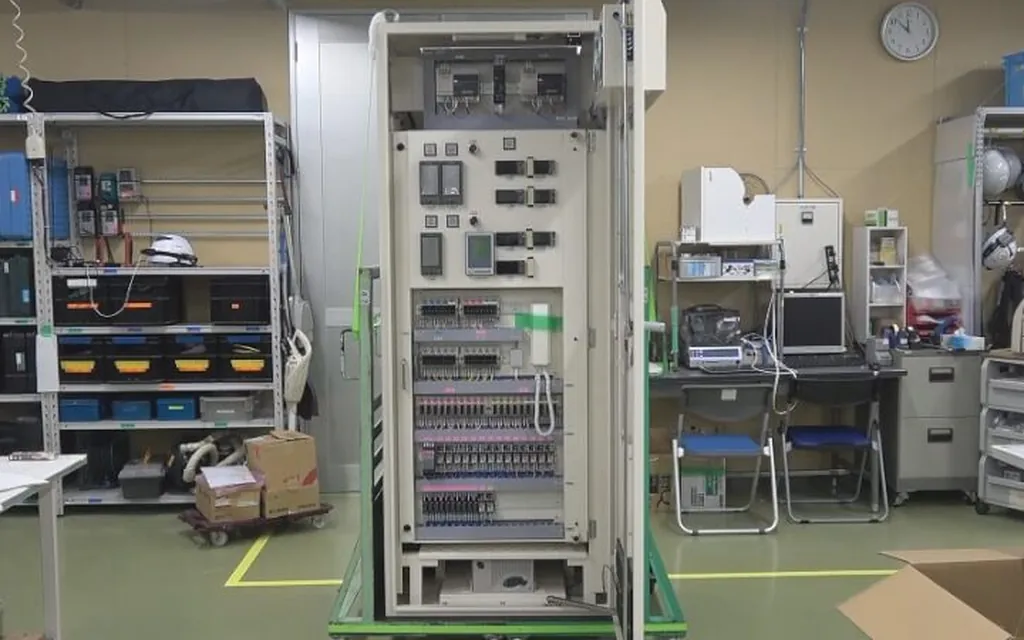
PLC hardware life correlates strongly with its environment. On temperature: keep the cabinet within the manufacturer's allowable range (usually 0-55°C) - sustained heat markedly shortens electronic component life, and cabinets over limit in summer need added ventilation or air conditioning. On dust: conductive dust (metal fines, carbon powder) inside modules causes short circuits, while thick insulating dust impairs heat rejection - both demand enclosure sealing and filtration. On moisture: condensation is the killer of electronics - check that cabinet heater-dehumidifiers actually work, and in damp environments consider a cabinet air conditioner.
Electromagnetic interference is the most insidious of the four: intermittent communication dropouts, modules failing for no reason, analog values jumping - and after endless investigation, interference is the answer. The countermeasure is wiring discipline: signal and power cables in separate trays (separated per code, crossing at right angles), shields grounded at one end only, and a grounding system that is reliable and within resistance limits. Done during a retrofit phase this costs little; retrofitted afterwards it means re-cabling at far greater expense.
Suggested inspection frequencies for environmental control: filters and cooling cleaned quarterly, in-cabinet temperature and humidity logged monthly, insulation and ground resistance tested annually, and shielding and grounding condition checked during each shutdown. Keep the data on file so trends are comparable - a cabinet temperature climbing month over month usually means the cooling system is degrading, and that signal arrives well before any fault alarm.
 FIELD · SCHH-2026
This article was written in-house by the Industrial Equipment Services Division. The thresholds, intervals and scrap criteria are field-experience values; in practice follow the equipment manufacturer's technical documents, current national standards and special-equipment safety regulations. Inspection and testing of special equipment (cranes, pressure vessels, etc.) must be carried out by a qualified body.
Send us your equipment list and operating conditions, and we will give you a workable inspection and maintenance standard.
 Scan to add Engineer Man on WeChat
 Guangzhou Yujihang Computer Technology Co., Ltd. · www.accpc.com.cn
 Guangzhou Henghuan Technology Co., Ltd. · www.hhrobotics.cn
 Nanchong Henghuan Robotics Co., Ltd. · www.hhrobots.cn