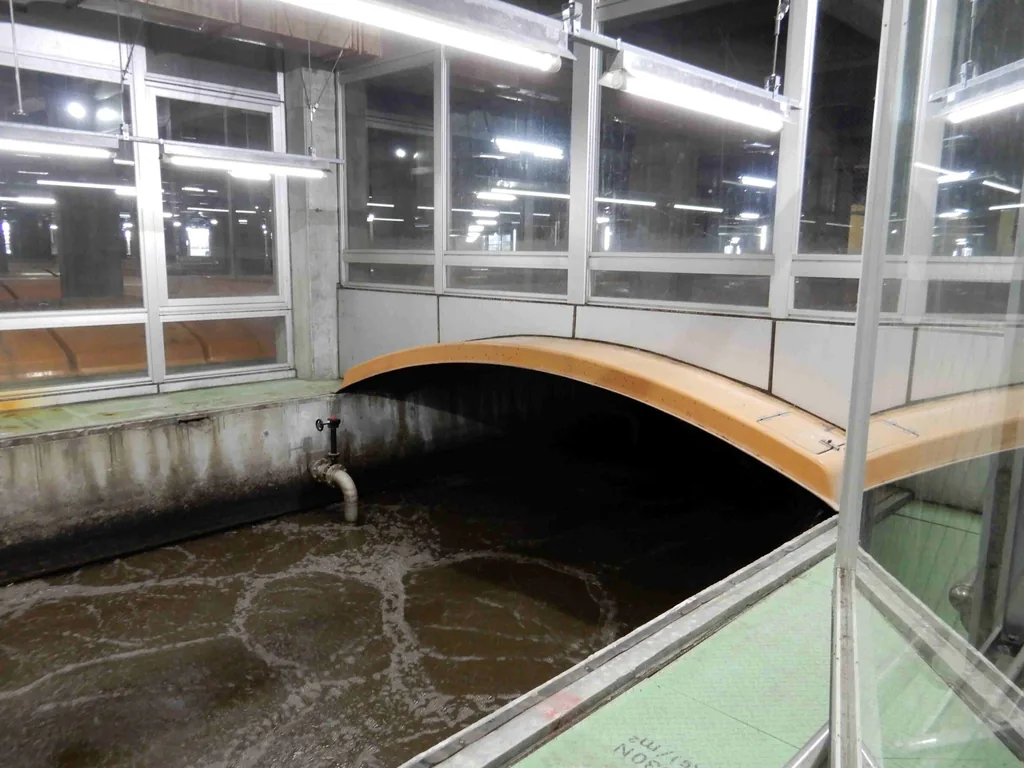
Submersible equipment sits in sewage year round and is harder to maintain than surface plant: out of sight and out of reach, and lifting it out for inspection is expensive. That makes routine monitoring and preventive maintenance more important — do not wait for a failure before pulling the pump.
A submersible pump's motor is kept dry by mechanical seals and an oil chamber. The oil (usually transformer oil or a dedicated grade) lubricates and blocks water. Change it on interval (generally yearly or by running hours), and read its condition when you do: milky emulsion means water ingress; metal flakes mean internal wear.
The mechanical seals (usually an upper and a lower) are wear parts. Water in the oil or a motor-chamber water alarm suggests seal failure — lift the pump and inspect and replace. Keep running on failed seals and the motor burns out fast.
Motor-chamber water monitoring: many submersibles carry leak probes (stator chamber or oil chamber). On alarm, stop and inspect at once — do not reset and run on. This is the last line of defence against burning the motor.
The cable is the submersible's weak point. Damaged cable lets water in and dampens the motor; cable joints (if any) must be properly waterproofed. Check the outer sheath for damage and hardening, and never lift the pump by its cable — use the lifting chain or lugs.
Insulation resistance: test motor insulation whenever the pump is lifted for overhaul, and dry it out if below standard. Test again before restarting a pump that has stood idle a long time.
 FIELD · SCHH-2026
Fibres, rope ends and plastic bags in sewage rag the impeller, cutting flow, raising current and stalling the pump. Cutter pumps chop some of it, but they are not magic.
How to tell the impeller is ragged: clear flow drop, abnormally high or fluctuating current, noise from the pump. Lift and clear it — never force it to turn (you will burn the motor or twist the shaft off).
Preventing ragging: fit a bar screen or grinder screen at the pump-station inlet to catch long fibres and large debris. Clean screens regularly — a blinded screen starves the inlet and runs the pump dry.
Impeller wear: gritty sewage wears impellers fast, cutting flow and head. Check vanes for thinning and notching; replace when severe. Also check the wear-ring clearance between impeller and casing — too big, and internal recirculation rises and efficiency falls.
Mixer and flow-maker impellers rag just the same, and deformed propellers spoil the flow field and mixing duty — inspect and clean regularly.
 FIELD · SCHH-2026
Pump level control must be dependable. Too-low level runs the pump dry; running dry starves the motor of cooling (submersible motors cool in the surrounding water) and dry-runs the mechanical seals — failure follows fast. Prove the low-level protection works.
On auto-coupling (guide-rail) pumps, check the coupling sealing face for wear and the guide rails for distortion. A sloppy coupling leaks discharge water and cuts pump efficiency.
Keep starts and stops within reason. Cycling faster than the maker's hourly limit overheats motor and starter. On level-controlled duty, set a sensible level band between start and stop to avoid short-cycling.
With multiple pumps in parallel, mind the system curve: total flow must match pipework resistance, and the duty point differs between single-pump and parallel running. Sitting far from the best-efficiency point for long accelerates wear and lifts energy use.
Sewage aggressiveness (pH, sulphides, chlorides) drives material choice for casings, impellers and fasteners. If corrosion accelerates, assess a material upgrade (stainless, duplex, coatings).
Stainless corrodes too: chloride service brings pitting and stress-corrosion cracking. Check stainless parts for pits and fasteners for seizing.
Sacrificial anodes (zinc blocks): some submersibles carry zincs on the oil chamber or motor shell for cathodic protection — inspect and replace on interval. Once the zinc is gone, corrosion moves onto the base metal.
Junction boxes and control panels in the open must be weatherproof and damp-proof. WWTPs are humid — confirm the IP rating and seals on electrical gear, since condensation causes faults.
| Maintenance item | Interval | Method | Acceptance criteria |
|---|---|---|---|
| Running current and flow monitoring | Daily | Ammeter; flow meter or level trend | Current steady; flow normal |
| Leak / water-ingress alarm check | Every shift | Monitor condition | No alarm; on alarm, stop and inspect |
| Low-level protection test | Monthly | Function test | Stops the pump reliably |
| Oil-chamber sample check / change | Yearly or by running hours | Sample the oil for condition; change on interval | No emulsion; no metal flakes |
| Insulation resistance measurement | Every lift-out / before restarting long-idle pumps | 500 V insulation tester | > 1 MΩ (tens of MΩ is good) |
| Impeller ragging and wear check | Quarterly or when flow misbehaves | Lift the pump; inspect impeller and wear-ring clearance | No ragging; wear below limits |
| Cable and lifting-chain check | Quarterly | Sheath, joints and lifting-chain condition | No damage; never lift by the cable |
| Screen cleaning | Every shift / daily | Inlet screens | Clear; inflow unobstructed |
| Sacrificial anode check | Annual | Zinc consumption | Not consumed; replace when due |
Submersible pumps normally fail more often than comparable surface pumps, because the duty is harsh in three ways: first, they are immersed long term in wastewater carrying solids and corrosive media, testing seals and materials far beyond clean-water duty; second, only a single mechanical seal stands between the motor and the water - once it fails, water enters and burns the motor out, with no margin; third, they run unattended - being underwater, daily inspection can neither see nor touch them, so abnormalities are usually discovered only at the failure shutdown. These three facts mean submersible pump maintenance must follow a different philosophy from surface pumps: condition monitoring instead of visual inspection, and preventive replacement instead of repair after failure.
Maintenance centres on three locations. First, the mechanical seals: a submersible pump normally has upper and lower (or multiple) seals, with oil in the seal chamber both lubricating and keeping water out. The oil chamber check is the core item - periodically inspect the oil's colour and emulsification (sample at the drain plug or check as specified); emulsified oil means a seal is leaking, and the pump must be stopped and overhauled - running it on is the same as letting water into the motor. Second, the cable and its joint: the cable is permanently submerged and under tension, and sheath damage or water entering the joint are common causes of motor burnout. Check cable condition, the fixing arrangement (it must not hang on its own weight) and insulation resistance (meggered at the specified interval - insulation readings in the submerged state are a key indicator). Third, the impeller and wear ring: solids in the wastewater cause wear that shows up as falling flow and rising current. Measure flow and current periodically against a baseline, and replace impeller and wear ring when wear exceeds the limit.
Two more items are easily overlooked: first, cooling conditions - some submersible pumps must run fully submerged (the surrounding water cools the motor), and running at low level overheats them; confirm level control and protection are effective. Second, start frequency - frequent starts shock the motor and seals, so the level control start/stop differential must be set sensibly to avoid rapid repeated cycling.
It depends on the case. The cost of a seal replacement relates to the pump's rating and construction: on small and medium pumps a seal change normally costs clearly less than a new pump and is worth doing - but mind the scope of the repair, because after a seal failure water may already have reached the oil chamber or even the motor cavity, so a strip inspection of motor insulation and bearing condition is needed, and the repair is only worthwhile if the motor is confirmed undamaged. Where the motor has been flooded and burnt out, a new pump is usually the more economical route on small and medium units (rewind plus seal replacement approaches the price of a new pump, with reliability discounted). On large pumps, motor rewind plus seal replacement usually pays, because new pump prices are high. The decision process is: measure insulation first (is the motor damaged), then strip and assess (seals, bearings, impeller wear), then do the arithmetic (total repair cost against new pump price and lead time). Our principle is to lay all three sets of data in front of you and let you make the call - we do not hide a 'replace' conclusion to win repair work, and we do not talk you into repairing what is not worth repairing to sell a service.
 FIELD · SCHH-2026
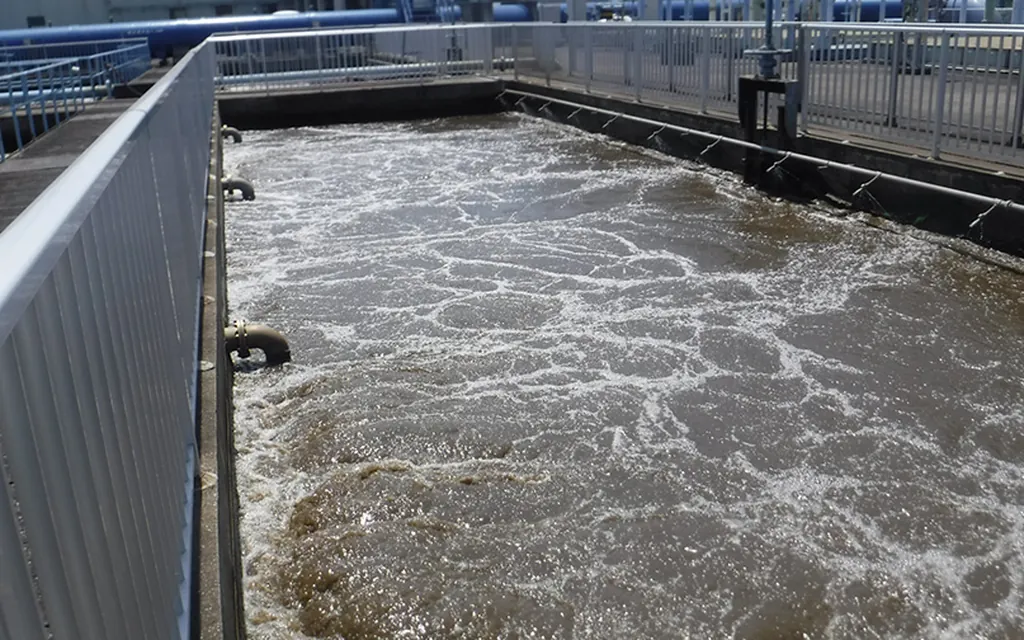
A mixer's maintenance priorities differ from a pump's and centre on three areas: first, the impeller and blades - running long term in solids-laden media, blade wear and entanglement (fibres, ropes) are the main issues, so measure blade wear, clear wrapped material and confirm the impeller is secure; second, the seals and oil chamber - just as critical as on a pump, with the same inspection interval and method, and emulsified oil means stop; third, the installation position and guide arrangement - a mixer's installation angle and immersion depth directly determine mixing performance, so check guide rails and lifting frames for corrosion and tightness, since a shifted position creates dead zones in the basin flow field (showing up as sludge deposition). Also, a mixer has no flow indicator, so judging its condition relies mainly on current (falling current may mean a worn or lost impeller; rising current may mean entanglement or bearing trouble) and on observing flow patterns in the basin (surface boiling, whether sludge is settling). Insulation and earthing checks on the electrical side are the same as for a pump, since both are submerged equipment, and protection of the cable and joint is equally critical.
Wastewater attacks from several directions: hydrogen sulphide and its oxidation products (acid attack - the smell of sewers and pumping stations), chloride ions (industrial or high-salinity streams), microbiologically influenced corrosion (localised attack beneath biofilm), and the combination of wear with corrosion (gritty sewage). The first layer of protection is material selection: casing and impeller material chosen for the corrosivity of the medium (cast iron for ordinary sewage, stainless steel for corrosive service or high cleanliness requirements, duplex or special alloys for high-chloride, highly corrosive media), and seal elastomers chosen for medium compatibility (standard nitrile, oil-resistant fluoroelastomer, chemically resistant PTFE and the like). The basis for selection is water quality analysis data, not price - choose the material wrong and what you saved is paid back double in service life.
The second layer is coatings and cathodic protection: inspect and repair the protective coatings on submerged steelwork (guide rails, supports, embedded items) on schedule, and consider cathodic protection (sacrificial anodes) for important structures. Coatings are consumables - inspection intervals and repair plans belong in the maintenance programme, and you must not wait for widespread peeling before acting. The third layer is operational management: avoid dry running (a submersible pump running dry has no cooling or lubrication at its seals and bearings and is damaged extremely fast), control the medium (large solids and long fibres should be stopped at the screens, not asked of the pump), and lift the pump for inspection periodically (the condition of submerged equipment can only be confirmed by lifting it - surface observation is no substitute).
Our advice on material selection: when we assess equipment we look at two sets of data - the water quality analysis report (sulphides, chlorides, pH, solids content) and the actual service life records of the existing equipment. With both, the economics of a material upgrade can be worked out clearly: an upgrade that doubles service life but costs only partly more actually lowers whole-life cost. Choosing materials from experience alone, without data, loses at both ends - over-specifying wastes investment, under-specifying means frequent replacement.
 FIELD · SCHH-2026
This article was written in-house by the Industrial Equipment Services Division. The thresholds, intervals and scrap criteria are field-experience values; in practice follow the equipment manufacturer's technical documents, current national standards and special-equipment safety regulations. Inspection and testing of special equipment (cranes, pressure vessels, etc.) must be carried out by a qualified body.
Send us your equipment list and operating conditions, and we will give you a workable inspection and maintenance standard.
 Scan to add Engineer Man on WeChat
 Guangzhou Yujihang Computer Technology Co., Ltd. · www.accpc.com.cn
 Guangzhou Henghuan Technology Co., Ltd. · www.hhrobotics.cn
 Nanchong Henghuan Robotics Co., Ltd. · www.hhrobots.cn