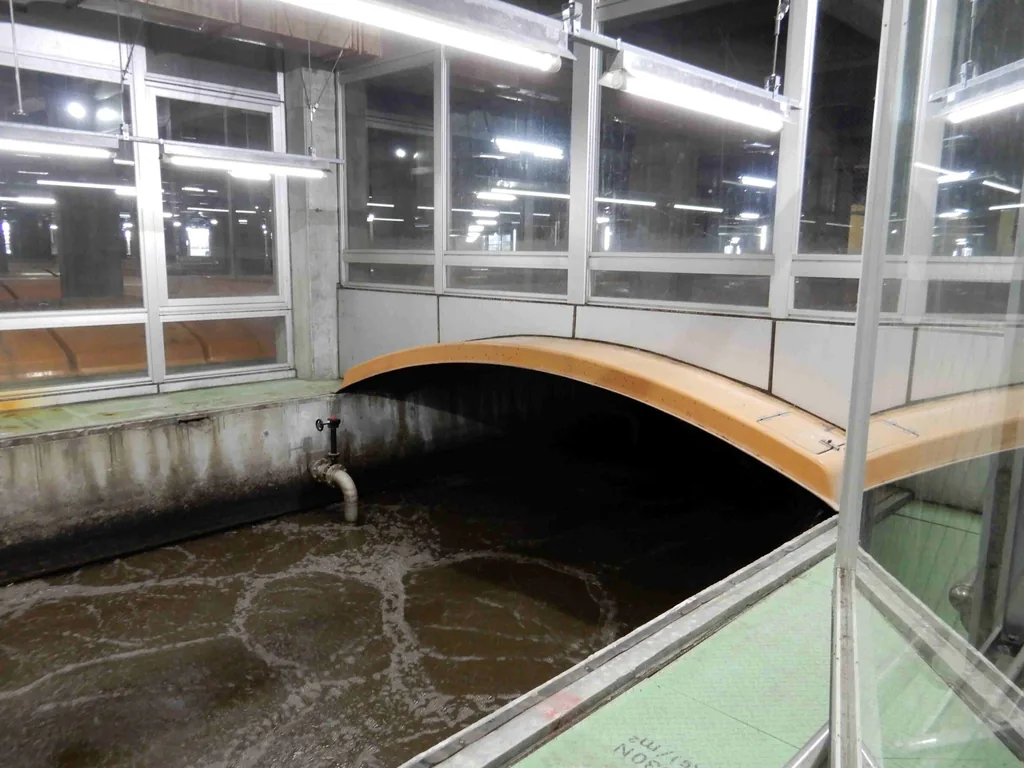
Corrosion is the biggest enemy of wastewater plant equipment: hydrogen sulphide, moisture and microorganisms working together accelerate the degradation of steelwork, electrical components and fasteners. Corrosion protection is not just a coat of paint — it has to be managed systematically.
Corrosion hot spots in a WWTP: inlet pump houses and screen rooms (high H₂S), sludge handling areas (anaerobic sulphides), aeration-tank walkway plates and submerged steel (wet/dry cycling), odour-control systems (concentrated corrosive gas), and chemical dosing rooms (acid and alkali attack).
Hydrogen-sulphide corrosion is the WWTP's signature attack: bacteria turn H₂S into sulphuric acid, which eats both concrete and metal. Concrete tanks, steelwork and cable tray degrade fast in H₂S atmospheres.
How to identify it: read the corrosion pattern (uniform rusting versus pitting), smell (rotten-egg odour means H₂S), and check environmental monitoring data. Signpost the hot spots and step up inspection frequency there.
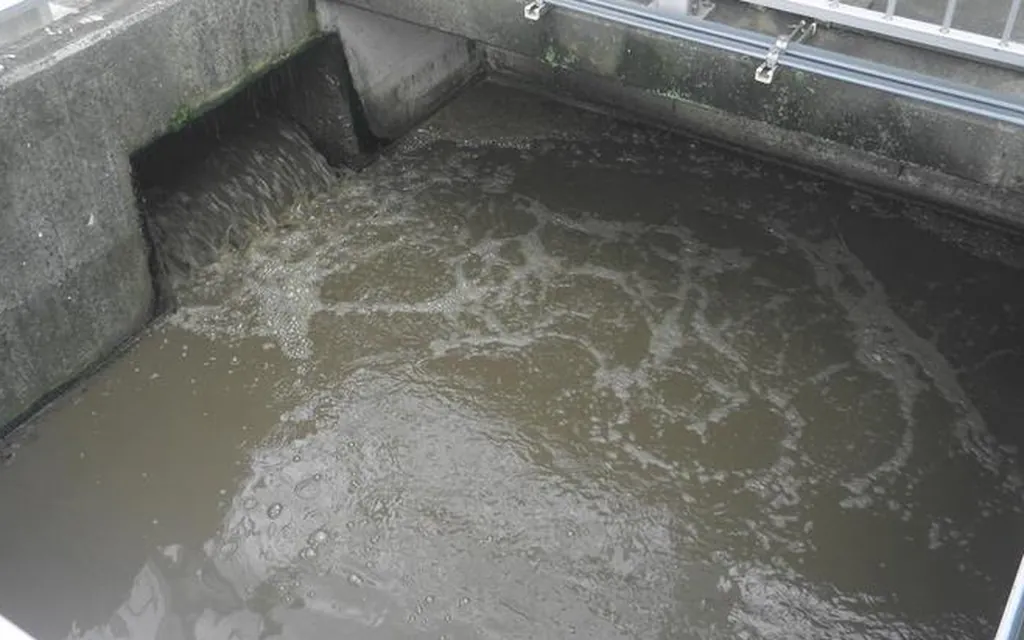
Wet/dry alternating zones corrode faster than fully immersed ones because oxygen is plentiful. Protect steel in the waterline zone as a priority.
 FIELD · SCHH-2026
Coatings are the foundation: surface preparation (blast-clean to the specified grade) → primer (zinc-rich or epoxy) → intermediate coat → topcoat (weather- and chemical-resistant). Film thickness must meet spec — workmanship matters more than the paint brand.
Inspect and maintain coatings regularly: on finding blistering, flaking or rust spots, treat locally and touch up — do not wait for widespread rusting. Patch repairs cost a fraction of a full recoat.
For submerged and waterline-zone steel: heavy-duty coatings (epoxy glass flake, etc.) or cathodic protection (sacrificial anodes / impressed current). Test CP potentials regularly and replace consumed anodes.
Stainless is not universal: in chloride and H₂S service, ordinary 304 pits and stress-corrodes. Critical locations need 316L or duplex — always select materials against the actual medium.
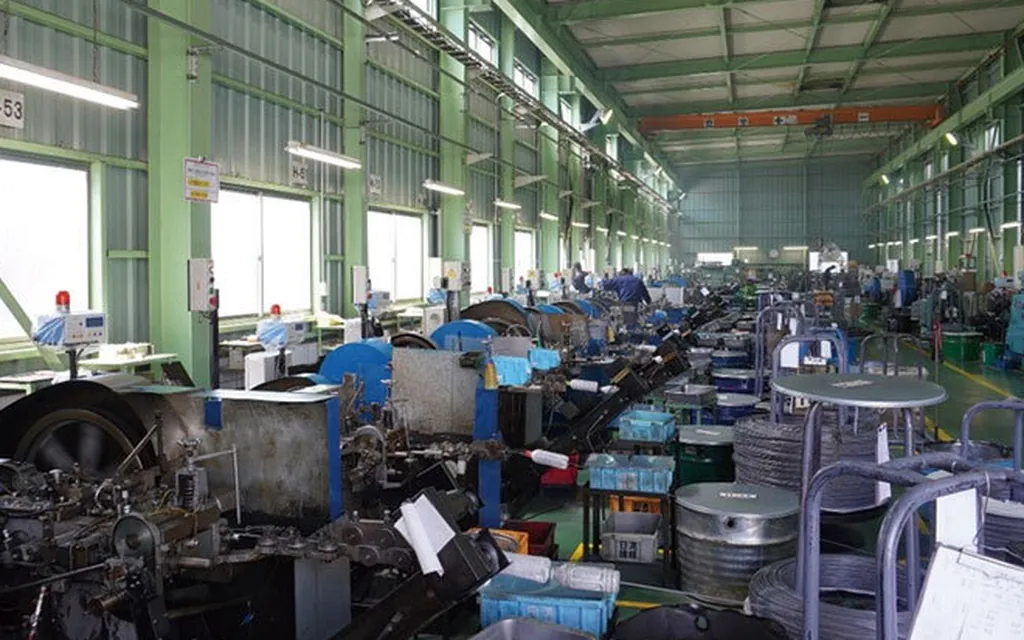
Fasteners (bolts and nuts) are the most overlooked corrosion point. Seized fasteners will not come apart at overhaul and end up cut off. Use stainless or hot-dip galvanised fasteners at critical points, with anti-seize compound.
 FIELD · SCHH-2026
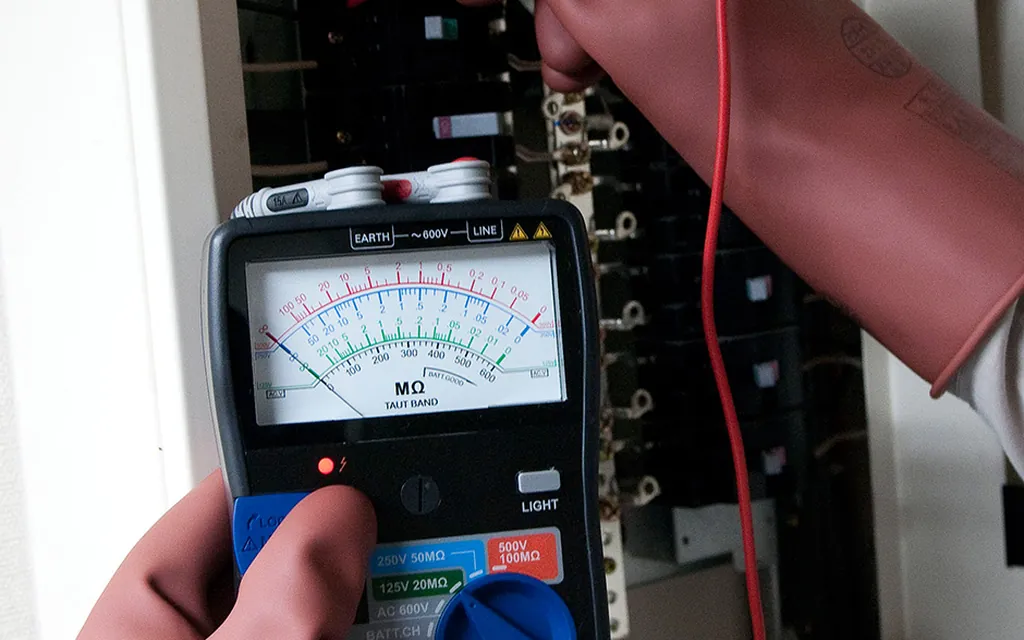
Pick IP ratings to suit the environment for panels, junction boxes and instruments. For the humid, corrosive WWTP atmosphere we suggest IP65 or better, IP66 outdoors. Underrated enclosures let condensation and corrosive gas destroy components.
Fit anti-condensation measures inside panels (heaters plus a thermo-hygrostat). Use stainless or corrosion-protected enclosures — plain carbon-steel cabinets live short lives in a WWTP.
Use hot-dip galvanised or GRP cable tray — painted tray rusts out quickly in H₂S. Seal cable joints and conduit entries so corrosive gas cannot travel along cables into equipment.
Instrument probes (pH, DO, MLSS, sludge blanket, etc.) sit immersed in corrosive media — clean and calibrate on interval, treat probes as wear parts and keep spares. Protect instrument junction boxes and signal cabling well; interference on signals upsets automatic control.
Corrosion-driven instrument failure shows up as drifting data or dead response, easily mistaken for a process problem. Regular calibration and cross-checking against a portable meter separates instrument faults from process faults.
H₂S attack on concrete (microbially induced corrosion) spalls the tank-wall surface and swells corroding rebar. Check walls for spalling, exposed steel and white crystalline deposits (sulphates).
Protection: corrosion-resistant wall coatings (epoxy, polyurea) or linings (HDPE, GRP), plus ventilation and odour control in the headspace to lower H₂S. For new tanks, design corrosion protection in from the start.
Construction joints and wall penetrations are the weak points for leakage and corrosion — check seals and waterstops. Leaks accelerate rebar corrosion.
Periodic tank inspection needs a drain-down; schedule it with the overhaul cycle and check walls, floor, embedded items, diffusers and mixer mountings.
Build a corrosion file per machine: for each critical asset record material, protection measures, commissioning date, corrosion condition found at every inspection, and maintenance history. With the file, life assessment and replacement planning have a basis.
Grade the management: classify by corrosion severity and equipment criticality — shorten inspection intervals in hot zones, keep routine intervals elsewhere. Spend the effort where it pays.
Spares and replacement planning: corrosion is gradual and predictable. Estimate remaining life from corrosion rates, and arrange spares and replacement ahead of time — avoiding emergency purchases and unplanned downtime.
Cost corrosion protection honestly: one good job (proper surface prep plus quality coatings) costs more up front but lasts longer with less upkeep; a cheap, shoddy job rusts in a year or two and repeated repairs cost more overall. Whole-life cost beats first cost.
Quality control on protection work: verify and record surface-prep grade, film thickness and curing conditions. Below-spec workmanship ruins even the best paint — and it is the stage where corners are most often cut.
| Maintenance item | Interval | Method | Acceptance criteria |
|---|---|---|---|
| Hot-spot corrosion rounds | Monthly | Pump house, sludge area, odour control, dosing room | Log changes in corrosion condition |
| Coating condition check | Quarterly | Blistering, flaking, rust spots | Treat and touch up on discovery |
| Fastener condition check | Semi-annual | Corrosion; seizing | Corrosion-resistant fasteners with anti-seize at critical points |
| Cathodic protection potential test | Every 6 months (where CP is fitted) | Protection potential measurement | Within protection range; anodes replaced when due |
| Panel anti-condensation and sealing check | Quarterly | Heater, thermo-hygrostat, seals | No condensation; seals intact |
| Probe cleaning and calibration | Monthly / per the maker | Clean; calibrate with standard | Readings accurate; response normal |
| Concrete tank inspection | Annually (at drain-down) | Spalling, exposed rebar, crystallisation, leakage | No structural deterioration |
| Corrosion file update | After every inspection | Log condition and maintenance | Continuous, traceable records |
| Remaining-life assessment and replacement plan | Annual | Estimated from corrosion rate | Spares and downtime arranged ahead |
Corrosion in a wastewater plant works continuously, so equipment management must take a whole-life view rather than fix-on-failure. Life-cycle management has four stages, and decisions at each stage drive the costs that follow. Stage one, design and selection: material choice (for the corrosivity of the medium), coating system, structural design (avoiding water traps and dead corners, allowing inspection and replacement) and spares availability. Decisions here cost least but matter most - the investment in a material upgrade is far smaller than the replacement and downtime losses caused by shortened life. Stage two, installation and baseline records: installation workmanship (galvanic protection where dissimilar metals meet, fastener material matched to the parent metal, repair of coating damage) and a baseline data file (wall thickness readings, insulation values, coating condition). This file is the starting point for every later trend comparison; skip it and a few years on there is nothing to compare against.
Stage three, operation and maintenance: periodic thickness measurement (the wall thickness trend of key structural members is the core data for life prediction), coating maintenance (repair small damage promptly to avoid widespread peeling), lubrication and seal management (in corrosive environments both grease selection and change frequency must be adjusted), and moisture and corrosion protection of electrics. Stage four, assessment and renewal: remaining life assessment (calculated from thickness data and degradation rate), repair-versus-replacement decisions (repair cost against remaining life), and material upgrades at renewal (revising the original selection with actual service data).
The key data set for this management is the wall thickness register: the same measurement points, the same method, a fixed interval - once the readings form a curve, corrosion rate can be calculated, remaining life predicted, and replacement planned ahead. Corrosion management without a thickness register is driving blindfold: the day the equipment perforates is pure luck. Thickness measurement costs very little (one ultrasonic gauge plus labour), yet it is the single most valuable data item in equipment management in corrosive environments.
Set frequency by equipment criticality and corrosion rate: critical pressure-bearing or load-bearing structures (embedded items in basins, large pipework, support girders) once a year; general structures and equipment casings every two to three years; locations known to corrode fast (high-sulphide areas, the gas-liquid interface zone, dead corners) every six months, or the next measurement date calculated from the thinning measured last time. Where to measure matters: the gas-liquid interface zone (where corrosion concentrates), elbows and reducers (erosion-corrosion), welds and heat-affected zones, water-trapping dead corners, and the areas beneath coating damage. Measurement points must be fixed and marked (stamped or numbered) so each reading is taken at the same place and the data is comparable. Records go into the register with point location, thickness, date, comparison with the previous reading and the calculated thinning rate. Once the thinning rate is known, remaining life has a basis for prediction - that is the key step from 'perforation by luck' to 'replacement planned in advance'. One caveat: thickness measurement needs surface preparation (coating and rust must be removed for an accurate reading), so it must be scheduled with the maintenance plan - it cannot be done at any moment.
 FIELD · SCHH-2026
It depends on the assessment - there is no one answer. The correct approach is a full condition survey first: thickness measurement zone by zone, coating condition grading, remaining life estimation, and failure risk ranking, then sort into three groups. Group one must be dealt with immediately (load-bearing sections thinned to the limit, risk of perforation or fracture): whatever scheme is chosen, these come first - it is a safety issue. Group two suits a whole-area upgrade (widespread corrosion in one zone, several items near end of life together, where the works can upgrade materials and structure at the same time): plan it as one project and build once, which saves both money and downtime compared with repeated repairs. Group three suits item-by-item repair (local corrosion, widely differing remaining lives, no effect on overall operation): handle in planned batches, putting limited budget where the risk is highest. The key judgement datum is 'consistency of corrosion rate within a batch' - equipment built in the same period in the same environment usually corrodes at similar rates, so one item at end of life means its batch-mates are close too, and at that point whole-area planning is far more economical than serial emergency repairs. Our assessments come with zoned condition maps and phased recommendations, so you can decide at the pace of your budget instead of one large outlay or endless delay.
The first element of long-term management is the written system: equipment classification (critical, important and general, ranked by downtime impact and safety weight, with inspection frequency and resources allocated by class); an inspection schedule table (the items and frequencies of daily rounds, monthly checks and the annual comprehensive inspection written down, not kept in anyone's memory); an abnormality response procedure (who assesses, who decides, and within what time it must be handled - written, not verbal); and repair-versus-replacement decision rules (what gets repaired, what gets replaced, who approves - with rules there is no argument every time). The value of the written system is that management does not break when people change: staff turnover is normal at wastewater plants, and the system plus the records are the only guarantee of continuity.
The second element is data: the equipment register (one file per unit, holding baseline data, overhaul records, replacement parts and thickness records), operating data (current, vibration, temperature, flow, energy), test data (insulation, wall thickness, oil condition, instrument calibration) and cost data (repair spend, spare parts, energy). Only when all four are keyed to the equipment number can they support trend analysis and decision-making. The pragmatic principle of data management is that field discipline matters more than tooling: a paper form with well-designed fields supports management just as well, while a system with chaotic fields and careless entry produces useless data all the same. When we deliver a management system we define the data field specification first, so moving to another medium later needs no rework.
The third element is people's competence: wastewater plant equipment spans mechanical, electrical, instrumentation and process disciplines, while operating teams usually come from a process background with limited equipment judgement. The pragmatic approach is layered development - operators master daily inspection and abnormality recognition (able to read data, judge abnormalities and report them), equipment managers master test methods and decision bases (able to measure, calculate and set the plan), and specialist overhaul capability can be outsourced (major overhauls, difficult faults, specialised testing). The interfaces between layers must be written clearly: who collects the data, who judges the abnormality, who sets the plan, who executes the work. This division-of-labour model has been proven on several wastewater plant projects and is more sustainable than either 'do everything in-house' or 'outsource everything'.
 FIELD · SCHH-2026
This article was written in-house by the Industrial Equipment Services Division. The thresholds, intervals and scrap criteria are field-experience values; in practice follow the equipment manufacturer's technical documents, current national standards and special-equipment safety regulations. Inspection and testing of special equipment (cranes, pressure vessels, etc.) must be carried out by a qualified body.
Send us your equipment list and operating conditions, and we will give you a workable inspection and maintenance standard.
 Scan to add Engineer Man on WeChat
 Guangzhou Yujihang Computer Technology Co., Ltd. · www.accpc.com.cn
 Guangzhou Henghuan Technology Co., Ltd. · www.hhrobotics.cn
 Nanchong Henghuan Robotics Co., Ltd. · www.hhrobots.cn