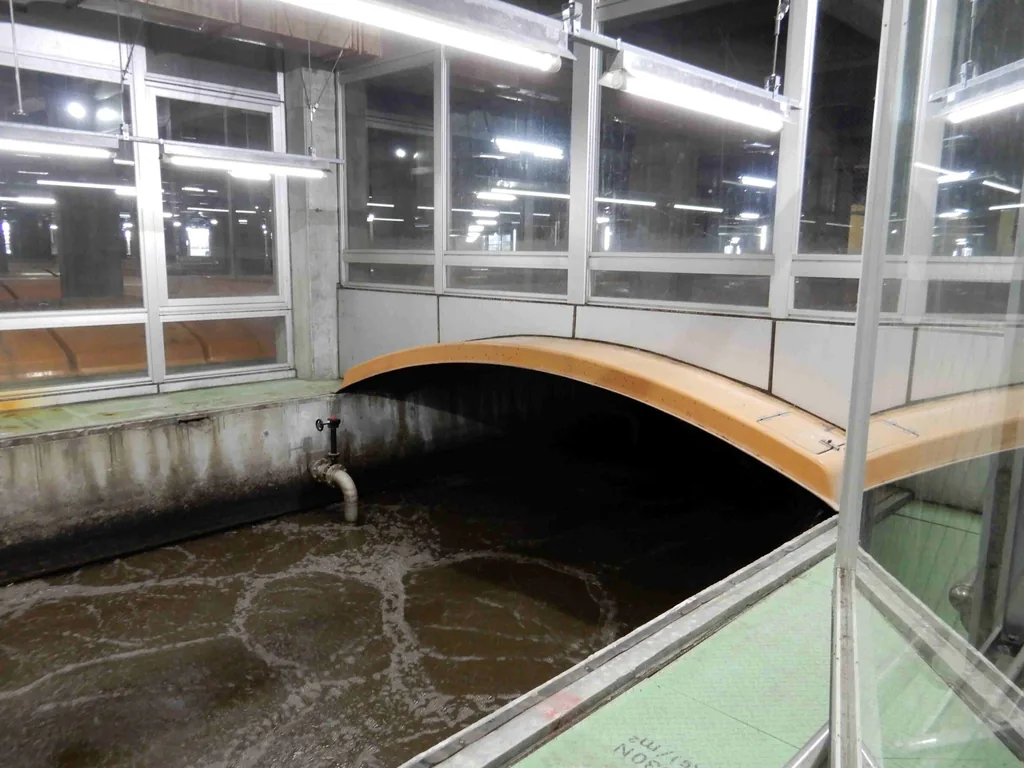
Aeration is the largest energy consumer in a wastewater treatment plant (usually over half the total) and the system that degrades fastest. Blocked or leaking diffusers cut oxygen transfer efficiency, push blower power up, and can put the effluent out of specification.
Roots blower basics: change the gear oil on interval (first service at 500 hours on a new machine, then by duty — generally 2000–4000 hours), using the maker-specified medium-duty gear oil. Keep the level at the centre of the sight glass; never fill it to the top.
Clean or replace the Roots blower inlet filter regularly — a blocked element cuts airflow, raises discharge temperature and lifts power draw. Shorten the interval in dusty locations (e.g. beside plant roads).
Monitor blower discharge pressure. Rising pressure usually means rising aeration resistance — fouled diffusers, water in the pipework, wrong valve positions. If pressure keeps climbing, investigate the aeration system; do not just turn the blower up and force it.
Log blower bearing temperature and vibration monthly. Check the Roots blower timing-gear backlash on interval — excessive clearance brings noise and vibration.
Centrifugal blowers (magnetic- or air-foil bearings) have different priorities: filter cleanliness, the cooling system, and backing up control-system parameters. Avoid frequent starts and stops on magnetic bearings — operate to the maker's instructions.
 FIELD · SCHH-2026
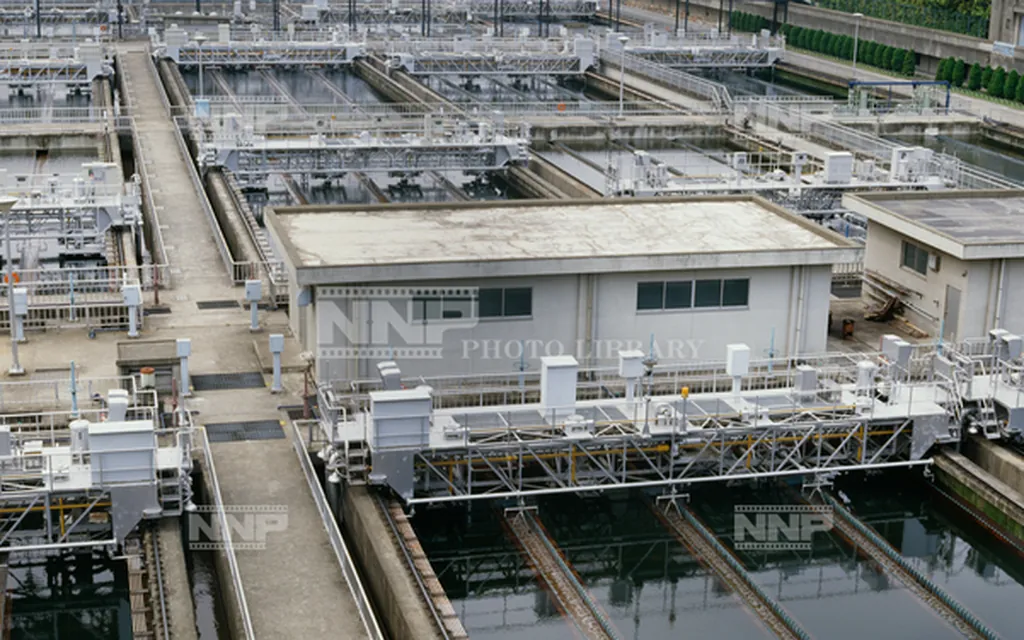
Water in the pipework is a common problem. Condensate collects at low points of aeration branches; enough water plugs diffusers and makes aeration uneven. Pipework should be laid to falls with drain valves — drain them regularly in service.
Keep valves free. If the zone-control valves on an aeration tank seize with rust, airflow cannot be trimmed to need. Exercise and lubricate valves in open, damp settings regularly; replace heavily corroded ones.
Check joints (flanges, couplings) for air leaks. Leaks waste airflow and under-aerate that zone. Find them by ear or with soapy water.
Pipe corrosion: damp, sulphide-laden air eats carbon steel fast. Check wall thickness and rust; where severe, change to stainless or apply corrosion protection.
 FIELD · SCHH-2026
How to tell diffusers are fouling: at the same airflow, surface bubbles grow larger and sparser, blower discharge pressure rises, and dissolved oxygen will not come up. That is the time to check the diffusers.
Fouling causes: microbial growth (biofilm), scale (calcium carbonate), dust (sucked in during shutdown). Remedies: acid washing (scale), high-air scouring (biofilm), cleaning at drain-down. Severe cases need replacement.
How to tell diffusers are broken: abnormal local boil-up (a cluster of large bubbles) and odd DO in that zone. Replace broken diffusers, or air short-circuits through them and other zones run short.
Aeration evenness checks: at drain-down (during overhaul), run a uniformity test and look at the bubble pattern; or in service, take multi-point readings with a portable DO meter — big differences mean uneven aeration.
Diffusers have a service life (generally 5–8 years, depending on water quality and maintenance). As membranes age, oxygen transfer drops and power rises. Assess replacement at end of life — do not wait for total failure.
Dissolved oxygen (DO) is the target of aeration control. Aerobic-tank DO is generally held around 2 mg/L (process-dependent) — too high wastes energy, too low hurts treatment. Calibrate DO meters regularly (air-saturated water or standard solution) and keep probes clean.
DO meters drifting out of calibration is common: scaled probes, torn membranes, exhausted electrolyte. Calibrate about monthly and maintain probes per the maker. If the DO data is wrong, automatic aeration control is wrong.
Control strategy: trimming blower frequency or valve opening on DO feedback saves power versus fixed-frequency running. Ammonia–DO cascade control is better still — provided the instruments are accurate and reliable.
Energy savings need data: log blower power, flow treated and effluent quality, compute aeration kWh per unit of water, and compare with before the retrofit. A saving you cannot measure is a saving you cannot prove.
| Maintenance item | Interval | Method | Acceptance criteria |
|---|---|---|---|
| Blower oil level and colour check | Weekly | Visual check of the oil sight glass | Level at centre; normal colour |
| Blower inlet filter cleaning | Monthly (fortnightly in dusty settings) | Clean or replace the element | No blockage |
| Blower discharge pressure and temperature log | Daily | Panel readings | Pressure steady; temperature normal |
| Blower gear-oil change | 500 h on new machines / 2000–4000 h thereafter | Full oil change | Maker's oil grade and interval |
| Visual aeration-evenness check | Weekly | Bubble pattern on the surface | No local clusters of large bubbles; no abnormal boil-up |
| Pipework draining and leak check | Monthly | Blow down via drain valves; soapy-water leak test | No standing water; no air leaks |
| Valve exercising and lubrication | Quarterly | Cycle fully open and closed; lubricate | Free; not rust-seized |
| DO meter calibration and probe care | Monthly | Calibrate with standard; clean the probe | Readings accurate |
| Diffuser condition assessment | Quarterly (detailed check at drain-down) | Fouling, breakage, ageing | Oxygen transfer normal |
Aeration is the largest energy consumer in a wastewater treatment plant, typically about half of the plant's total electricity use - which means maintaining the aeration system is not just equipment management, it is cost management directly. Aeration energy has two components: the energy the blowers spend compressing and delivering air, and the efficiency with which the diffusers disperse that air into bubbles (oxygen transfer efficiency). Maintenance must hold both: on the blower side keep efficient running (clean inlet filtration, belt or coupling condition, bearing lubrication, surge avoided), and on the diffuser side keep oxygen transfer efficiency (managing diffuser blockage and damage).
The effects of blocked and damaged diffusers can be understood quantitatively: blockage raises air resistance, so blower power rises while air volume falls; damage lets large bubbles escape on a short circuit, oxygen transfer efficiency drops, and dissolved oxygen misses target at the same power draw. Both show up as 'the electricity bill has not fallen, but dissolved oxygen will not rise'. The diagnostic method is zone-by-zone observation: uneven boiling on the basin surface, localised surges of large bubbles (the signature of damage), rising air pressure with falling air volume (the signature of blockage). Run a diffuser uniformity check periodically (visual plus air pressure and volume data), and when problems are found treat them zone by zone - there is no need to replace the whole basin.
Cleaning and replacement of aeration systems follow mature techniques: acid washing (for inorganic scale blockage), alkaline or high-pressure water cleaning (for biofilm and organic blockage), and local replacement of damaged diffusers. The decision to clean rests on trends in air pressure and dissolved oxygen data - air pressure climbing steadily while the blowers are normal essentially confirms diffuser blockage. Setting the cleaning interval also depends on accumulated data; blockage rates differ greatly with water quality (high industrial wastewater fractions foul faster).
Choose by air volume and pressure demand and by the operating strategy. Roots blowers: simple structure, low price, wide pressure adaptability, suited to small and medium volumes - but relatively low efficiency, noisy, and needing periodic maintenance (belts, gear oil). Multi-stage centrifugal: large volumes at moderate efficiency, suited to medium and large plants, with limited turndown (mind the surge boundary). Single-stage high-speed centrifugal (including air foil and magnetic bearing machines): highest efficiency, oil-free with little maintenance, quiet - suited to large-volume continuous duty; the initial investment is high but the long-term savings in electricity and maintenance are clear, and this is the mainstream choice for new build and retrofit in recent years. The decision basis is the load curve: for large units with stable air demand, high-efficiency machines win clearly on whole-life cost; with widely fluctuating loads or small units, Roots or ordinary centrifugal may be more economical. Our practice is to measure the existing blowers first (volume, pressure, current, running hours), calculate the power per unit of oxygen delivered, then compare the retrofit calculations - let the data speak; we do not push the most expensive option.
 FIELD · SCHH-2026
It depends on the type of blockage, diffuser age and the cost comparison. Cleaning suits cases where blockage is mainly biofilm or inorganic scale and the diffusers themselves are still sound (membranes and micro-orifice structures not aged or damaged). Cleaning can be offline (diffusers removed and washed - effective but slow, requiring the basin drained) or online (acid dosing or high-pressure flushing - no shutdown but limited effect); the choice depends on the degree of blockage and the operating schedule. Replacement suits diffusers that have run for years (aged membranes, irreversibly declined oxygen transfer), a high damage rate, or where cleaning cost approaches replacement cost. The data basis for the decision is the improvement in air pressure and dissolved oxygen before and after cleaning - a clear improvement means blockage was the main cause and cleaning pays; a limited improvement means the diffusers themselves have aged and should be replaced. Our advice is to trial on a small area first (clean part of the basin and compare the data), then decide the whole-basin plan, avoiding one big speculative investment.
How well an aeration system performs depends not only on equipment condition but on the control strategy. The most basic scheme is constant air volume - blowers run at a fixed frequency or damper opening and dissolved oxygen is trimmed by human experience. The waste is obvious: influent load differs greatly between day and night, so constant aeration over-aerates at low load (money burned) and under-aerates at high load (effluent compliance at risk). The improvement is dissolved-oxygen feedback control: the DO instrument signal drives blower frequency or damper opening, holding dissolved oxygen in a set band with the blowers working only as needed. This retrofit is not expensive (inverter plus control logic), the energy saving is normally considerable, and effluent stability improves.
Going further, feedforward-plus-feedback control uses influent flow and quality data to anticipate load changes and adjust aeration ahead of time, instead of waiting for dissolved oxygen to drift before responding. This demands more of the control logic and instrument reliability, and suits larger plants with a good automation base. Whichever level you reach, the precondition is reliable instruments - dissolved oxygen probes, flow meters and pressure transmitters must be calibrated and maintained properly; with inaccurate instrument data, automatic control is automatic error-making. That is why instrument calibration sits on our aeration maintenance checklist: the more advanced the control system, the higher the demands on sensor maintenance.
One more layer of synergy deserves mention: linking aeration to sludge condition. Changes in sludge concentration (MLSS) change the oxygen demand, and sludge ageing or bulking also shifts oxygen transfer efficiency. Data sharing between the operations team and the equipment team is critical here - when the process side spots a change in sludge characteristics, the equipment side adjusts the aeration strategy accordingly, and only with both sets of records read together can plant-wide power use and effluent quality be optimised at once. When we write a maintenance plan we spell out the data interface between process and equipment, so the two sides never keep separate books.
 FIELD · SCHH-2026
This article was written in-house by the Industrial Equipment Services Division. The thresholds, intervals and scrap criteria are field-experience values; in practice follow the equipment manufacturer's technical documents, current national standards and special-equipment safety regulations. Inspection and testing of special equipment (cranes, pressure vessels, etc.) must be carried out by a qualified body.
Send us your equipment list and operating conditions, and we will give you a workable inspection and maintenance standard.
 Scan to add Engineer Man on WeChat
 Guangzhou Yujihang Computer Technology Co., Ltd. · www.accpc.com.cn
 Guangzhou Henghuan Technology Co., Ltd. · www.hhrobotics.cn
 Nanchong Henghuan Robotics Co., Ltd. · www.hhrobots.cn