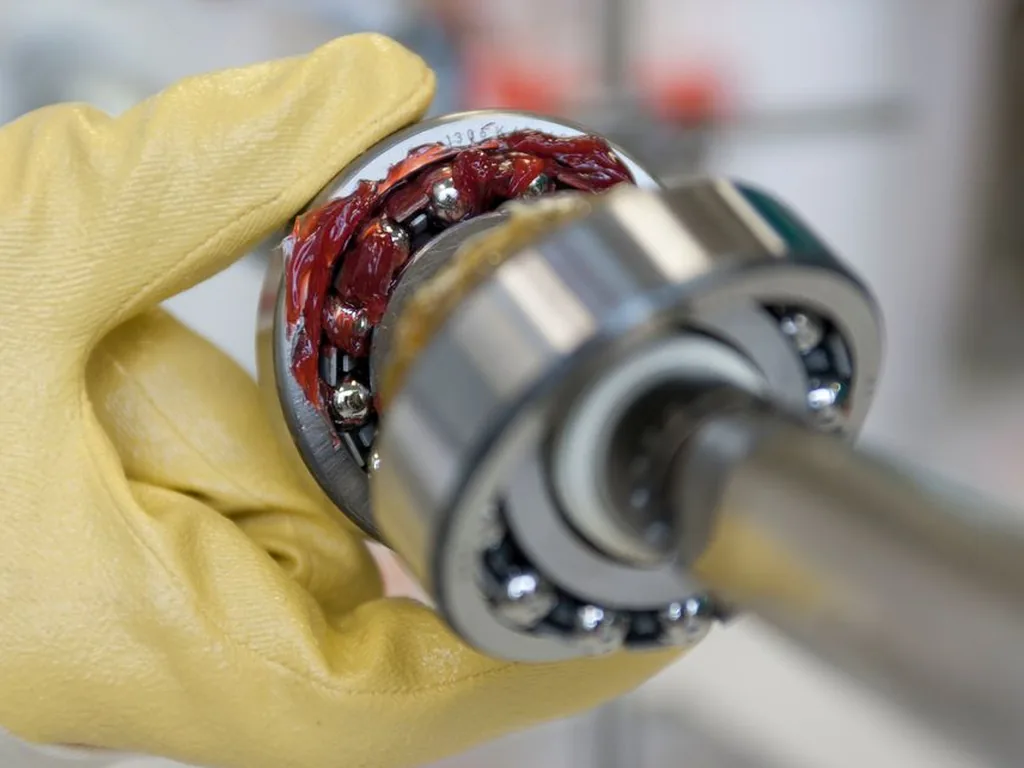
Air compressors are among the biggest electricity users in a plant; power usually accounts for over seventy per cent of their whole-life cost. Good care saves energy as a by-product. Without it you get high-temperature trips first, then higher consumption.
The intake filter is the most neglected maintenance item there is. Once it blocks, intake resistance rises, output drops, power consumption climbs, and the airend runs hot from starved intake. Replace it above 0.05 MPa differential; shorten the interval in dusty shops.
Manage the intake location: keep it away from dust sources and hot air (near a boiler house or in direct sun). Every 3 °C of intake temperature costs about 1% of output. Routing the intake pipe to a cool, clean spot is the cheapest energy-saving retrofit you can make.
The oil separator element needs changing on schedule too. Blocked, its differential rises, oil carry-over increases, discharge oil content goes out of spec, and downstream equipment and pneumatic components suffer with it.
 FIELD · SCHH-2026
Compressor oil is not ordinary engine oil — it has specific oxidation and emulsion resistance requirements. Change intervals depend on oil type and duty (mineral oil 2000 hours, semi-synthetic 4000, full synthetic 8000; shorten all of these for dusty, hot service). Oil used past its life cokes up and blocks oilways and coolers.
Discharge temperature is the key indicator. A screw machine normally runs at 75–95 °C; above 100 °C it should alarm, and above 110 °C it trips. Usual causes of high temperature: low oil level, degraded oil, blocked oil cooler, faulty thermostatic valve, poor room ventilation. Investigate in that order.
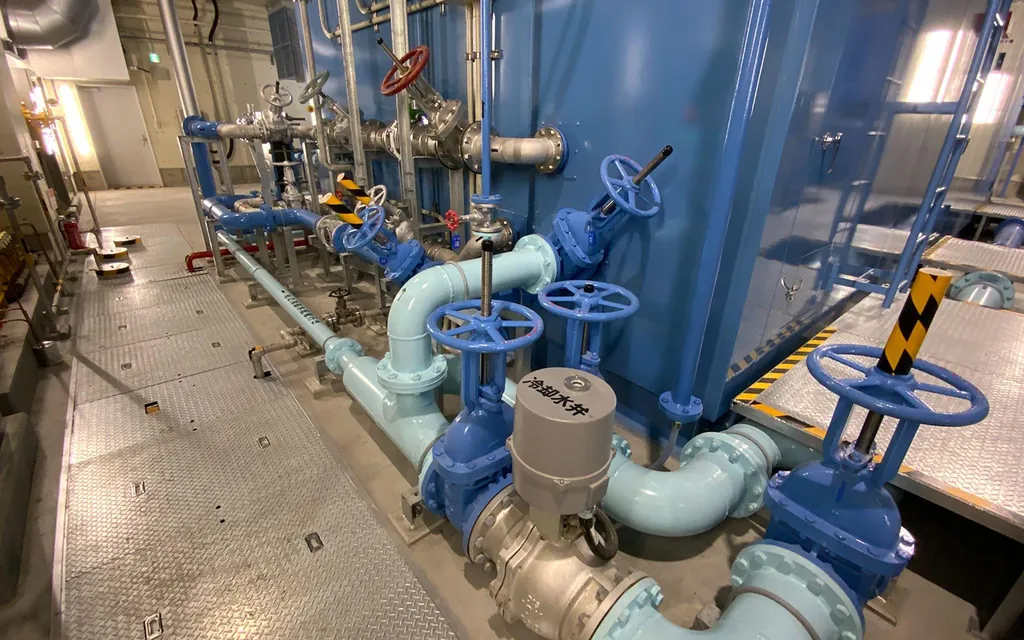
Clean the oil cooler and aftercooler yearly. On air-cooled units blow out with compressed air from inside outward (mind the fins); on water-cooled units check for scale, and chemically clean heavy scaling.
 FIELD · SCHH-2026
Clean the refrigerated dryer's condenser regularly and confirm the auto drain actually drains. A blocked drain sends water down the air line, sharply shortening the life of downstream pneumatic components — and freezing the pipework in winter.
Drain the air receiver as required (once daily, automatic or manual) and keep it inside the statutory periodic pressure-vessel inspection regime. No shortcuts here — it is a legal requirement.
Compressed air leaks are pure waste. Walk the network with an ultrasonic leak detector: a single 3 mm hole at 0.7 MPa typically leaks away over a thousand yuan of electricity a year. Fix what you find — this is the highest-return energy saving available.
Do not creep the pressure setting upward. Every 0.1 MPa of extra discharge pressure costs about 7% more power. Set the pressure to what the points of use actually need — as low as you can go.
| Maintenance item | Interval | Method | Acceptance criteria |
|---|---|---|---|
| Intake filter differential / replacement | Check every 500 h; replace above the differential limit | Differential gauge reading | Differential <0.05 MPa |
| Oil level and colour | Weekly | Visual via the sight glass | Level within marks; oil not blackened |
| Discharge temperature log | Daily | Panel readings | 75–95 °C, never above 100 °C |
| Oil separator element change | Every 2000–4000 h or by differential | Separator differential | Differential <0.1 MPa |
| Compressor oil change | By oil type and duty | Full oil change with flush | No coking, no emulsification |
| Cooler cleaning | Annual | Air-cooled blow-out / water-cooled descale | Fins clear; no heavy scale |
| Receiver draining | Daily | Automatic or manual drain | No standing water or oil |
| Leak survey of the pipework | Quarterly | Ultrasonic leak detection | All leaks dealt with |
Compressed air is called the fourth utility of the plant, and it is one of the most expensive energy forms: the efficiency of converting electricity into compressed air is usually only around ten percent, meaning each unit of compressed air used carries nearly ten times its value in electricity cost. That conversion efficiency determines where the savings lie - not in making compressors more efficient, but in using less and wasting none. Leaks are the biggest single block: in many plants the leakage rate reaches twenty to thirty percent of total output, and all that electricity is simply thrown away.
Leak-finding methods run from simple to professional: listening for hissing in the pipework during quiet periods (shutdowns or weekends), applying soapy water to fittings and valves, and scanning with an ultrasonic leak detector. Ultrasonic detection is the most efficient - one instrument can scan a whole station in a day with precise leak location. After finding leaks, the key is fixing and preventing them: replacing fittings and hoses, renewing seals, choosing self-sealing quick couplers, and designing pipework with fewer joints. The investment in leak repair is usually recovered through the electricity bill within months.
Beyond leaks, three more blocks of energy waste are worth checking. First, pressure set too high: for every 0.1 MPa above need, compressor energy rises by roughly ten percent - yet most points of use need far less than header pressure. Second, long unloaded running: under load/unload control a compressor still draws power while producing no air, and the problem is acute where multiple units run without group control. Third, waste heat discharged directly: compressors turn much of their input power into heat, and recovering it for domestic hot water or process preheating is a solidly returning energy project.
By oil type and duty: mineral oil typically around two thousand hours; semi-synthetic and full synthetic four to eight thousand hours or longer - always subject to the manufacturer's specification. But the interval is only an upper limit; the actual change should follow oil condition - sample it for color and viscosity, test the acid number, and change early where the tendency to carbon formation is clear. Duty factors count too: high ambient temperature, heavy dust and continuous running all shorten the interval. Our recommendation is to set the interval from oil analysis data - neither wasting oil early nor risking the airend late.
 FIELD · SCHH-2026
It depends on the load profile. VSD shines where the load swings widely - demand up and down, speed following it, avoiding the unloaded losses of load/unload cycling; there the savings are real. But where the load sits high and steady (continuous full-load operation, say), a fixed-speed machine's efficiency at full load is perfectly good, the VSD's saving is small, and you have paid extra for the drive. The way to decide is to log the demand curve for one to two weeks first: wide swings call for VSD, steady full load calls for fixed speed. This is where selection is most easily steered wrong by sales talk.
Most plants manage compressed air at the level of "keep each machine from failing", when in fact the larger room for optimization is at station level. First, multi-unit group control: several compressors loading, unloading and sequencing automatically according to demand, so units are not all running inefficiently at part load, and one is not loaded while another idles. The control investment is modest, savings are typically in the high single-digit percent or better, and for multi-unit stations it is one of the fastest-paying projects there is.
Second, tiered supply: classify points of use by pressure requirement, give the few high-pressure processes a dedicated booster or small unit, and serve the majority of low-pressure needs from a stepped-down network. The energy saving from lowering header pressure is system-wide, and the high-pressure points lose nothing. This retrofit requires surveying the pipework - a medium-investment project best done together with any network upgrade.
Third, a data register: air output, electricity consumed, running hours, load factor, pressure fluctuation, and each unit's failure and maintenance history. Once the register exists, the core metric - power per unit of air produced - can be computed, and with it retrofit results, unit efficiency decay and maintenance quality can all be measured. A station without a register can only retrofit by feel and cannot demonstrate the result afterwards - which is why the first thing we do on any energy project is install meters and build the register.
 FIELD · SCHH-2026
This article was written in-house by the Industrial Equipment Services Division. The thresholds, intervals and scrap criteria are field-experience values; in practice follow the equipment manufacturer's technical documents, current national standards and special-equipment safety regulations. Inspection and testing of special equipment (cranes, pressure vessels, etc.) must be carried out by a qualified body.
Send us your equipment list and operating conditions, and we will give you a workable inspection and maintenance standard.
 Scan to add Engineer Man on WeChat
 Guangzhou Yujihang Computer Technology Co., Ltd. · www.accpc.com.cn
 Guangzhou Henghuan Technology Co., Ltd. · www.hhrobotics.cn
 Nanchong Henghuan Robotics Co., Ltd. · www.hhrobots.cn