When a hydraulic system misbehaves, check the oil first. Dirty oil, water in the oil and high oil temperature explain seventy per cent of hydraulic faults, and all three are preventable.
Clearances in hydraulic components run from a few microns to a dozen-plus — finer than a human hair. A single hard 20 μm particle in the oil is enough to score a valve spool. Cleanliness class (ISO 4406 or NAS 1638) is the key indicator.
Servo and proportional systems generally require ISO 4406 18/16/13 or better; ordinary hydraulic systems work around 20/18/15. Follow the machine maker's requirement where one exists; use these figures as reference otherwise.
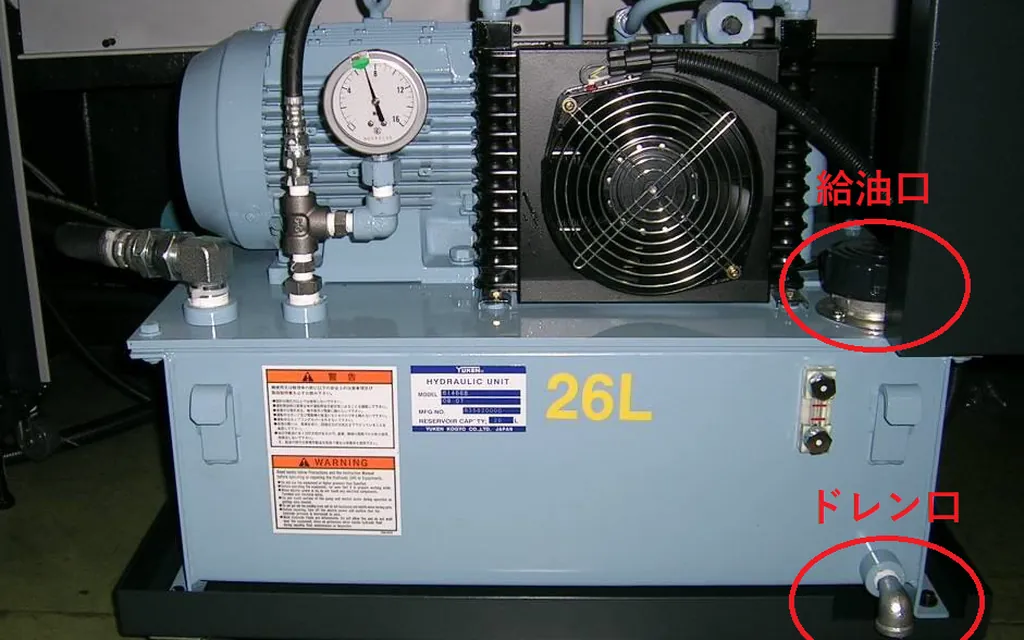
All oil added must be filtered. New oil is not clean oil — drummed new oil often fails system cleanliness requirements. Use a filtered transfer cart (filtration at least as fine as the system filters) and fill through the dedicated port; never just pour.
Fit a filtered breather (air filter) on the tank — never an open vent. The breather is the main route for dust ingress, especially in dusty shops and on outdoor equipment.
 FIELD · SCHH-2026
Elements are changed by differential pressure, not by the calendar. Return-line and pressure-line filters usually have a differential indicator or switch — change the element when the needle hits the red zone or the switch alarms. Do not drag it out.
Check the differential switch itself for failure. Some fail silently; then a blocked element opens the bypass and dirty oil runs straight back to tank — worse than no filter change at all. Function-test the switches periodically.
Change elements cleanly: wipe around the filter head first; pull the old element out mouth-down to keep residual oil from dripping; check the new element's seal is intact, film it with clean oil, and tighten to torque.
Never adjust the bypass valve opening pressure casually. Set too high, elements collapse; set too low, dirty oil bypasses. Keep the manufacturer's setting.
 FIELD · SCHH-2026
Water above 0.1% (1000 ppm) noticeably degrades lubrication and component life: the oil turns milky, components rust, the pump gets noisier. On finding emulsion, trace the water source (cooler leak, water through the breather, a loose tank lid), then dehydrate or change the oil.
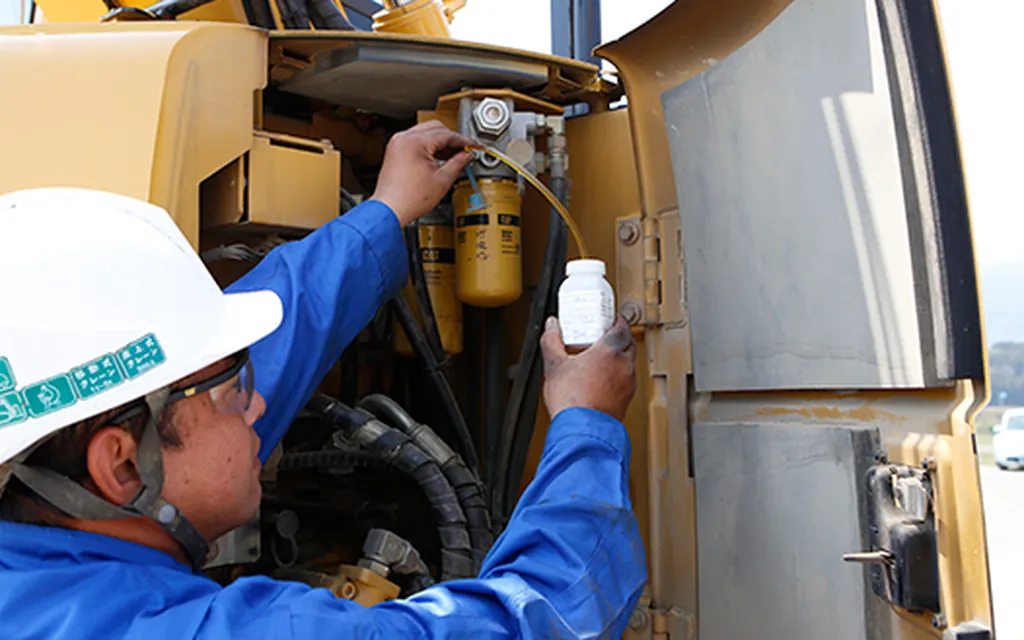
A simple field test for water: heat an oil sample above 100 °C — crackling means water; or let a sample stand and look for separation. Where possible, measure exact water content by Karl Fischer titration.
Keep oil temperature in the 30–60 °C sweet spot. Above 65 °C oxidation accelerates markedly and seals age faster. Rank the usual causes of high oil temperature: a fouled cooler or short water flow, continuous high-pressure relief over the relief valve, excessive internal leakage, wrong oil viscosity. Investigate in that order.
Too cold is bad as well. Winter cold starts mean high viscosity, hard suction and pump cavitation. Systems with heaters must warm the oil above 10 °C before starting, or circulate at low pressure to warm up first.
Oil change intervals are not fixed — they depend on oil type and duty. Mineral oil generally runs 3000–5000 hours or a year; shorten that for harsh duty (heat, dust, continuous running). Fire-resistant fluids (water-glycol, phosphate ester) follow the maker's requirement.
The better way is scheduled oil sampling: viscosity, water, acid number, cleanliness, metal particles. An analysis costs tens to hundreds of yuan — cheaper than blind oil changes and far cheaper than waiting for a failure.
When changing oil, clean the tank — do not just drain the old oil and refill. Sludge and sediment on the tank floor contaminate fresh oil fast. Wipe the tank dry after cleaning and leave no lint behind.
Do not mix hydraulic oils of different brands or types. Their additive packages may be incompatible, and mixing produces sludge or foam. When a brand change is unavoidable, flush the system thoroughly.
| Maintenance item | Interval | Method | Acceptance criteria |
|---|---|---|---|
| Visual oil level and colour | Every shift | Sight glass; sample for colour | Level within marks; no milky emulsion |
| Oil temperature record | Every shift | Panel gauge or IR thermometer | 30–60 °C, never above 65 °C |
| Filter differential check | Weekly | Differential indicator / switch | Below the red zone; switch working |
| Breather check | Monthly | Element cleanliness and condition | Clear, filtered type, fitted |
| Oil sample analysis | Every 6 months (quarterly on critical machines) | Viscosity, water, acid number, cleanliness, metal particles | All within in-service oil limits |
| Element change | At the differential limit or on interval | Clean technique; check the seal | Correct element specification |
| Cooler cleaning | Annual | Descale water side, flush oil side | Heat transfer restored |
| Oil change and tank cleaning | By analysis result or interval | Full change plus tank cleaning | Tank sludge-free; new oil filtered in |
Hydraulic oil contamination does not appear out of nowhere - it enters through five doors, and seal the doors and cleanliness can be held. The first door is filling: new oil itself may not be clean (drummed oil picks up dust and water in storage and transport), and pouring it into the tank unfiltered is actively feeding contamination into the system. The countermeasure is that filling must go through a filter cart or filtration unit, with element rating chosen to the system's requirement - a small investment with the most visible effect.
The second door is the breather. As tank level rises and falls, air moves in and out - an ordinary breather stops only coarse particles, while damp air and fine dust enter freely. The countermeasure is an air breather with desiccant and a fine element, and in heavy dust, a positive-pressure or high-efficiency model. Breathers are consumables: replace them when the desiccant changes color - an item most plants overlook.
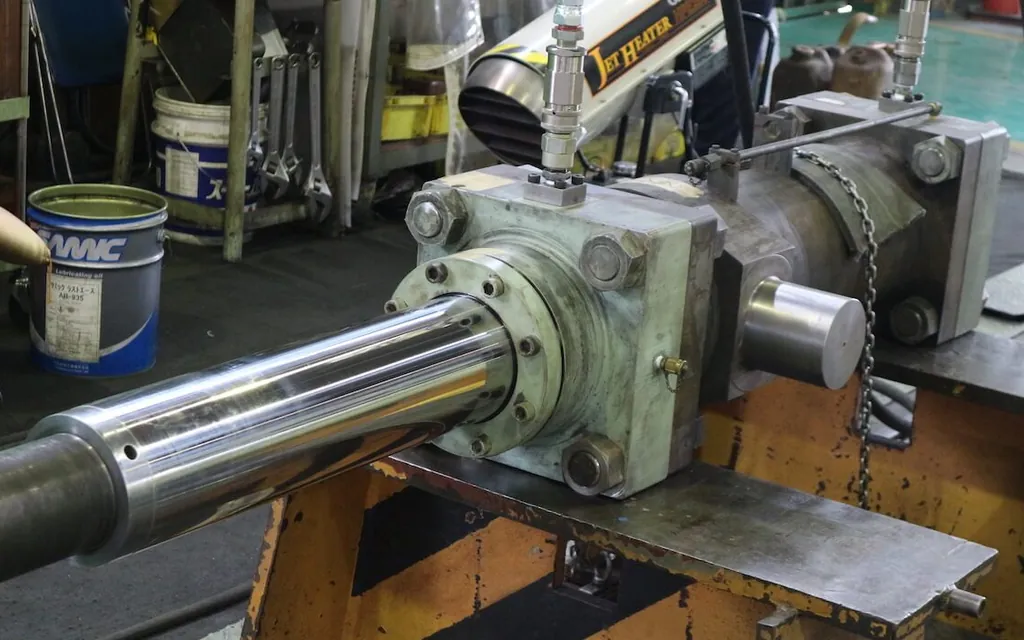
The third door is seals and leak points. A cylinder rod carries out an oil film and brings dust back in; once rod seals and wipers age, contamination worsens, and weeping fittings also draw in air and particulates. The countermeasures: replace wipers on cycle, treat rod surface damage promptly (scores cut up seals), and eliminate leak points quickly. The fourth door is maintenance work - components stripped without cleaning, open line ends left unplugged, parts stored without dust protection: one sloppy job can introduce as much contamination as a year of normal running. The countermeasure is maintenance discipline: clean external surfaces before disassembly, plug line ends immediately after opening, assemble components only after cleaning, and use lint-free wipes on site rather than cotton waste. The fifth door is internally generated contamination - wear particles of metal, gums from oil oxidation, rubber debris from worn seals. This cannot be fully avoided, only continuously removed by filtration - which is why filter selection and change-out are so critical.
Cleanliness is expressed in the ISO 4406 code, whose three digits give the concentration class of particles larger than 4, 6 and 14 microns respectively. The required level depends on the most sensitive component: servo-valve systems are the strictest (typically 16/14/11 or better), proportional-valve systems next (around 18/16/13), and ordinary directional-valve and piston-pump systems more relaxed (around 20/18/15). Always follow the equipment manufacturer's technical documents. Judging the current state requires sending a sample to a lab or measuring on site with a portable particle counter - oil color and clarity alone cannot accurately judge cleanliness, because the fine particles are invisible to the eye, yet they are exactly what wears the components.
 FIELD · SCHH-2026
Changing by differential pressure is the most accurate criterion: change immediately when the differential reaches the specified value - not by calendar. For systems without differential indication, follow the manufacturer's recommended interval, adjusted by oil analysis results. The right way to extend element life is not to delay changes but to control upstream contamination - with filtered filling, an upgraded breather and good seal maintenance, actual element life usually extends itself. Conversely, in a heavily contaminated system an element may block within days; what needs treating then is the contamination source, not more frequent element changes. Removed elements can be cut open to read the contaminant type: metal fines indicate internal wear, fibers indicate seal damage, dust indicates external ingress - all valuable for diagnosis.
Oil monitoring has three levels of increasing investment and value. Level one is visual and simple checks at almost no cost: color change (new oil is usually clear and bright - darkening or clouding indicates oxidation or contamination), signs of emulsification (a water line or milky appearance after standing means water ingress), particulates (sediment and suspended matter), and smell (a burnt odor means overheating and oxidation). Done as a matter of course at sampling, these checks catch obvious problems. Level two is on-site rapid testing: a portable particle counter for cleanliness, a moisture meter for water content, a viscosity comparator for viscosity change. The investment is moderate, testing frequency can be high, and it suits plants with multiple or critical hydraulic units.
Level three is laboratory oil analysis: viscosity, acid number, water content, cleanliness, elemental spectroscopy (wear metals and additive elements) and FTIR (oxidation and contamination type). Cost per sample is modest, the report is professional, and it can judge remaining oil life and machine wear condition. It suits quarterly or semiannual sampling for critical equipment, and deep analysis during fault diagnosis.
The value of monitoring data lies in trends: with the same machine and the same sampling method, a viscosity change beyond the specified ratio, a continuously rising acid number, deteriorating cleanliness, or a rising concentration of some wear metal - every trend points at a specific problem. A single passing result means little; only continuous trend data is the raw material of predictive maintenance. We recommend an oil register for critical hydraulic equipment: every test's data and conclusions filed, cross-referenced with the maintenance records.
 FIELD · SCHH-2026
This article was written in-house by the Industrial Equipment Services Division. The thresholds, intervals and scrap criteria are field-experience values; in practice follow the equipment manufacturer's technical documents, current national standards and special-equipment safety regulations. Inspection and testing of special equipment (cranes, pressure vessels, etc.) must be carried out by a qualified body.
Send us your equipment list and operating conditions, and we will give you a workable inspection and maintenance standard.
 Scan to add Engineer Man on WeChat
 Guangzhou Yujihang Computer Technology Co., Ltd. · www.accpc.com.cn
 Guangzhou Henghuan Technology Co., Ltd. · www.hhrobotics.cn
 Nanchong Henghuan Robotics Co., Ltd. · www.hhrobots.cn