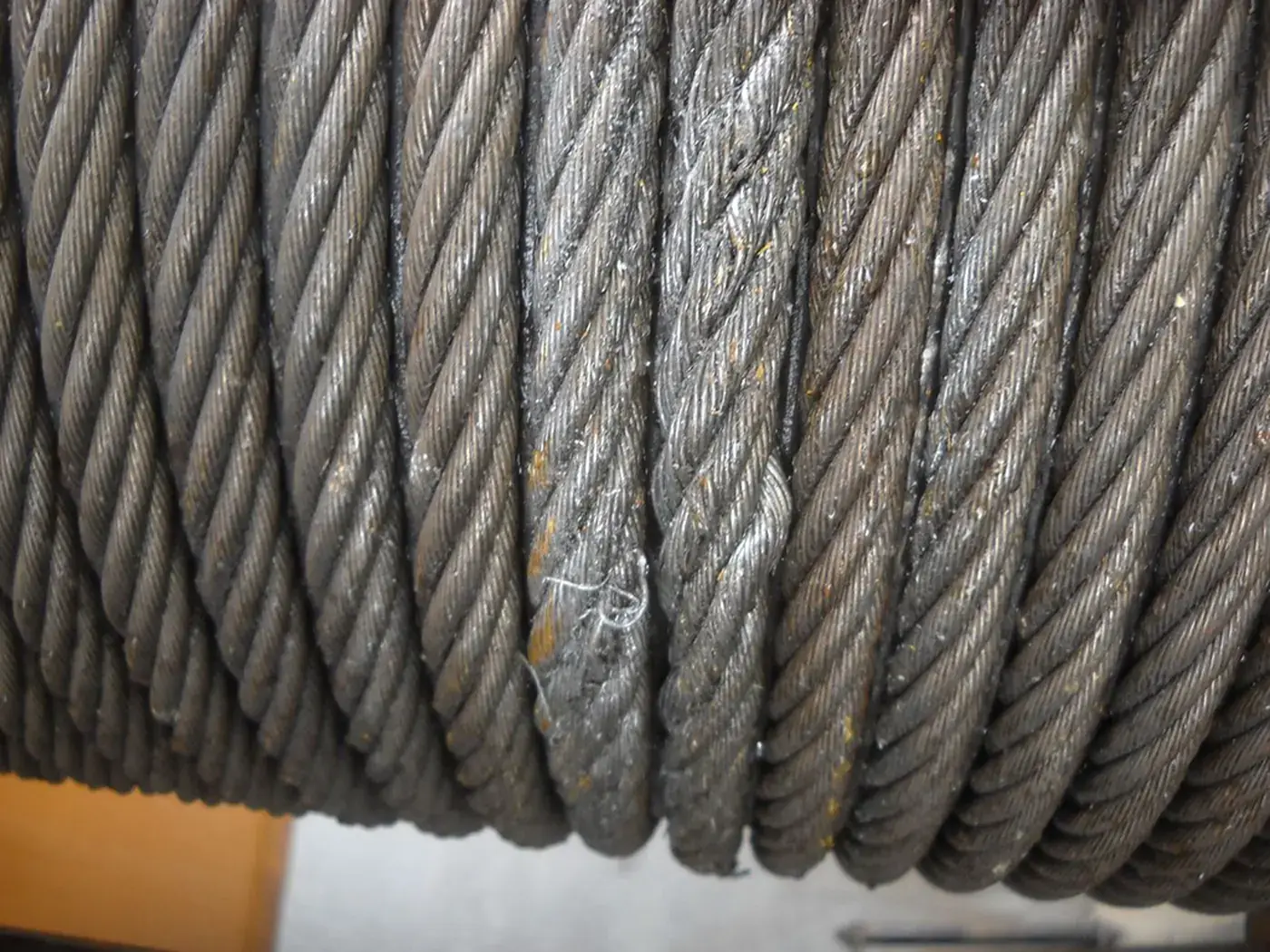
Electric hoists are the most numerous and most used lifting equipment in a plant, and usually the least looked after. Many are only remembered once the wire rope is a bird's nest and the brake is slipping — by then the cost has doubled.
A wire-rope hoist spools badly usually because: the rope guide is worn or broken, it hoists with a slack rope (reeling before the rope is taut), or it side-pulls (jogging with the load not directly below the hoist).
The rope guide is a wear part; replace it once worn. Its job is to lay the rope in order in the drum grooves — when it fails, rope piles and jams, and then crushes the wire rope.
Operating habits matter more than fixing hardware: side-pulling is the common root of both rope disorder and accidents. Ban it explicitly in the operating procedure and hammer it home in crew training. This costs nothing but is the hardest thing to enforce.
A badly worn drum groove stops the rope seating properly; once groove wear exceeds one rope diameter, consider repairing or replacing the drum.
 FIELD · SCHH-2026
Measure load-chain stretch: take the total length over 10–15 links and compare with the cumulative standard pitch. Discard above 5% elongation. Note this is plastic stretch, not elastic.
For chain wear, look at the link contact faces; discard once wear exceeds 10% of the original diameter. Assess chain and sprocket (pocket wheel) together — a sprocket pocket worn hook-shaped speeds up chain damage.
Lubricate the chain with chain oil on the link contact points. Do not use thick grease — it collects dust.
A twisted, knotted or bent chain must be dealt with, never forced into use. A twisted chain loads unevenly on the sprocket and can snap suddenly.
 FIELD · SCHH-2026
An electric hoist's hoist brake is usually built into a conical-rotor motor or is a separate electromagnetic brake. Test before the shift: lift the rated load 100–200 mm, hold, and watch the drift. Significant drift means adjust or repair — never run with a fault.
Check brake-ring (friction lining) wear; deal with wear at the limit mark or any oil contamination. The brake faces must be oil-free — clean oil off with solvent and trace the leak source.
Test the upper and lower limits before every shift. A failed hoist limit means an over-hoist or over-lowering; over-lowering lets the rope reverse-wrap on the drum, which is a real pain to sort out.
Frequent jogging markedly shortens brake life. If the process needs frequent jogging, specify a heavy-duty class at selection, or cut the jogging out of the process.
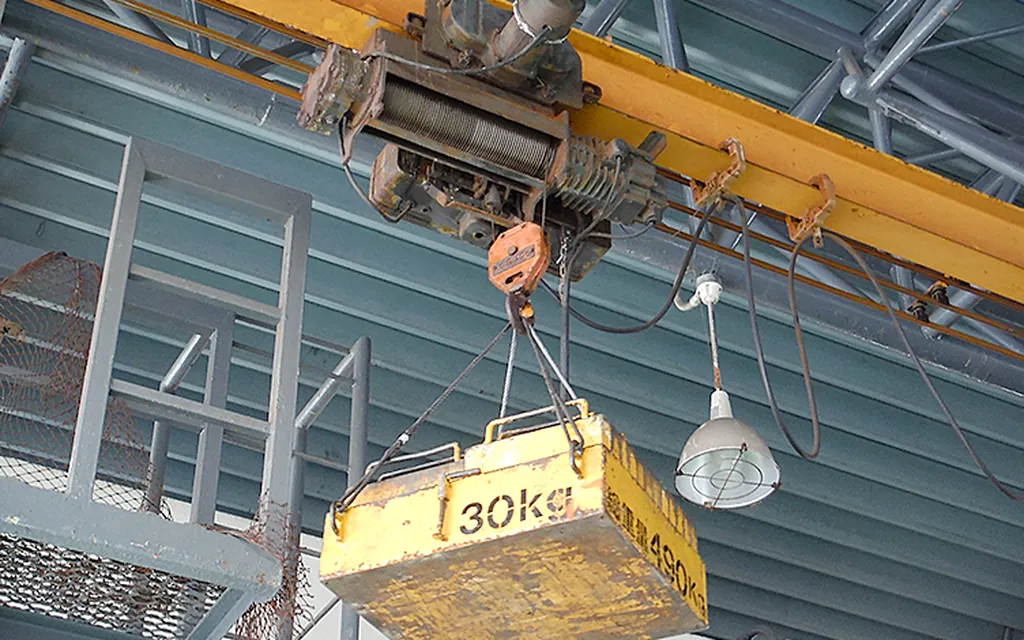
Overloading is strictly forbidden. The hoist usually carries a rated-load plate; overloading not only damages the equipment but permanently deforms structural parts. Keep the overload limiter effective.
Side-pulling is strictly forbidden. Lift with the load directly below the hoist; side-pulling creates a horizontal force that damages the rope guide, the rope and the structure — and is the main cause of rope disorder.
Never stand under a suspended load, and keep a watch during lifting. This is safety procedure — cover it in every training session.
A hoist unused for a long time must have its insulation tested, brake tested and limits checked, and be run once unloaded to confirm normal, before returning to service.
A hoist is part of the lifting-equipment family, falls under special-equipment management, must be periodically inspected per regulation, and must be operated by certified personnel.
| Maintenance item | Interval | Method | Acceptance criteria |
|---|---|---|---|
| Pre-shift brake and limit test | Every shift | Rated-load test lift; limit function | No drift; limits effective |
| Wire rope / chain visual check | Weekly | Broken wires, wear, kinks, deformation | Below the discard criterion |
| Rope guide check | Monthly | Wear, integrity, rope ordering | No damage; rope spools neatly |
| Chain stretch measurement | Monthly (chain hoists) | Total over 10–15 links vs standard | Elongation <5% |
| Drum groove check | Quarterly | Wear depth | Wear <one rope diameter |
| Brake-ring wear check | Quarterly | Thickness, oil contamination | Short of the limit; oil-free |
| Chain lubrication | Monthly | Chain oil on the contact points | Oil film present; not dust-catching |
| Insulation and full inspection | Before restart after long idle / yearly | Insulation, brake, limits, structure | All normal |
Electric hoists are the most numerous lifting devices in a plant and also a category with a relatively high incident rate. The reason is not the equipment itself but the state of management. Three typical features: first, 'anyone operates them' - there is no fixed operator, whoever in the shop needs one presses the button, and training coverage is low; second, 'they are used everywhere' - main shops, stores, maintenance sites and ad-hoc lifts all have hoists, so duty is complex and frequently beyond the design purpose; third, 'nobody owns them' - an overhead crane has an operator and a dedicated inspector, while electric hoists are usually classed as 'small equipment', with low inspection frequency and incomplete records. Large numbers, casual use and weak management stacked together naturally concentrate the risk.
The management response must target those three points. Against 'anyone operates them', provide training and authorisation: who may use them, when they must not be used (overloading, side pulling, standing under the load, insecure slinging), and how to handle abnormalities - authorise people after training and post the authorised list. Against 'they are used everywhere', build a register and classify: number every hoist in the plant and file it, grade them by usage frequency and location, and raise inspection frequency for high-use and critical locations. Against 'nobody owns them', assign responsibility clearly: daily checks belong to the operating team, periodic checks to equipment management, statutory inspection to the compliance register - three layers written out plainly, with checklists designed to be finished in ten minutes.
Inspection priorities for an electric hoist resemble those for an overhead crane but are more simplified; the core is four items: wire rope (broken wires, deformation, spooling neatness), hook (throat opening, hook latch, free rotation), brake (slip - the single most critical test on a hoist) and limit switches (up and down limit operation tests). These four are checked every time, and the rest covered on schedule. The slip test method: hoist the rated load (or a known weight close to it), hold it still for one minute, and measure how far the load slips; beyond the specified value the brake is unfit and the hoist must be taken out of service for repair. This test needs test weights and measurement, and many plants never do it - missing precisely the most critical indicator.
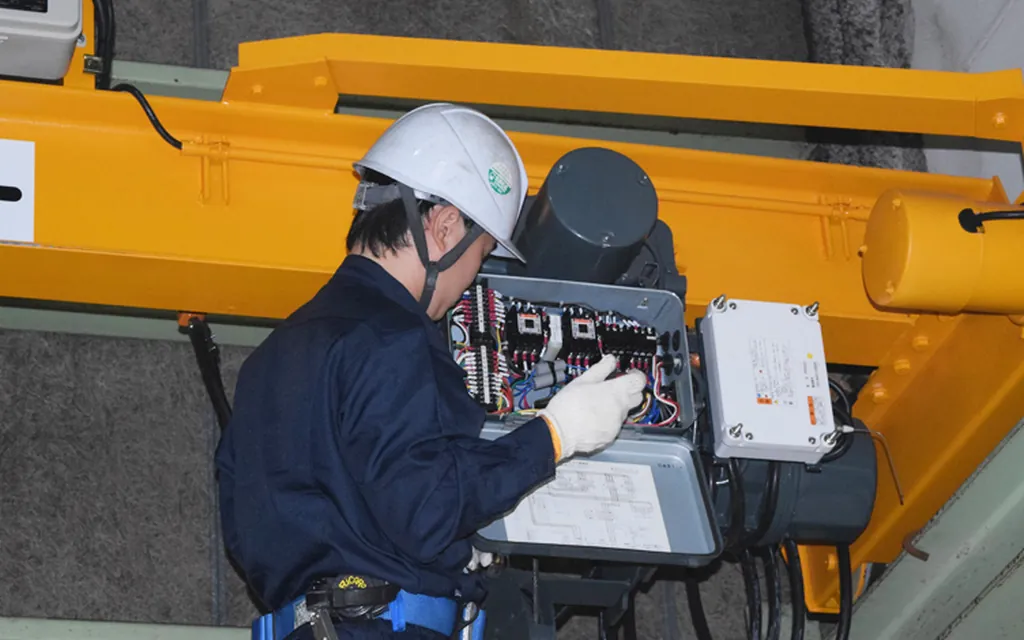
In three layers: the pre-shift check is done by the operator, narrowed to the four core items (rope or chain condition, hook and latch, a preliminary brake check, limit switches) and finished in two or three minutes; the monthly periodic inspection is done by equipment management and includes an actual brake slip test, electrical checks and structural tightening; the annual inspection is more comprehensive, covering strip inspection (depending on duty), insulation and earthing tests, and support for the statutory inspection. For hoists of high duty class in frequent use, tighten the monthly check to fortnightly or set frequency by running hours. File all inspection records centrally and close out abnormal items. Statutory inspection intervals follow the special equipment code and are carried out by qualified bodies - the user's own daily checks cannot replace statutory inspection.
 FIELD · SCHH-2026
You can, and the method is the slip test: hoist the rated load (or a known weight), stop at a set height, hold still for one minute, and measure how far the load slips. The acceptance criterion follows the equipment technical documents - generally the slip must stay within the specified limit. The test needs two conditions: a test load of known weight (a metrologically verified mass will do) and safety measures (isolating the test area, keeping people away from under the load). We recommend testing quarterly or half-yearly, and always after replacing brake linings. Simple day-to-day warning signs: visible slip while hoisting, slow creep after stopping, abnormal friction noise when braking, brake ring wear beyond the limit (check through the inspection port or by strip inspection as specified) - any one of these calls for a test and overhaul. The brake is the most critical safety component on a hoist; one extra test is never wasted.
Many hoist problems are sown at the selection stage. Selection must match three dimensions: duty class (defined by frequency of use and load state - occasional lifting in a maintenance shop and high-frequency lifting on a production line have completely different duty class requirements, and under-specifying means short life and frequent faults); environmental conditions (normal shops, high-temperature duty, dusty, corrosive or outdoor environments call for different protection ratings and configurations - heat shielding for high temperatures, anti-corrosion treatment for corrosive environments, explosion protection requirements for dusty areas); and mode of use (fixed, monorail trolley or double-girder trolley, each with different travel mechanisms and power supply arrangements).
Common selection mistakes come in two kinds: first, specifying too low a duty class - the price is saved but faults are frequent and life is short, so whole-life cost is actually higher; second, environment mismatch - an ordinary hoist used in corrosive or high-temperature duty corrodes and ages its insulation several times faster. When upgrading or replacing, we look first at the failure modes of the existing equipment: if failures concentrate in duty-related areas (rope corrosion in a corrosive environment, brake wear under high-frequency use), the selection can be judged mismatched, and the replacement should be upgraded rather than copied as-is.
One more point on mode of use: risk management for ad-hoc lifting (using a hoist to lift components at a maintenance site) is often ignored. Ad-hoc lifts need a plan: lift point selection and capacity confirmation, sling and rigging inspection, exclusion zone setup, and a named signaller. A hoist being fit does not make the lift safe - work management is another layer of defence. We turn the safety essentials for ad-hoc lifting into a one-page reminder card and hang it on the maintenance team's board - a low-cost reminder like this works better in practice than a single training session.
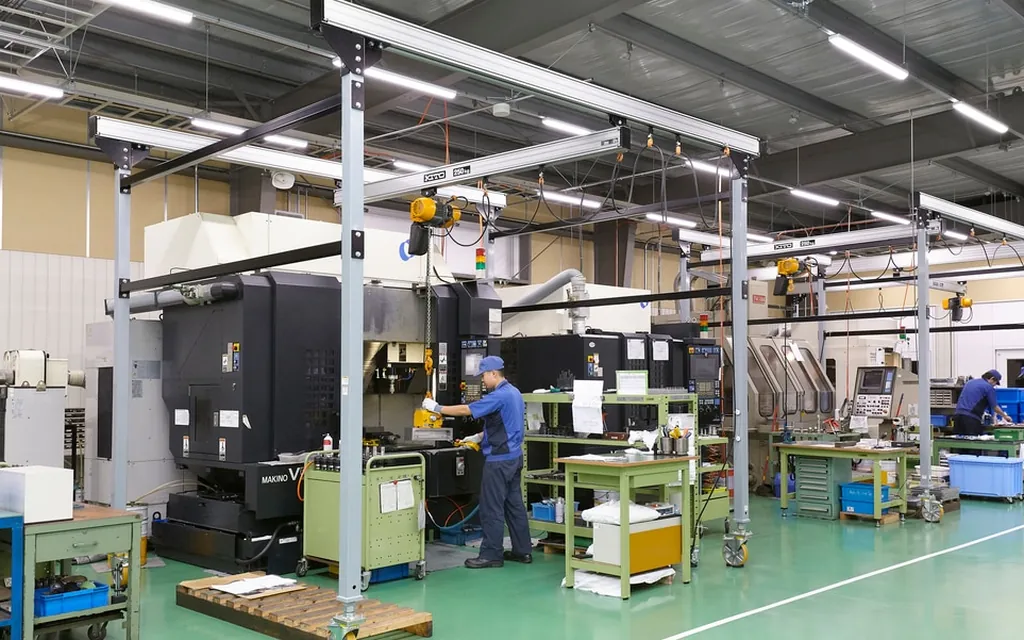 FIELD · SCHH-2026
This article was written in-house by the Industrial Equipment Services Division. The thresholds, intervals and scrap criteria are field-experience values; in practice follow the equipment manufacturer's technical documents, current national standards and special-equipment safety regulations. Inspection and testing of special equipment (cranes, pressure vessels, etc.) must be carried out by a qualified body.
Send us your equipment list and operating conditions, and we will give you a workable inspection and maintenance standard.
 Scan to add Engineer Man on WeChat
 Guangzhou Yujihang Computer Technology Co., Ltd. · www.accpc.com.cn
 Guangzhou Henghuan Technology Co., Ltd. · www.hhrobotics.cn
 Nanchong Henghuan Robotics Co., Ltd. · www.hhrobots.cn