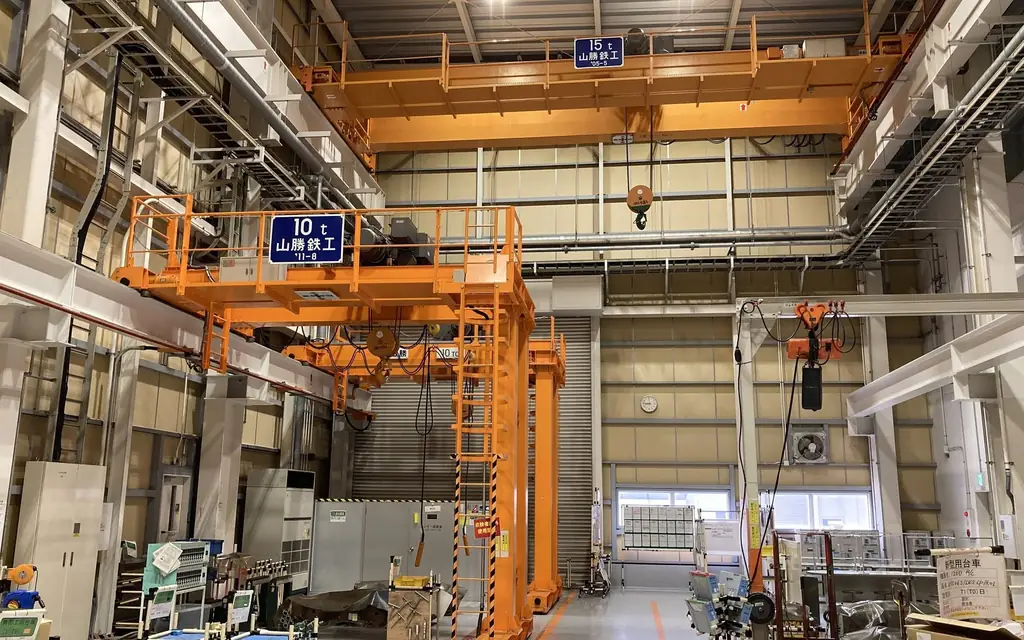
Crane inspection has both regulatory requirements and technical essentials. The regulations are the floor (periodic statutory inspection, certified operators); the technical essentials mean finding the hazards before the inspection does.
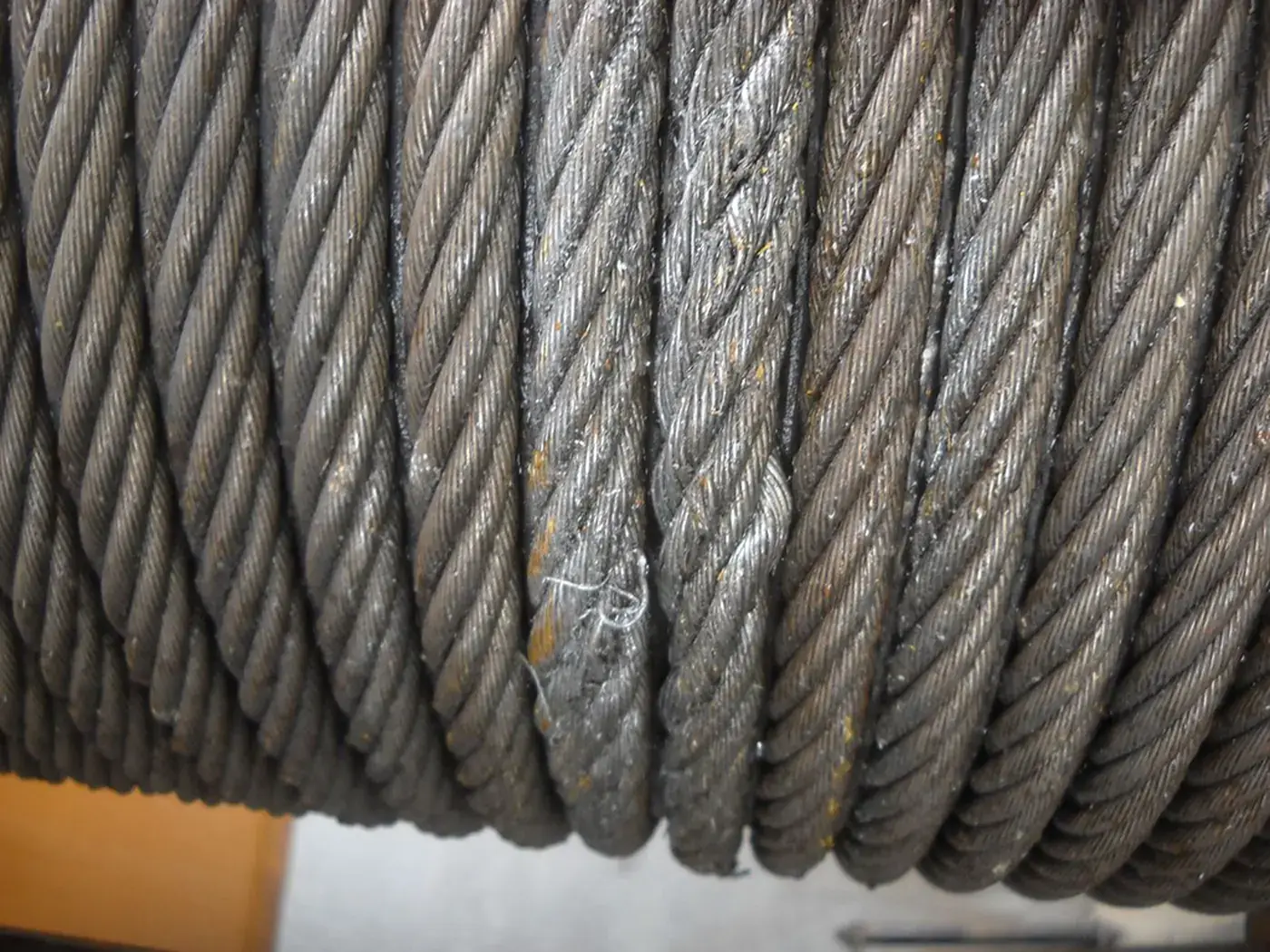
The wire rope is the crane's first line of safety. The discard criteria (see GB/T 5972, the crane wire rope care code) turn on four things: broken wires, wear, deformation and corrosion.
Broken wires: discard once broken wires in one lay length reach 10% of the total (5% for hot metal or hazardous loads). Inspect length by length, especially the sections running over sheaves and the drum, and the rope terminations — that is where breaks concentrate.
Wear: discard once wire diameter is worn down by 7% of the original. Measure with calipers, do not eyeball it. Wear often comes with broken wires, and the combined judgement is stricter.
Deformation and corrosion: discard immediately on any birdcaging, core extrusion, kink, crushing or bend; discard on pronounced surface pitting or loose wires. These deformations are visible to the eye, and once seen the rope must not be used again.
Lubrication: dress the rope regularly with dedicated wire-rope grease (not ordinary butter grease), after brushing off old grease and dust with a wire brush. A well-lubricated rope lasts more than twice as long.
 FIELD · SCHH-2026
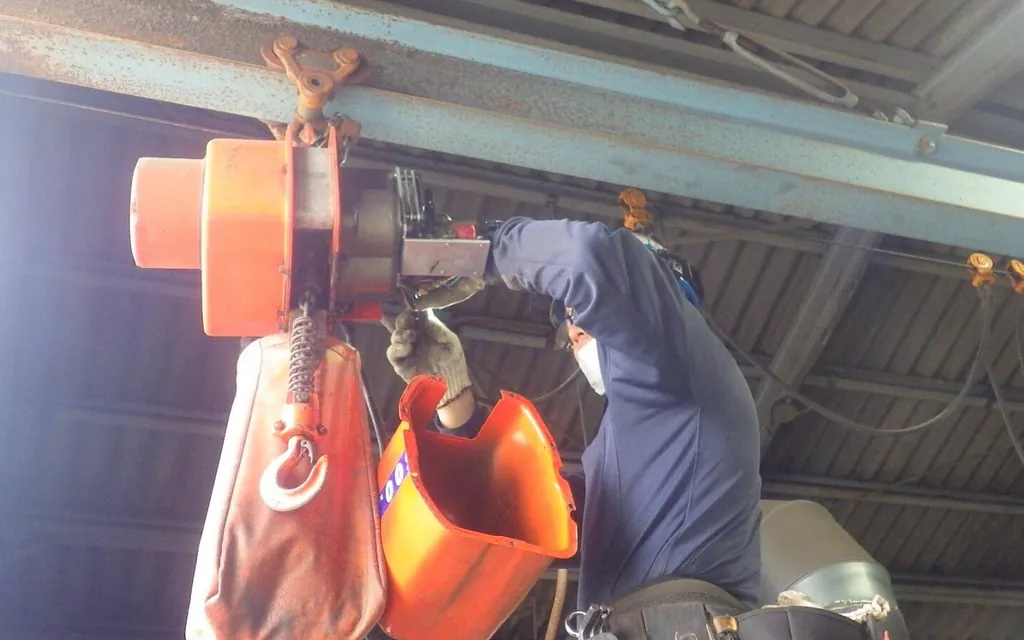
Flaw-detect the hook yearly (magnetic particle or dye penetrant), and in daily checks look for cracks, deformation and increased throat opening. Discard when the throat opening exceeds 15% of the original or twist exceeds 10°.
The hook's safety latch must be intact and working; a missing or failed latch is dealt with immediately. It is a mandatory inspection item and also the part most often removed — taken off for convenience, and then an incident becomes a major one.
Lubricate the hook nut and thrust bearing, and check that the hook swings freely. A hook that will not turn freely puts torsion into the wire rope.
For sheaves, check groove wear: discard when the groove wall is worn 20% of its original thickness, or uneven groove wear reaches 3 mm. Uneven groove wear makes the rope wear off-centre and fail faster. Sheaves must turn freely; a stuck sheave simply grinds the rope.
 FIELD · SCHH-2026
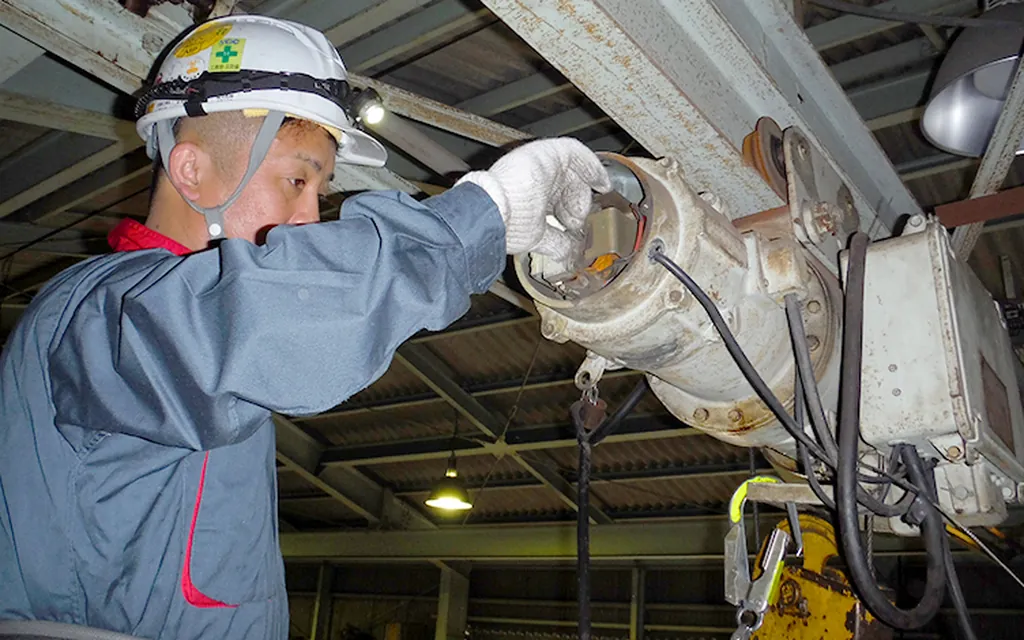
Test the hoist brake before every shift: raise an empty hook to a set height, stop, and watch for drift. Drift beyond the limit (for hoists, generally no more than the allowable per-minute drift for the speed) means adjust or repair immediately.
Check brake-lining wear: replace once wear reaches 50% of the original thickness or rivets show. The brake wheel surface must keep enough friction; clean off any oil contamination with solvent — there must be no oil on it.
Brake springs must be crack-free, and brake clearance set to the maker's standard. Too much clearance gives sluggish braking or none at all; too little causes friction heat and dragging.
On hydraulic-thruster brakes check oil level and leaks; on electromagnetic brakes check coil temperature rise and operating sound. Brake action must be crisp — anything sticky or sluggish gets stripped and inspected.
The brake is the one component you must never run with a fault. On finding a problem, take it out of service on the spot, tag it and report it — do not try to manage with "we'll just be careful".
Test the hoist upper limit before every shift: raise the empty hook slowly and confirm it cuts the hoist-up control circuit automatically at the limit. A failed limit switch is the same as none — a hook hitting the top can snap the rope.
Test the bridge and trolley travel limits periodically as well. Buffers and end stops must be intact, and end stops strong enough to take the running impact.
Calibrate the overload limiter (load indicator) as required, with displayed vs actual load error inside tolerance. The alarm and cut-out set points must not be raised casually.
Check item by item: audible-visual alarms, emergency stop buttons, the cab fire extinguisher, and insulation protection (for molten-metal handling). These are all mandatory items at statutory inspection.
| Maintenance item | Interval | Method | Acceptance criteria |
|---|---|---|---|
| Pre-shift safety check | Before every shift | Brake test, limit test, rope visual | No brake drift, limits working, rope normal |
| Detailed wire rope inspection | Monthly | Broken wires by section; calipers on wear; check deformation | Below the discard criterion |
| Wire rope lubrication | Quarterly | Brush off old grease, apply rope grease | Grease film present, no caked dust |
| Hook and sheave inspection | Monthly | Cracks, deformation, throat opening, groove wear | Throat opening increase <15%; sheave groove wear <20% |
| Hook flaw detection | Annual | Magnetic particle or dye penetrant | No cracks |
| Brake adjustment and lining check | Monthly | Clearance, wear, brake wheel surface | Lining wear <50%; free of oil contamination |
| Limit switch and overload limiter calibration | Quarterly / per regulation | Function test and load calibration | Accurate operation, error within limits |
| Statutory periodic inspection | Per special-equipment rules (generally 2 years) | Carried out by a qualified body | Inspection certificate obtained |
The wire rope is the only load-bearing member on a crane with no backup - a failed brake still has redundancy in the design, but a broken rope means the load drops straight down. That is why rope discard criteria are rigid: there is no room for 'using it a little longer'. The core criteria are several: broken wire count (counted within a specified lay length; once it reaches the number in the standard the rope is scrapped, and the limit differs by rope construction), diameter reduction (wear and corrosion reducing the diameter below the nominal value by more than the specified proportion means scrapping), deformation (basket deformation, core protrusion, kinking, or a bend set into a dead angle - any of these means scrapping regardless of broken wire count), and corrosion (surface corrosion at pitting level means downgrade or scrap).
Applying discard criteria on site has two difficulties. The first is the counting method: broken wires must be counted within a specified lay length - not a casual look at one stretch, and not the total along the whole rope. Record by section during inspection, especially the lengths running over the drum and sheaves and the rope terminations, where loading is most complex and broken wires concentrate. The second is the seriousness of the decision: operators and inspectors often think 'only a few wires are broken, it can still work', but broken wires develop at an accelerating rate - the load transfers to the adjacent wires, their stress rises and fracture advances faster. The figures in the discard standard already include that acceleration factor; continuing to use a rope beyond the limit is a gamble on probability.
One more point is easily overlooked: a wire rope must be replaced as a whole length - it cannot be spliced into service, and an old rope cannot be turned end for end and kept (the most worn section still sits at the most heavily worked position). A new rope must be pre-stretched and observed through its run-in period as the code requires, and the workmanship of the terminations (wedge sockets, clamps, splices) bears directly on safety - the terminations must be checked every time.
Cranes are classified as special equipment, and the statutory requirements cover use registration, periodic inspection (carried out by a qualified inspection body at the interval in the code, normally once a year), certified operators, and complete safety technical files. Day-to-day checks and statutory inspection are two layers: the daily checks (pre-shift, monthly and annual self-inspection) are done by the user to find and fix problems in time, while statutory inspection is third-party compliance verification, and its report lists findings requiring rectification. The two are complementary - if daily checks are done properly, statutory inspection passes first time; if they are a formality, inspection throws up piles of findings and both the rectification period and the cost rise. Our service position is to make the daily-check layer solid, and we also take on the pre-inspection survey and rectification support.
 FIELD · SCHH-2026
There is no fixed interval, only discard criteria - wire rope is replaced on condition, not on time. Service life depends on duty class, load factor, environment (corrosion, heat, dust) and maintenance quality; the same rope can last several times longer under one duty than another. The right practice is to keep an inspection register: record the broken wire count, diameter readings and deformation at every check, and the trend in the data tells you when to replace. For reference, ropes on high duty-class cranes may need replacing within a year or two, while light-duty ropes can last many years. Our advice is to inspect at the specified interval with strict records, replace immediately once discard criteria are met, and hold a spare rope in advance so production is never waiting on supply.
The hook has three inspection points: the dangerous sections of the hook body (scrap when wear exceeds the specified proportion), the shank thread and nut (cracks, deformation, looseness), and the throat opening (scrap when the increase exceeds the specified value). Repair welding on a hook is strictly forbidden - welding changes the material structure and stress distribution, and the strength of a welded-repair hook cannot be guaranteed; this is explicitly prohibited. The hook latch must be confirmed functional, and a missing or ineffective latch must be fitted - this is a focus item in recent inspections and statutory surveys.
The common failures of sheaves are groove wear and bearing damage. Uneven groove wear loads the rope off-centre and accelerates rope wear; a groove wall worn beyond the specified thickness means scrapping. A sheave bearing short of grease or damaged shows up as stiff rotation and noise - a rope running over a sheave that does not turn is effectively sliding friction, and rope wear multiplies. Sheave inspection must confirm free rotation, no abnormal groove wear and normal bearing lubrication.
On the drum the inspection points are groove wear and wall thickness. Worn grooves let the rope spool disorderly, with overlapping and crushing - a common cause of abnormal rope damage. On multi-layer spooling also check that the rope lays neatly: disordered spooling not only damages the rope but can cause sudden jamming and shock loading. Drum cracks and wall thinning are judged against the standard, and a cracked drum must never be weld-repaired and kept in service. These three parts and the rope form a matched friction pair, so they must be checked together - inspecting only the rope and not the grooves means a new rope will wear out quickly too.
 FIELD · SCHH-2026
This article was written in-house by the Industrial Equipment Services Division. The thresholds, intervals and scrap criteria are field-experience values; in practice follow the equipment manufacturer's technical documents, current national standards and special-equipment safety regulations. Inspection and testing of special equipment (cranes, pressure vessels, etc.) must be carried out by a qualified body.
Send us your equipment list and operating conditions, and we will give you a workable inspection and maintenance standard.
 Scan to add Engineer Man on WeChat
 Guangzhou Yujihang Computer Technology Co., Ltd. · www.accpc.com.cn
 Guangzhou Henghuan Technology Co., Ltd. · www.hhrobotics.cn
 Nanchong Henghuan Robotics Co., Ltd. · www.hhrobots.cn