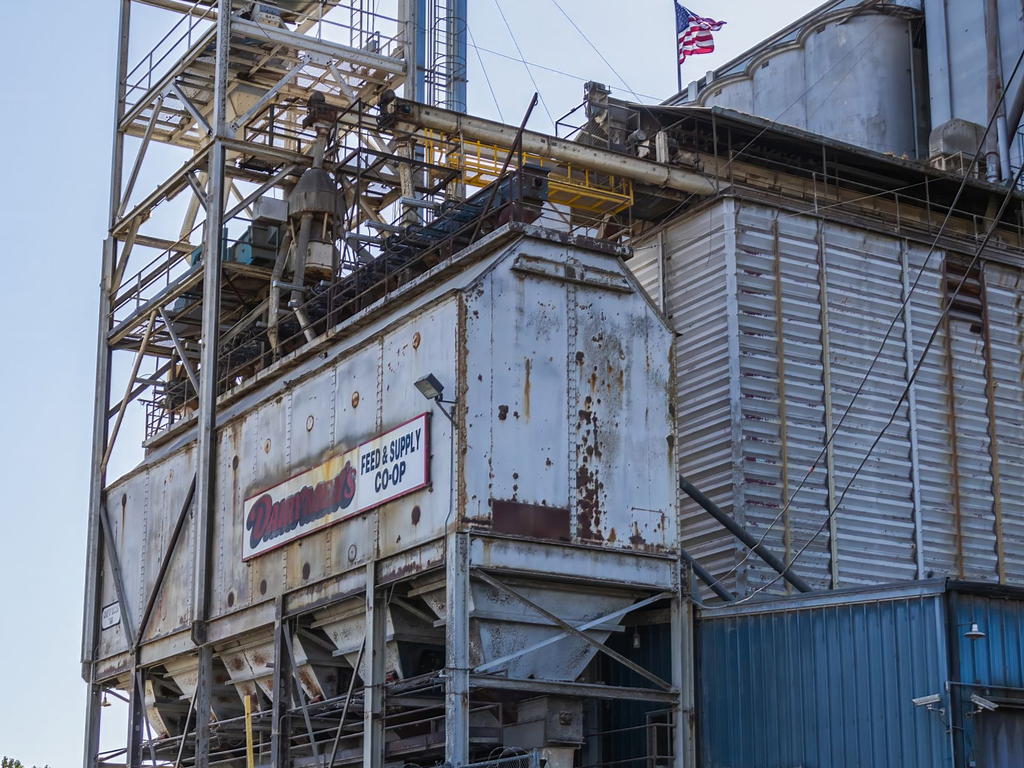
The grinding section of a feed, grain or biomass plant is a high-risk area for dust explosions. A dust explosion is not a low-probability event: it happens once concentration, ignition source, oxygen and confinement all come together. The job of maintenance is to make sure they never do.
The dust collector is the workhorse of concentration control. On a pulse-jet baghouse check: bag damage (dust at the outlet means a torn bag), pulse valves and the cleaning system, hopper bridging or plugging, and whether the differential is in range. High differential means plugged bags; low differential can mean a torn bag or bypass.
The collector's cleaning must be effective. Incomplete cleaning raises bag resistance, cuts suction, and shop dust concentration climbs. Set the pulse controller's interval and pulse width to the dust characteristics and do not change them casually.
Housekeeping matters more than equipment. Settled dust is the fuel of a secondary explosion — the primary blast lifts dust off floors and equipment into a wider cloud, and the secondary explosion is often worse than the first. Clean by vacuum (explosion-rated) or wet methods; never blow down with compressed air, which simply makes a dust cloud by hand.
Cleaning must cover everything: floors, equipment surfaces, beams and columns, tops of pipes, cable trays, light fittings. Dust up high is the most overlooked and the most dangerous.
 FIELD · SCHH-2026
Electrical equipment in hazardous dust areas must be explosion-protected, with the protection level and temperature class matched to the dust. Non-rated motors, ordinary switches and ordinary lighting inside a hazardous area are a serious hazard — survey and replace them.
Electrical runs must be sealed in conduit, with flameproof faces intact. Rust, damage or missing bolts on a flameproof face defeat the protection — inspect regularly.
Static earthing is a basic requirement of dust explosion protection. Bond and earth collectors, silos, pipework and equipment bodies, with earth resistance to spec (generally below 10 Ω; follow the code). Measure and record earth resistance yearly.
Mechanical sparks: tramp iron entering a mill makes sparks — an ignition source. Pre-feed magnetic separation must work; clean the permanent magnets regularly (the amount of iron removed is direct evidence the magnet is working), and add metal detection with auto-reject where needed.
Hot-work control: hot work (welding, cutting) in a dust area requires a hot-work permit — clear the dust before, watch during, and check for smouldering after. This is a management control, but it matters more than any piece of equipment.
 FIELD · SCHH-2026
Enclosures such as collectors and silos must have explosion vents (bursting panels or vent doors). Vent area is calculated to code, and vents must face a safe area — never a walkway, never other equipment. Inspect vent panels regularly for deformation, rust or paint covering; replace any failed panel immediately.
Bucket elevators are a hot spot for dust explosions and must have venting plus belt-drift, belt-slip and plug monitoring with trip devices. Clear accumulated material from the boot and head regularly; a drifting belt rubbing and heating is a common ignition source.
Pipework must have explosion isolation (isolation valves, chemical suppression) to stop a explosion propagating along the ducts to other equipment. Inspect isolation-valve actuators regularly so they do not seize with rust.
Inspection of these devices must go on the periodic maintenance list — fitting them is not a set-and-forget. Vent panels, isolation valves and suppression systems all have inspection intervals and replacement requirements.
Dust explosion protection needs dedicated management systems: housekeeping (areas, frequency, method, owner), hot work, equipment inspection, earth testing, and training. The systems must be enforced, and inspections must be recorded.
Training must explain the why: the mechanism of a dust explosion, the danger of secondary explosions, cleaning methods (why not compressed air), hot-work control, and emergency response. People who understand the principle follow it without cutting corners.
Drill the emergency plan. Dust explosions often come with fire and secondary blasts, so evacuation, firefighting and rescue must be rehearsed, not just written on paper.
New projects must include a dedicated dust explosion protection design chapter, and existing facilities must carry out a special dust-protection survey and rectification. This is a legal requirement (the Safety Rules on Dust Explosion Protection for Industry and Trade Enterprises, among others) and a baseline.
| Maintenance item | Interval | Method | Acceptance criteria |
|---|---|---|---|
| Collector differential and emission check | Every shift | Differential gauge; visual on the outlet | Differential in range; no dust emission |
| Pulse cleaning system check | Weekly | Pulse valve action, cleaning effect | Cleaning effective; no air leaks |
| Shop and equipment housekeeping | Every shift / daily | Vacuum or wet cleaning | No settled dust; high platforms fully covered |
| Magnetic separator cleaning | Every shift / daily | Clear and log tramp iron from the magnets | Normal iron quantity; separation effective |
| Explosion-proof electrical inspection | Monthly | Flameproof faces, conduit seals, temperature class | Ex protection intact; no non-Ex equipment |
| Earth resistance measurement | Annual | Earth resistance tester | Complies with code (generally <10 Ω) |
| Vent panel / isolation valve check | Quarterly | Deformation, corrosion, paint cover, actuating mechanism | Intact and effective; not painted over |
| Elevator misalignment & slip protection test | Monthly | Function test | Trips reliably and stops the machine |
| Hot-work permit compliance | Every hot-work job | Permit, clean-out, fire watch, inspection | Full procedure; records on file |
A dust explosion needs five conditions met at once: combustible dust, suspension at an explosive concentration, oxygen, an ignition source, and a confined space. Explosion protection attacks these five conditions, and in engineering terms it reduces to three pillars: control concentration (keep dust from suspending at dangerous levels), control ignition sources (eliminate every possible ignition energy) and control consequences (if an explosion does occur, limit the damage to the minimum). All three must be done together - doing only one is sham rectification: control concentration but not ignition sources, and one cloud of re-suspended settled dust can still cause an incident; control ignition sources but not consequences, and an accidental ignition has no venting path.
Concrete actions for concentration control: first, a cleaning regime focused on settled dust (deposits on equipment surfaces, beams and columns, cable trays, wall corners) - cleaning must be by vacuum, and compressed-air blow-down is strictly forbidden, because blowing turns settled dust into a dust cloud, the most dangerous action of all; second, an effectively running dust collection system - sensible air volume and hood design, filter bag differential pressure monitored, dust discharged promptly (ash building up in hoppers causes secondary dust clouds and spontaneous combustion); third, equipment sealing to stop dust escaping. Concrete actions for ignition source control: electrical equipment in hazardous areas selected and installed to the correct protection level, a reliable earthing system with resistance measured periodically, a hot work permit system, static control (personnel clothing, equipment bonding), and prevention of mechanical sparks (tramp material entering crushers, overheated bearings). Concrete actions for consequence control: explosion venting devices (vent panels and vent doors, with venting area calculated to the standard and the vent directed to a safe area), explosion isolation devices (isolation valves, chemical suppression, blocking flame propagation along ducts), and suppression and inerting for particular cases.
When rectifying, the priority of the three pillars is set by risk: ignition source control and consequence control (venting and isolation) are high-hazard items and must go in the first batch; the cleaning regime and dust collection upgrades are management plus moderate investment and can proceed in parallel or immediately after. Phased rectification is allowed, but the high-hazard items cannot be phased - this is the principle we hold to on every dust explosion protection project.
It starts with a hazard survey - the mandatory first step and the cheapest one: check the site item by item against the explosion protection safety code and produce a hazard list graded by risk (high, medium, general). Only with that list can the investment scale be known, and it varies greatly between plants depending on the dust type (explosibility indices differ), the protection level of existing equipment, the building structure and the state of the dust collection system. The investment breaks into roughly three blocks: explosion protection upgrades to electrical equipment (usually the largest share - protected motors, distribution boxes, lighting and wiring), venting and isolation devices (vent panels and isolation valves configured by standard calculation), and management systems and cleaning facilities (explosion-protected vacuum equipment, written regimes, training). We quote in phases against the list with high-hazard items first, so your spending stays under control. One thing must be said plainly: dust explosion protection is a safety red-line item. Our principle is to benchmark only against regulations and standards - we do not offer discounted versions. Devices that the standard requires are never cut for budget pressure; they can be phased, but not skipped.
 FIELD · SCHH-2026
Cleaning regimes fail for three usual reasons: unclear responsibility (nobody is fixed on who cleans), vague standards (how clean counts as clean), and unreasonable frequency (set too high, so teams that cannot keep up give up collectively). The design must nail these three down: allocate cleaning zones to named roles (draw a zone map with a responsible role marked on every zone), make the acceptance standard visual (photograph a model condition and judge against it, or use a settled-dust thickness limit), and set frequency from the dust settling rate (fast-settling zones cleaned every shift, slow-settling zones weekly or monthly). One more point is critical - the cleaning equipment must be provided: explosion-protected industrial vacuums, dedicated cleaning tools, and lifting platforms or long-pole tools for work at height. Without adequate tools, no written regime will be executed. Supervision runs on checklists plus spot checks: daily cleaning is recorded and signed, managers spot-check weekly with photographs on file, and spot-check results feed into performance assessment. On our explosion protection projects, the cleaning regime and the checklists are standard deliverables, and we coach the teams through the first two weeks so the habits are formed before handover.
In a dust explosion protection system the dust collector plays a dual role: it is the main means of controlling dust concentration (the explosion protection function) and the safeguard of the production environment (occupational health and equipment cleanliness). Maintenance focuses on four areas. Filter bags (or cartridges): differential pressure is the core indicator - rising differential means blockage (failed cleaning system or aged filter media), while abnormally low differential means damage (dust breaking through); log differential every shift and replace elements on condition and schedule. Pulse cleaning system: confirm pulse valve operation, check compressed air pressure and moisture content (moisture cakes the bags), and verify that the cleaning cycle is set sensibly (over-cleaning damages bags, under-cleaning blocks them). Dust discharge system: rotary valves and screw conveyors - operation and wear, hopper levels, discharge kept prompt so nothing accumulates. Fan and ductwork: fan vibration and bearing condition, dust build-up and wear in the ducts (elbows especially), and freedom of dampers and adjustment devices.
The signals of falling collection efficiency must be recognised: visible dust at the outlet, clearly more dust in the shop, faster deposition on equipment surfaces, abnormal collector differential pressure. Falling efficiency is not only an environmental issue - it means the shop dust concentration is rising and explosion risk rises with it. That is why, in shops handling explosive dust, dust collector maintenance is a safety item, not an environmental one - and this difference in framing sets the inspection frequency and the rectification priority.
The explosion protection check on a dust collection system adds several items: the condition of venting devices on the housing and ductwork, isolation valve function, collector earthing, hopper temperature monitoring (early warning of spontaneous combustion), and whether vent panels are blocked by material or snow (common on outdoor collectors). Confirm each item during the annual inspection, keep the results on file, and map them to the statutory inspection requirements.
 FIELD · SCHH-2026
This article was written in-house by the Industrial Equipment Services Division. The thresholds, intervals and scrap criteria are field-experience values; in practice follow the equipment manufacturer's technical documents, current national standards and special-equipment safety regulations. Inspection and testing of special equipment (cranes, pressure vessels, etc.) must be carried out by a qualified body.
Send us your equipment list and operating conditions, and we will give you a workable inspection and maintenance standard.
 Scan to add Engineer Man on WeChat
 Guangzhou Yujihang Computer Technology Co., Ltd. · www.accpc.com.cn
 Guangzhou Henghuan Technology Co., Ltd. · www.hhrobotics.cn
 Nanchong Henghuan Robotics Co., Ltd. · www.hhrobots.cn