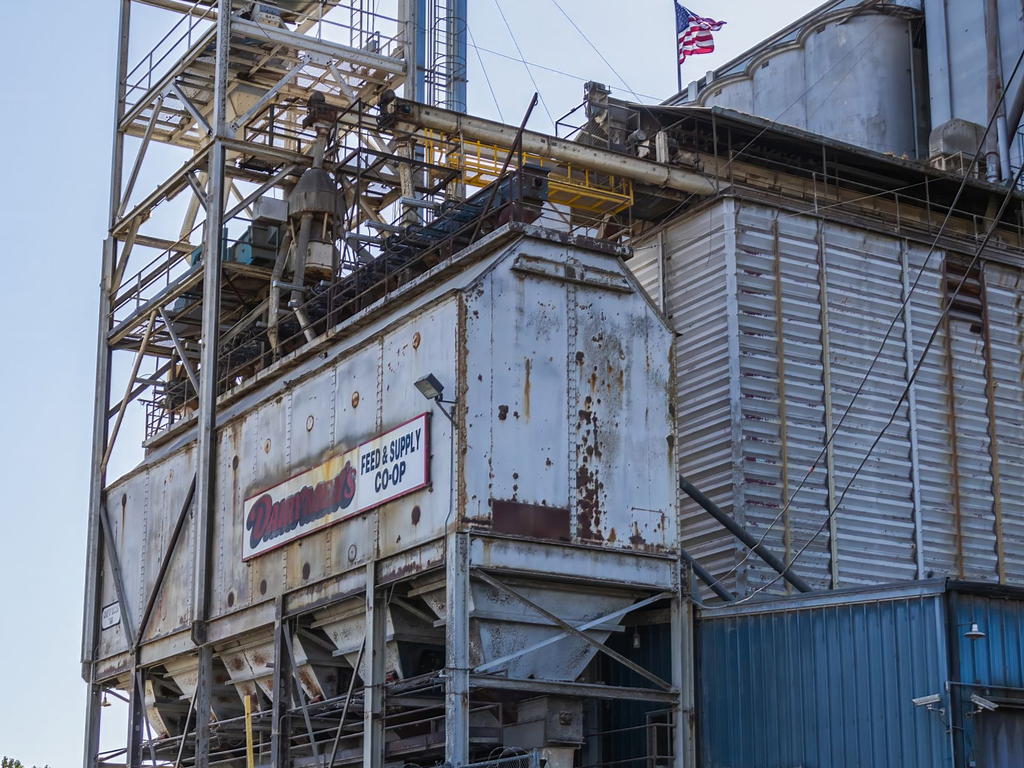
Biomass pellet lines work on much the same principle as feed lines but run harder: the feedstock is high-silica, high-fibre material such as sawdust, straw and rice husk, which wears faster, and its moisture and particle size swing much more, making pelletising harder. Care focuses on feedstock management and wear-part life.
Feedstock moisture is the core parameter. Moisture entering the die is generally 12–18% (by material — sawdust at the low end, straw at the high). Too dry and pellets will not form, coming out loose; too wet and the die blocks and pellets crack. Keep the dryer outlet moisture stable; large swings mean check the drying process.
Feedstock particle size must be even. Oversize particles (over one third of the die-hole diameter) make forming hard and accelerate die wear; too many fines leave pellets weak. Pick the grinder screen aperture to the product spec — a damaged screen lets coarse material through.
Debris removal is mandatory. Biomass feedstock often carries stones, nails and grit — all lethal to dies. Magnetic separation, air separation and screening must all be fitted and confirmed working. Tramp iron in a die hole blocks the die at best and bursts the ring die at worst.
Different feedstocks behave very differently in the die. Pure sawdust, bark-mixed sawdust, straw and rice husk each need their own compression ratio and moisture window. When the feedstock changes, adjust the die compression ratio and process parameters — one setting cannot serve all. On a new feedstock batch, run a small trial first.
 FIELD · SCHH-2026
The ring die compression ratio (effective hole length to diameter) must match the feedstock. A high ratio gives dense pellets but more energy use and faster wear; a low ratio gives poor formation. Sawdust generally takes a lower ratio, straw and rice husk a higher one. The wrong ratio hurts both output and die life.
Die material matters. Biomass feedstock is abrasive — use high-chrome alloy or carburised wear-resistant ring dies; ordinary material may last only a third as long. When costing up, include die-change downtime and labour: a cheap die is not necessarily a saving.
Roller-to-die gap: biomass lines usually run a slightly larger gap than feed lines (0.2–0.5 mm, by machine) because the fibre is long. Set the gap by the maker's method and criteria, then test-run and watch the current and pellet quality.
Roller bearings run hot and dusty and live short lives. Check lubrication on interval, use high-temperature grease, and shorten the regreasing cycle or fit auto-lubricators where needed. A failed bearing takes the roller shaft and ring die with it — changing early is cheaper than changing late.
Log the actual tonnage of every ring die to build a life baseline. How many tonnes a die normally presses is predictable — a sudden drop means feedstock trouble or a wrong gap, and the cause must be found.
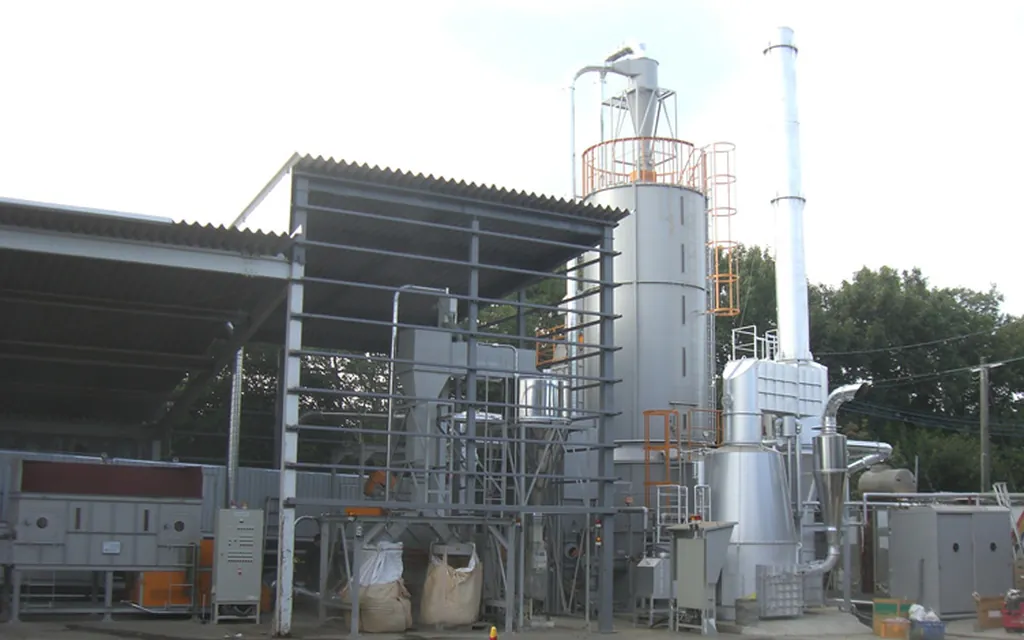 FIELD · SCHH-2026
Biomass pelleting runs hot — material inside the die hole reaches 80–120 °C — and roller and main-shaft bearings feel it. Monitor bearing temperatures; above 80 °C, check lubrication and clearances.
Feeder and conditioner (if fitted) paddles and flighting wear fast — inspect and replace on schedule. Worn, they feed unevenly and condition poorly, and forming suffers.
Confirm the cooler actually cools. Pellets leave the die hot; bagged without cooling they re-absorb moisture, mould and crack. Cooler airflow, bed level and discharge must all be normal, and after cooling the pellets should sit within 5 °C of ambient.
Check the grading screen mesh — a tear lets off-spec pellets into the finished product and costs you your reputation.
Match feed rate to mill capacity. Overfeeding raises current and blocks the die; underfeeding wastes capacity and wears the die running empty. Controlling feed rate from main-motor current feedback is an effective way to prevent blockage and hold steady output.
For a blocked die, follow the feed-line practice: stop, back the blockage out with oily feed or strip and clean the die — never force-start or clean by brute force. Before shutdown, displace the material in the die holes with oily feed (or a fat-blended purge mix).
Watch main-motor current, main-bearing temperature and die discharge in real time. Persistently high current foretells a die blockage or wrong gap — reduce feed or stop and inspect in time.
Keep the line balanced: buffer bins between grinder, dryer, pellet mill, cooler and packer must be big enough, or the front end chokes while the back end starves. Buffer-level monitoring is the key to continuous production.
| Maintenance item | Interval | Method | Acceptance criteria |
|---|---|---|---|
| Feedstock moisture test | Every shift / every batch | Rapid moisture meter | Inlet moisture 12–18% (by material) |
| Feedstock de-stoning and magnet clean-out | Every shift | Clear the magnet catch and log it | No tramp iron or stones entering |
| Die-roller gap check | Every shift / at changeover | Feeler gauge or dedicated tool | 0.2–0.5 mm (by machine) |
| Main-motor current monitoring | Continuous through the shift | Panel gauge or ammeter | Steady; not persistently high |
| Main and roller bearing temperatures | Every shift | IR thermometer | < 80℃ |
| Ring die tonnage log (life baseline) | Per ring die | Cumulative tonnes pressed | Compare with the historical baseline |
| Cooler effectiveness check | Every shift | Discharge pellet temperature | Within 5 °C of ambient |
| Screen mesh and paddle wear check | Weekly | Grinder screens; feeder and conditioner paddles | No damage; wear below limits |
| Buffer bin level interlock check | Every shift | Level sensors and upstream/downstream interlocks | Levels normal — no choking, no starvation |
On the same type of pellet mill, biomass duty (sawdust, straw, rice husk, bamboo powder and the like) punishes the equipment far harder than feed duty, and the difference shows at three levels. First, raw material hardness and abrasiveness: woody materials carry a high silica content (straw and rice husk especially contain silicon dioxide), are far harder than grain-based materials, and multiply the abrasive wear on ring dies, rollers and main shaft bearings. Second, compression ratio and forming pressure: wood fibre is elastic and bonds poorly, so a higher compression ratio and greater forming pressure are needed - meaning higher loads in the die-roller zone, more heat, and higher main motor current. Third, raw material variability: biomass feedstocks come from mixed sources (different species, different moisture contents, with sand and stones among them), batch-to-batch variation is large, the process window is much narrower than for feed, and die plugging and shock loads are more frequent.
These three differences mean the maintenance plan must be recalculated - feed mill rule-of-thumb values cannot be copied over. The concrete differences are in four areas: ring die and roller life shortens markedly (the same machine may see only a fraction of its feed-duty life under biomass duty), so the life register and replacement plan must be recalibrated on tonnage; the grease must be a high-temperature type and seals must be upgraded (the die-roller zone runs hotter, ordinary grease runs off and hardens, and abrasive dust gets in more easily); the main motor and gearbox run at higher load factors, so current monitoring and temperature rise checks must be more frequent; and feedstock de-contamination is mandatory - metal and stone entering the die-roller zone chips the die and shock-damages bearings, and a single incident can cost more than a whole year of maintenance.
Our experience is that a biomass plant running a feed-mill-template maintenance plan sees no problem in the first three months, but by six months its failure rate and spare parts costs are clearly worse than its peers'. Conversely, plants that recalculate the plan for biomass duty can take ring die bearing life from a few dozen days to the better part of a year - we documented this improvement in a case report, achieved with three things: correct grease selection, metered greasing and a seal upgrade, none of which cost serious money.
No - it is normally higher. Wood fibre is elastic and has poor natural binding (unlike starch, which brings its own bonding once gelatinised), so a greater compression ratio is needed for dense pellets. The exact figure depends on the raw material: pure sawdust, straw, rice husk, bamboo powder and mixed feedstocks each take a different ratio, and grind size and moisture also matter. The consequences of choosing wrong are direct: too low gives loose pellets, a high fines rate and lower yield; too high cuts output, raises current, plugs the die frequently and overloads the die and main shaft. Our practice is to run trials on your actual feedstock to fix the ratio, never copying generic tables - even the same tree species differs in forming behaviour by origin and moisture content. Before replacing a ring die, keep the actual service data of the old one (tonnage, pellet quality, current behaviour); it is the most valuable basis for selection.
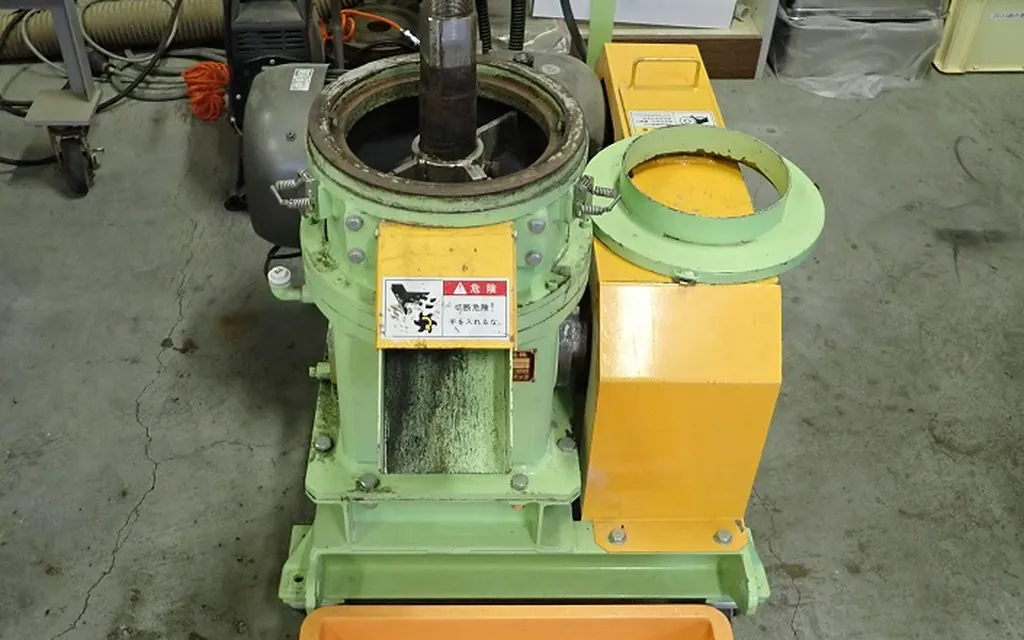 FIELD · SCHH-2026
Short life comes from four factors stacked: heat (conducted from the die-roller zone), abrasive dust ingress (failed seals), improper lubrication (wrong grease or over-greasing), and shock loads (die plugging and tramp material). The permanent fix is not a more expensive bearing but treating the four factors one by one: a seal upgrade (labyrinth plus lip, cutting off the dust path), correct grease selection (high-temperature grade, matched drop point, water-washout resistance), metered greasing (an automatic lubricator, avoiding churning heat from overfill), and process control (effective de-contamination, moisture under control, current within limits, plugging handled properly). We applied this combined treatment in a case project and took bearing life from 40 days to 9 months - none of it cost serious money; it was all about doing the right things right. If your bearings also fail within two or three months, strip one and read the failure pattern first: abrasive wear (fine scoring on the raceway) points to seals and dust; lubrication failure (hardened grease, discoloured raceways) points to grease selection and greasing; impact damage (indentations and spalling on the raceway) points to die plugging and tramp material. The pattern identifies the cause - far more effective than blindly changing parts.
A considerable share of pellet line equipment problems originate in the raw material. Four points of raw material management directly set equipment loads and wearing part life. First, de-contamination: metal, stone and sand are killers of dies and bearings; iron separators (permanent magnet or electromagnetic) and screening equipment must be properly installed, and magnetic bars and separators cleaned every shift with records - the amount of tramp material removed is a direct indicator of feedstock quality. Second, moisture control: test incoming feedstock batch by batch, dry or segregate material above specification, and adjust process parameters when moisture swings. Moisture significantly affects pellet quality, power consumption and die wear. Third, particle size and fibre length: uneven grind gives unstable formation and blocked die holes, so grinder screen condition and hammer wear must be checked on schedule and particle size distribution sampled periodically. Fourth, batch records: log production data (current, output, pellet quality, plugging frequency) for each feedstock batch, and after a while you can see which material is friendliest to the equipment and which needs special parameter control - this record is the base data for process optimisation.
There is also an economic layer to managing raw materials and equipment together: cheap feedstock loaded with impurities and moisture can cost back double, in die life, power consumption and downtime, what was saved on purchase. Our practice is to work this account out for clients - using equipment data (die consumption, power use, failure downtime) to back-calculate the true cost of the raw material, as a reference for purchasing decisions. Some plants, after doing this arithmetic, adjusted their purchasing standards and found total cost actually fell. Equipment data is not just the maintenance department's paperwork; it gives purchasing and production decisions a basis nobody else can provide.
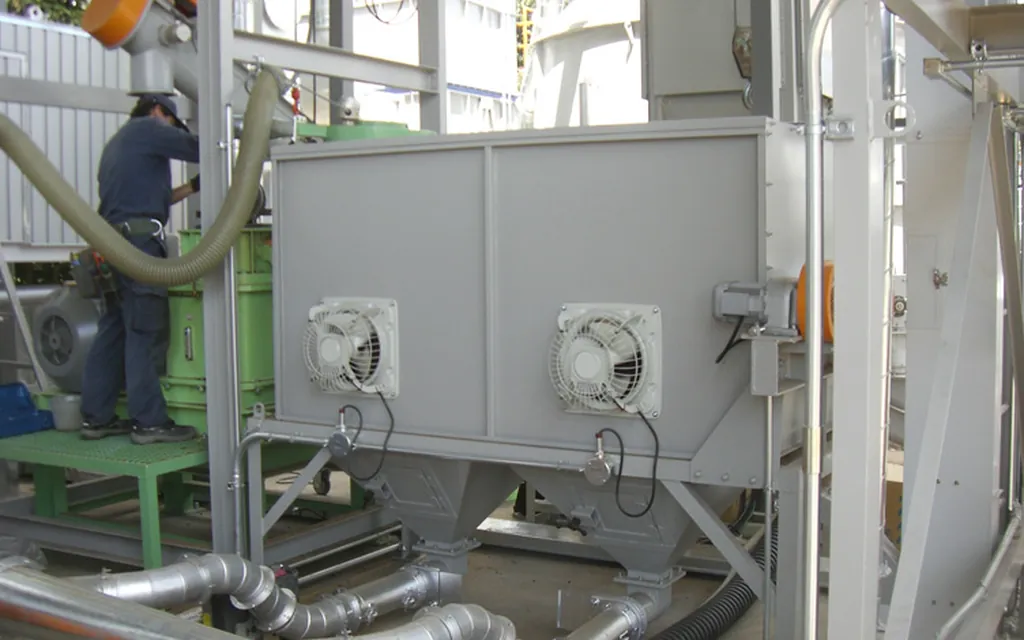 FIELD · SCHH-2026
This article was written in-house by the Industrial Equipment Services Division. The thresholds, intervals and scrap criteria are field-experience values; in practice follow the equipment manufacturer's technical documents, current national standards and special-equipment safety regulations. Inspection and testing of special equipment (cranes, pressure vessels, etc.) must be carried out by a qualified body.
Send us your equipment list and operating conditions, and we will give you a workable inspection and maintenance standard.
 Scan to add Engineer Man on WeChat
 Guangzhou Yujihang Computer Technology Co., Ltd. · www.accpc.com.cn
 Guangzhou Henghuan Technology Co., Ltd. · www.hhrobotics.cn
 Nanchong Henghuan Robotics Co., Ltd. · www.hhrobots.cn