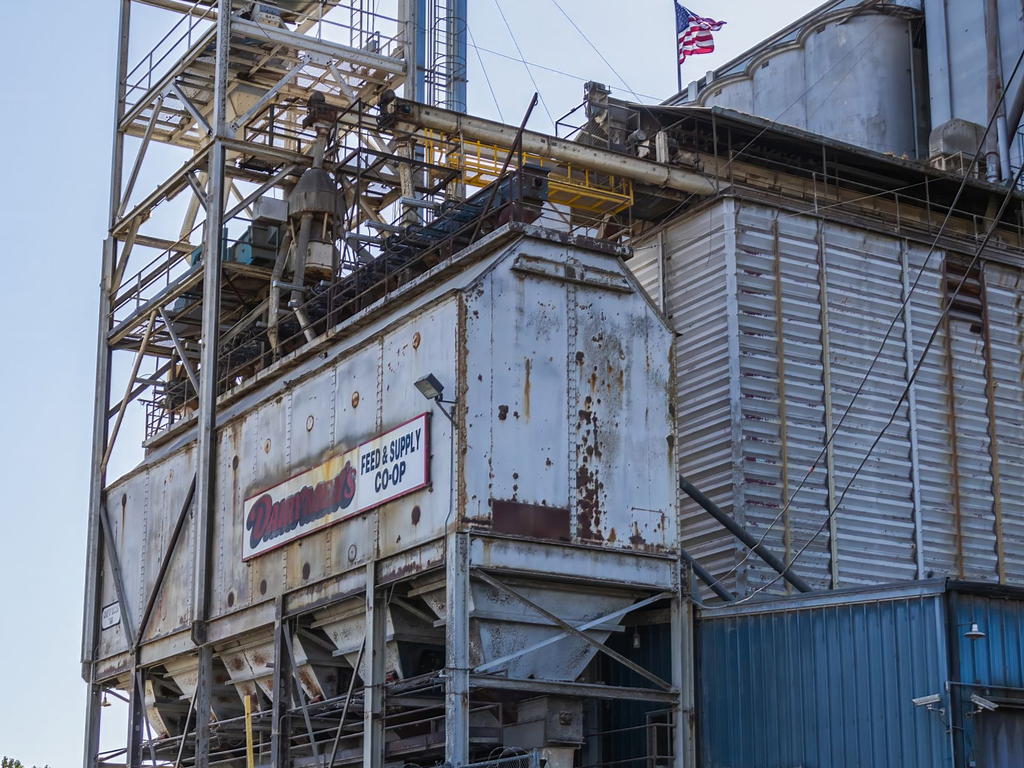
The pellet mill is the heart of a feed plant and the machine most prone to blocking. A blocked die usually traces back to conditioning and feeding rather than the mill itself. Control the process window and blockages drop away.
Conditioning aims to gelatinise the feed fully with even moisture and temperature. Conditioning temperature is generally held at 80–85 °C (livestock and poultry feed); aquatic feed runs higher. Too cool and gelatinisation is incomplete — pellets are loose with high fines; too hot and nutrients are lost while energy use climbs.
Conditioning time must be adequate. A single-shaft conditioner gives short residence time and incomplete gelatinisation; twin- or multi-shaft conditioners work better. As conditioner paddles wear, conveying and mixing drop off — inspect and replace them regularly.
Steam quality matters. Dry saturated steam is best; wet steam carrying water makes local moisture too high and blocks the die. The steam line needs a working steam trap, and stable pressure after the reducing valve.
Clean the conditioner regularly, especially after shutdown. Residual feed hardens into lumps inside it; on the next start those lumps enter the die holes and cause blockage or damage. Post-shutdown conditioner cleaning should be part of the operating procedure.
 FIELD · SCHH-2026
The ring-die-to-roller gap (roller to die inner surface) is a key parameter, generally 0.1–0.3 mm (by model and material). Too wide and the feed slips — low output, high fines; too narrow and metal touches metal — wear accelerates, temperature soars, bearings can even burn out.
Set the gap by the maker's method with a feeler gauge or dedicated tool, never by feel. After adjusting, run a test to confirm — listen to the sound, watch the current, check pellet quality.
For ring-die wear, look at the holes: a flared, bell-mouthed inlet and rough hole walls give rough pellet surfaces and higher fines. Once the holes are worn enough (compression ratio drops), replace the die or re-drill and sleeve it.
Uneven roller-shell wear loads the ring die unevenly; measure roller OD regularly and replace at the wear limit. Roller bearings live a short life in high heat and heavy dust — check lubrication on interval and shorten the regreasing cycle where needed.
Before fitting a new ring die, check the holes are clear (dress any burrs or metal chips), and run it in with oil sand or a dedicated lapping paste — never go straight to full-load production.
 FIELD · SCHH-2026
Feeding must be even and steady. Feeder speed swings make the mill load swing, the current rise and fall, and the die block easily. VFD feeding interlocked with mill current (feed backs off automatically when current climbs) is an effective anti-blockage measure.
Control raw-material moisture. Moisture into the die (after conditioning) is generally 15–18% (by formula). Manage moisture at intake in the raw store; when rainy-season feed runs wet, step up conditioning and ventilation. Large swings in feed moisture are the most common external cause of die blockage.
Grind size must be even. Too coarse and conditioning is incomplete, pellets loose; too fine and output falls while energy use rises. A torn mill screen lets coarse particles through — inspect screens regularly.
Do not skip decontamination. Iron, stones and string in the feed entering the mill damage the die and rollers and can even jam the drive. Confirm the pre-feed permanent magnet and scalping screen work, and clean the magnetic separators regularly.
When the die blocks, do not force it to run. The right move: stop, back the blockage out of the holes with oily feed (or a dedicated cleaning mix), or remove the ring die to clean it. Hammering it or prying at the holes with a bar damages the die — a common but wrong site practice.
The key parameters for preventing blockage: conditioning temperature, moisture into the die, feed rate, and die compression ratio. Log all four; when a block happens, find the cause against the data rather than guessing from experience.
Follow a proper shutdown procedure: before stopping, displace the feed in the die holes with oily feed (a fat-containing cleaning mix) so it does not cool and harden in the holes. Skip this step and the next start-up blocks.
Monitor mill current and main-bearing temperature in real time. A sudden current rise warns of impending blockage; a temperature rise points to lubrication or gap trouble. Confirm any alarm and interlock-trip functions actually work.
| Maintenance item | Interval | Method | Acceptance criteria |
|---|---|---|---|
| Conditioning temperature and steam pressure log | Every shift | Panel or temperature probe | Conditioning 80–85 °C; steam pressure stable |
| Ring die / roller gap check and setting | Every shift / at changeover | Feeler gauge or dedicated tool | 0.1–0.3 mm (per maker) |
| Feed-current interlock check | Every shift | Watch for current swings | Steady load, no large swings |
| Conditioner cleaning | After every shutdown | Clear residual feed | No hardened lumps |
| Pre-shutdown oily-feed displacement | Before every shutdown | Oily cleaning mix through the die holes | No feed left in the holes |
| Die hole and roller wear measurement | Weekly | Visual on holes; calipers on rollers | No bell-mouthed holes; rollers short of limit |
| Magnet and scalping screen check | Weekly | Clear tramp metal; check the screen | Decontamination effective; screen intact |
| Mill screen check | Weekly | Damage, hole size | No damage; grind size to spec |
| Main bearing lubrication and temperature | Temperature each shift / lubricate on interval | IR thermometer; greasing log | Normal temperature; proper lubrication |
A considerable share of pellet mill 'equipment' faults actually originate not in the equipment but in process parameter drift. Conditioning temperature, moisture entering the die and feed rate form a process window: inside the window the line runs smoothly, outside it the die plugs, pellet quality drops and current goes abnormal. An equipment manager who knows mechanics but not the process will respond to a plugged die by cleaning the die - and it plugs again, because the root cause (wrong moisture or temperature) was never touched. Conversely, a process technician who only tunes parameters and ignores the machine will keep running standard parameters with a die-roller gap out of tolerance, and pellet quality fails anyway.
How the key parameters of the window are set: conditioning temperature follows the formula and raw materials (poultry and livestock feed generally runs in the 80-85°C band, specifically per the starch gelatinisation requirement) - too low a temperature means insufficient gelatinisation and crumbly pellets, too high means nutrient loss and a die that plugs easily; moisture entering the die follows the raw materials and the season (normally 15%-17%) - high moisture plugs the die, low moisture gives poor pellet formation and fast die wear; feed rate is interlocked with main motor current, which is the direct load indicator - overfeeding spikes the current, and prolonged running above rated current sharply shortens the life of the gearbox and main shaft bearings.
Bringing these three parameters into equipment inspection is what makes pellet line maintenance distinctive: temperature and moisture recorded every shift, main motor current recorded every shift, all three on one sheet - when the die plugs or pellets go abnormal, look at these three numbers first, and in most cases the answer is on the sheet. This is the method we stress again and again in our case reports: establish the data first, then draw conclusions.
By probability, check the process first, then the equipment. Process side, three items: moisture entering the die (too low gives poor formation and rough surfaces, too high gives soft pellets that crack easily), conditioning temperature and time (insufficient gelatinisation means weak bonding and a high fines rate), and formula and raw material particle size (over-coarse grind impairs formation). Equipment side, four items: die-roller gap (too large means insufficient compression and loose pellets), die compression ratio (mismatched to the raw material makes formation difficult), die wear (out-of-round holes give uneven pellets), and knife condition (dull or nicked blades give uneven pellet length and ragged ends). There is a simple entry point for diagnosis: look at the distribution of the fines rate - uniformly high across the line mostly indicates a process problem (moisture, temperature, formula), while values that swing or correlate with one machine mostly indicate an equipment problem. Our diagnostic procedure is to measure and log the process parameters for three days while checking die-roller gap and wear in parallel, then read both data sets together - the direction is usually clear in two or three days.
 FIELD · SCHH-2026
The compression ratio is the ratio of the effective length of a die hole to its diameter, and it determines how much the material is compressed inside the hole. A high ratio gives dense, well-formed pellets but lower output, higher current and faster die wear; a low ratio gives high output and low energy use but loose pellets and a high fines rate. The consequences of choosing wrong are direct: too high a ratio keeps the main motor above rated current, plugs the die frequently and heavily loads the gearbox; too low a ratio misses quality targets and increases rework. The ratio must suit the raw material (high-fibre materials need a different ratio - livestock feed, aqua feed and biomass pellets all differ) and balance against your quality requirements and output targets. When replacing a ring die, do not look only at price and lead time - whether the ratio matches the raw material is what matters. We have seen several plants where die plugging got worse after a die change, and investigation showed the compression ratio had been chosen wrong. We base our selection advice on raw material test data and actual trial runs, not on generic tables.
Pellet line lubrication has three critical locations, each with its own temperament. The main shaft bearing runs hot in heavy dust: the grease must be a high-temperature type (drop point matched to the measured cavity temperature), greasing must be metered (over-greasing causes churning heat - we have covered this in our case reports), and sealing must be treated alongside - once the seal fails, even the best grease cannot stay put. The gearbox runs at high torque and low speed: select the oil by viscosity grade and EP requirement, check level and colour on schedule, and change the oil on condition rather than by calendar. The roller bearings (internal-cavity type) face the harshest duty: confirm the lubrication passages are clear, and set the quantity and frequency from the equipment manual adjusted with actual wear data.
The core of spare parts management is a life register for wearing parts. Ring dies, rollers, hammers, screens, belts, bearings, seals - how fast these are consumed directly sets the purchasing rhythm and stock levels. The register records three things: the date each part went on, its cumulative tonnage (not calendar time - wear on a pellet line correlates strongly with output), and its measurements (die hole wear, hammer weight, screen condition). After three cycles of data you have a life curve for your own duty, and purchasing lead times, overhaul scheduling and cost accounting all gain a basis. Without a register, spares are always either 'bought only as they fail' or 'bought and never used'.
One more experience worth sharing: supplier management for wearing parts. For items like ring dies and rollers, materials and heat treatment vary greatly between makers, and price gaps are large - but life gaps can be larger. Our practice is to record the maker, batch and actual service life of every purchased part and evaluate suppliers on the data - the part that looks cheap on purchase price is often dearer once replacement labour and downtime losses are counted in. Handing this evaluation table to the purchasing department gives selection a basis.
 FIELD · SCHH-2026
This article was written in-house by the Industrial Equipment Services Division. The thresholds, intervals and scrap criteria are field-experience values; in practice follow the equipment manufacturer's technical documents, current national standards and special-equipment safety regulations. Inspection and testing of special equipment (cranes, pressure vessels, etc.) must be carried out by a qualified body.
Send us your equipment list and operating conditions, and we will give you a workable inspection and maintenance standard.
 Scan to add Engineer Man on WeChat
 Guangzhou Yujihang Computer Technology Co., Ltd. · www.accpc.com.cn
 Guangzhou Henghuan Technology Co., Ltd. · www.hhrobotics.cn
 Nanchong Henghuan Robotics Co., Ltd. · www.hhrobots.cn