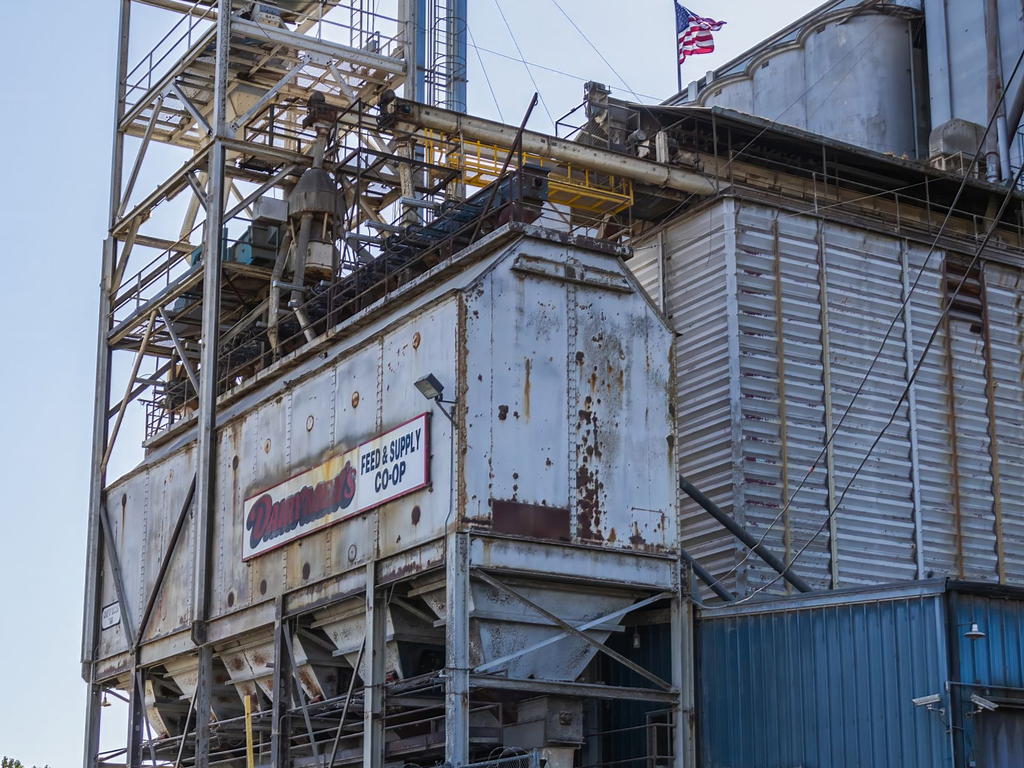
Elevators and conveyors are the arteries of a production line — one blockage stops everything. Their failures follow patterns: elevators are vulnerable to plugging and belt drift, conveyors to jamming and wear. Care targets exactly those points.
Preventing blockage is priority one. Material builds up in the elevator boot; enough build-up buries the buckets, jamming the machine or even pulling the chain apart. The boot needs build-up monitoring (a level switch or an inspection window) and prompt clearing. Feed evenly — a sudden flood of material blocks easily.
Anti-misalignment: a drifting bucket belt (belt type) or chain (chain type) wears the casing, damages buckets and can jam outright. Fit misalignment monitoring that alarms and stops the machine. In day-to-day checks, look for the causes: off-centre feeding, uneven tension, non-parallel pulleys, deformed buckets.
Anti-slip: the head pulley of a belt elevator needs enough grip, and belt tension must be right. Slip cuts capacity and accelerates belt wear. Fit slip monitoring (a speed switch) that alarms and stops the machine.
Bucket checks: deformation, loose bolts and detached buckets must all be dealt with promptly — a loose bucket wedged in the casing causes a serious breakdown. Open the inspection doors regularly (machine stopped and isolated) to check buckets and casing-liner wear.
Lubricate head and tail shaft bearings, and keep the tail take-up (screw or counterweight) free. When take-up fails, the belt or chain goes slack, and misalignment and slip follow.
 FIELD · SCHH-2026
Chain tension: a drag conveyor chain (single or double) must be correctly tensioned — too slack and it jumps or jams, too tight and it wears fast. On double-chain units the two chains must be equal in length, or the flighting tracks askew and loads unevenly.
Flighting checks: worn, deformed or missing flights cut conveying efficiency, and a detached flight wedged in the trough causes blockage and chain failure. Count and inspect flights regularly.
Trough wear: material slides along the trough bottom, so wear is gradual. Beyond a certain point, replace the trough or repair it by hardfacing. Inspect and replace trough liners where fitted.
Anti-blockage: keep inlets and outlets clear. A blocked outlet lets material pile up in the trough, resistance spikes, and the chain snaps or the motor burns. Monitor the outlet and stop promptly to clear any blockage.
Check head and tail sprocket wear — sprockets worn to a hook profile destroy chains fast, so assess sprockets and chain together for replacement.
 FIELD · SCHH-2026
Flight wear: worn flight edges cut throughput — hardface-repair or replace when severe. Conveying abrasives (sand, grit, mineral powder) wears flights quickly, so inspect regularly.
Hanger (centre) bearings are the screw conveyor's weak point. Material ingress seizes and wears them — choose well-sealed designs and lubricate regularly. A failed hanger bearing lets the screw shaft sag and scrape the trough.
Anti-blockage: screw conveyors suit neither sticky nor stringy materials, which clog at the inlet and hanger bearings. Feed evenly, and empty the trough before shutdown so material cannot set and cake.
Maintain the drive (gearbox, coupling) to the general requirements. Check the screw-shaft connecting bolts — looseness misaligns the shaft and accelerates wear.
All three conveyor types need basic monitoring: speed monitoring (slip / broken chain), misalignment monitoring (elevators, belt conveyors), blockage monitoring (level switches), and motor overload protection. Test the monitors regularly — fitting them and never proving them is pointless.
Clean-out regime: clear residual material after shutdown, especially at the boot, the outlet and the hanger bearings. Once residue sets and cakes, it is the root of blockage and jamming at the next start-up.
Maintenance safety: entering a conveyor for inspection or cleaning requires stop, isolate, lock-out/tag-out and a watcher. Entanglement in conveyors is one of the most common machinery injuries — never enter live or unwatched.
Lubrication chart: head/tail pulley bearings, sprocket bearings, hanger bearings, gearbox, take-up screws — list lubricant and interval point by point, execute to the chart and record.
| Maintenance item | Interval | Method | Acceptance criteria |
|---|---|---|---|
| Boot / outlet build-up check and clean-out | Every shift | Inspection window or level monitoring | No build-up burying buckets; discharge clear |
| Misalignment and slip monitor test | Monthly | Function test | Alarms and stops reliably |
| Chain / belt tension check | Weekly | Take-up travel; chain or belt sag | Correct tension; double chains equal length |
| Bucket / flight inspection | Monthly (stopped and isolated) | Deformation, looseness, loss, count | Intact and complete |
| Sprocket and trough wear measurement | Quarterly | Tooth thickness; trough-bottom wear | Below the replacement limit |
| Head/tail pulley and hanger bearing lubrication | Per the lubrication chart | Grease point by point; record | Every point in position |
| Screw flight and hanger bearing check | Monthly (screw conveyors) | Flight wear; hanger bearing stiffness | No severe wear; rotates freely |
| Post-shutdown residue clean-out | Every shutdown | Boot, outlet, hanger bearings | No caked residue |
Bucket elevators usually sit at the top of fault statistics on feed and pellet lines, because they carry several high-risk roles at once: continuous running (a stoppage breaks the whole line), vertical conveying of heavy material (a broken belt or chain has serious consequences), high dust concentration (venting and isolation requirements in explosive dust service), and reversal and drift risks (mechanical damage and ignition sources). Elevator failures are characteristically sudden and costly: after a belt break the buckets and belt fall, the casing deforms and the boot blocks solid, repair takes weeks, and the whole line stops.
Prevention centres on three monitoring points: first, belt (or chain) condition - tension, elongation, splice condition and tightness of the bucket bolts; the belt splice is the weak point and must be checked most frequently. Second, the anti-reversal device - the backstop must function; reversal causes material backflow and equipment damage and can even injure people, so this item must be actually tested periodically, not just looked at. Third, drift and speed monitoring - drift switches and speed sensors (slip monitoring) are standard protections on elevators; verify their function periodically, and after any alarm stop the machine and find the cause rather than simply resetting.
Elevators in explosive dust service add a dedicated explosion protection scope: venting devices (vent openings on the casing, head and boot, with venting area calculated to the standard), isolation devices (isolation valves or rotary valves at the inlet and outlet, blocking flame propagation), earthing and static control (elevators readily accumulate static), and protected electrical equipment (drive motor and field electrics selected to the correct protection level). Integrity checks on these devices must be written into the dedicated inspection, matching the dust explosion protection regime described earlier.
Because those two locations are where dust explosions most often start and where the hazard concentrates. The head (discharge zone) has the highest dust concentration - material thrown from the buckets generates large amounts of dust, and the drive is there (possible ignition sources: overheated bearings, friction from belt slip, mechanical sparks). The boot (infeed and digging zone) accumulates material with thick dust deposits, and friction between belt and buckets plus sparks from tramp material all occur in this region. Venting devices are therefore given priority at these two locations, with venting area calculated to the standard and the vent directed to a safe area (never facing walkways, buildings or other equipment). Besides venting, the head and boot also need isolation - blocking flame propagation along the inlet and outlet ducts to upstream and downstream equipment, normally with rotary valves (airlock feeders) or isolation valves. One warning: vents must never be blocked (by snow, material or covers) - inspection must confirm the vent path is clear; this is a common failure on outdoor elevators.
 FIELD · SCHH-2026
Judge each from data. For the chain: measure elongation (measure a fixed span against the standard value; at the elongation limit replace the whole chain - no patching, no mixing old with new), check link wear and deformation (replace when wear exceeds the specified proportion of the section or plastic deformation is present), and check sprocket tooth form (teeth worn to a hook shape are replaced together with the chain, or a new chain will quickly be worn out again). For the trough (casing): measure bottom and side plate wear (thin below the specified limit and it must be treated), check liner condition (where liners are fitted, replacing liners is far more economical than replacing the casing), and check deformation and leak points (local deformation can be straightened; extensive wear and deformation means replacing that casing section). The decision logic is 'replace whichever reaches its limit first': typically chain and sprockets are replaced together, liners separately, and the casing patched locally. Our practice is to record measured wear at every location during overhaul and build a condition table; repair-versus-replacement decisions follow the table, not a feeling - and the table becomes the comparison baseline for the next overhaul. The other key item on a drag conveyor is lubrication: the condition of head and tail shaft bearings and of chain lubrication directly decides service life, and in dusty environments grease selection and sealing must be considered together.
Most sudden failures of elevators and drag conveyors can be traced back to load mismatch. Matching has three layers: equipment capacity matched to process flow (elevating capacity must exceed the peak upstream feed, with margin); upstream and downstream equipment matched in sequence (correct start/stop order and interlock logic between the elevator, the grinder ahead and the distributor or bin behind); and abnormal-condition handling matched (protections operate reliably during plugging or overload). The third layer is where problems most often lie - many lines plug because interlock logic is incomplete or protections have been shorted out, so material keeps feeding until the machine is solid.
There are four actions for load matching. First, verify capacities: list the conveying capacity of every machine on the line, find the bottleneck, and where the bottleneck runs at a chronically high load factor, modify it or rebalance the process distribution. Second, complete the interlocks: confirm each function works - start/stop sequence (start against the material flow, stop with it), plugging protection (level, current and speed monitoring), and abnormal interlocks (one machine fails, upstream feeding stops). Third, current monitoring: the main motor current of elevators and drag conveyors is the most direct load indicator - persistently high current means overload or an obstruction; set an upper-limit alarm and include it in shift records. Fourth, feed control: where feed is adjustable (inverter feeding, gate opening), adjust to the actual load and avoid peak overfeeding.
None of these four actions costs much, yet the effect shows directly in the incident rate. When we build a line maintenance plan, the load matching review is one of the standard steps - we hand the plant three documents: a line-wide capacity table, an interlock logic table and a current limit table, giving day-to-day management and fault finding a basis. These three tables are also the best training material for new staff: understand them and you understand how the whole line runs.
 FIELD · SCHH-2026
This article was written in-house by the Industrial Equipment Services Division. The thresholds, intervals and scrap criteria are field-experience values; in practice follow the equipment manufacturer's technical documents, current national standards and special-equipment safety regulations. Inspection and testing of special equipment (cranes, pressure vessels, etc.) must be carried out by a qualified body.
Send us your equipment list and operating conditions, and we will give you a workable inspection and maintenance standard.
 Scan to add Engineer Man on WeChat
 Guangzhou Yujihang Computer Technology Co., Ltd. · www.accpc.com.cn
 Guangzhou Henghuan Technology Co., Ltd. · www.hhrobotics.cn
 Nanchong Henghuan Robotics Co., Ltd. · www.hhrobots.cn