
The "coal sea" of the south-west and Guizhou's new energy and phosphorus-coal chemical city: 2025 GDP of CNY 254.114 billion, third in the province. Coal (the Zhijin-Nayong coalfield), coal-fired power, integrated phosphorus-coal chemicals (the Zhijin project, planned at about CNY 73 billion) and new energy equipment (Sany Heavy Energy) are the pillars.
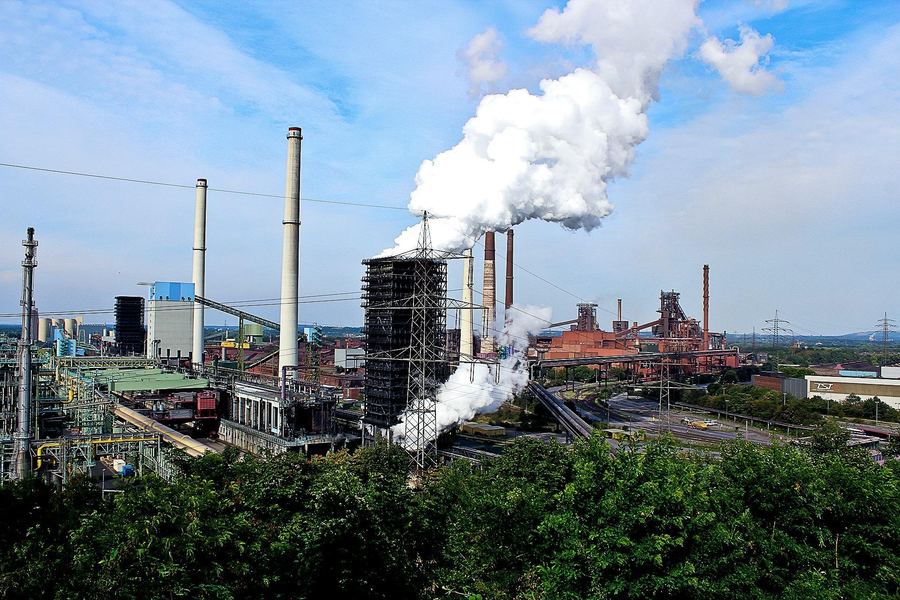
Bijie sits deep in the Wumeng Mountains and lived historically on agriculture and small-scale mining (coal, sulphur, iron), with a thin modern industrial base; during the Third Front era it held only a few supply points. After reform and opening-up, as the "Development, Poverty Alleviation and Ecological Construction" pilot zone (approved by the State Council in 1988, the only one of its kind nationally), Bijie explored paths for treating rocky desertification and lifting people out of poverty. Industrialisation quickened after the 2000s: the Zhijin-Nayong coalfield (Zhijin and Nayong, one of Guizhou's largest) was developed at scale and coal-fired power (the Nayong and Qianxi plants) was built; in the 2010s the integrated phosphorus-coal chemical project (the Zhijin project, drawing on the Zhijin Xinhua phosphate mine and coal resources, planned at about CNY 73 billion) began its early phases, and the Sany Heavy Energy (wind power equipment) Bijie base went into production. Bijie has transformed from an agricultural pilot zone into Guizhou's new energy and heavy-chemical city.
In 2025 Bijie's above-scale industrial value added grew steadily. Coal (the Zhijin-Nayong coalfield plus the Jinsha and Dafang mining areas, with raw-coal output among the province's highest) and coal-fired power (the Nayong, Qianxi and Jinsha plants) form the largest industry; integrated phosphorus-coal chemicals (the Zhijin project advancing) is seen as Bijie's biggest industrial increment. New energy equipment (Sany Heavy Energy wind turbines and blades) and new energy (fast-growing wind and solar capacity) advance together; deep processing of specialty agriculture (Weining potatoes, high-altitude cool-climate vegetables, roxburgh rose, gastrodia) is scaling up. The Bijie High-tech Zone and the Zhijin-Qianxi area are the main carriers, building toward an important south-west energy base and a new coal-chemical demonstration zone.
Developers of the Zhijin-Nayong coalfield (Guizhou Energy Group family), the Nayong/Qianxi/Jinsha power plants, the Zhijin integrated phosphorus-coal chemical project entity (planned at about CNY 73 billion), the Sany Heavy Energy Bijie base (wind power equipment), and the cluster of Weining potato and roxburgh rose processors.
Bijie's maintenance demand centres on coal mining, coal power and coal chemicals. Mine equipment (shearers, roadheaders, armoured-face conveyors, hoisting winches, main ventilation fans, gas drainage pump stations) upkeep and annual-inspection rectification are rigid, high-frequency work with extremely high safety requirements; power plant (boiler, turbine, auxiliaries) overhaul has defined cycles and large volume. Once the phosphorus-coal chemical project is built it will bring overhaul and upkeep demand on gasifiers, synthesis towers and air-separation units — a major increment market. Wind farms (Sany Heavy Energy turbine supply) see growing gearbox and pitch-system maintenance. Our focus: mine equipment upkeep and annual-inspection rectification, power plant auxiliary overhaul, coal-chemical plant installation, commissioning and upkeep, and wind farm O&M.
Every administrative division under Guizhou is inside our service range. Click through for each area's industrial history and maintenance market analysis:
The industrial history, 2025 industry update, leading enterprises and market analysis on this page are written in-house by the Industrial Equipment Services Division. Data sources: the Guizhou Provincial Bureau of Statistics' 2025 bulletin on national economic and social development and 2025 economic performance releases from each city and prefecture, plus public material from the Guizhou Provincial Department of Industry and Information Technology on the "six major industrial bases"; wartime relocation and Third Front history follows published local gazetteers. For image use and disclaimers see the site-wide "Image Use & Disclaimer" page.
One call to confirm the schedule and you deal directly with Engineer Man: 18002209253 (same number on WeChat).
 Scan to add Engineer Man on WeChat
 Guangzhou Yujihang Computer Technology Co., Ltd. · www.accpc.com.cn
 Guangzhou Henghuan Technology Co., Ltd. · www.hhrobotics.cn
 Nanchong Henghuan Robotics Co., Ltd. · www.hhrobots.cn