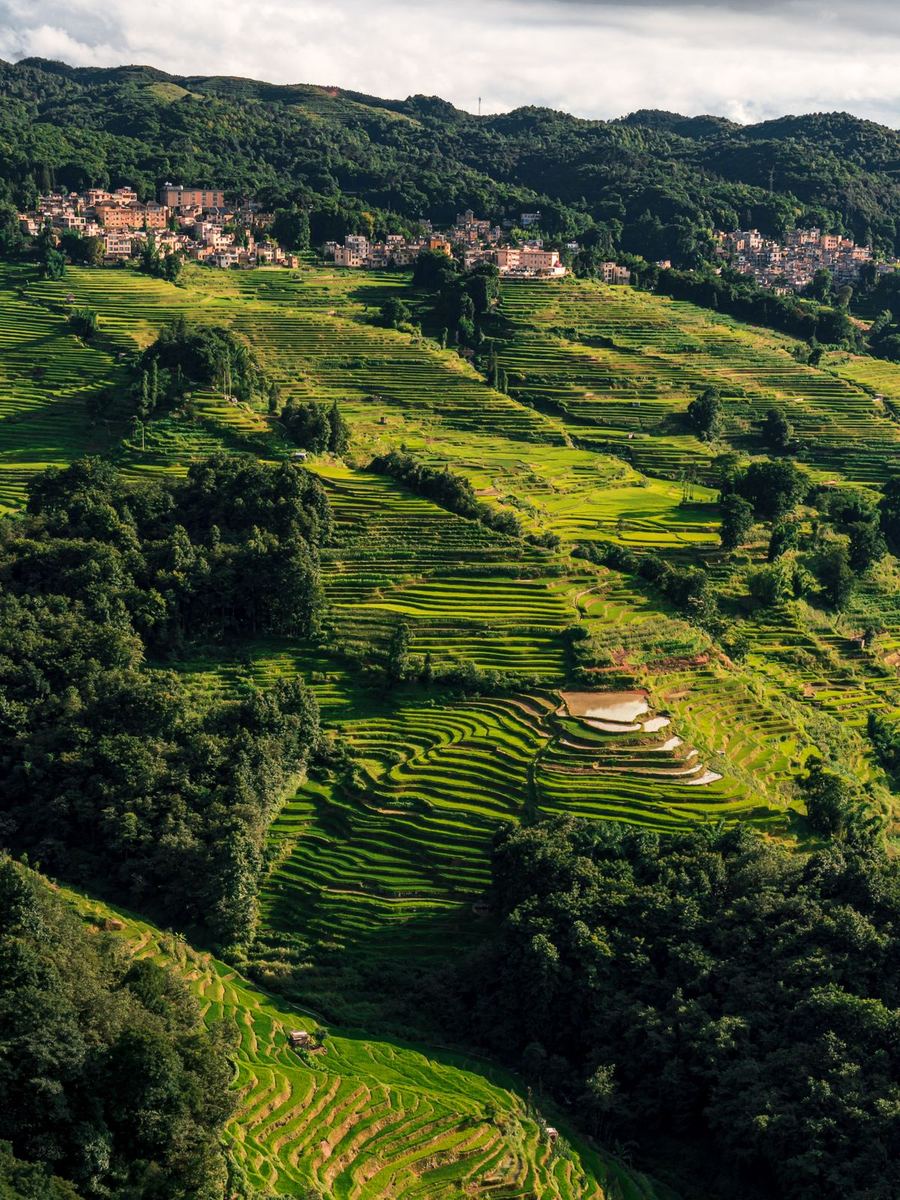
Source of the world's tea and China's coffee capital: 2025 GDP of CNY 125.240 billion, mid-table in the province. Green industry (tea and coffee deep processing), clean energy (hydro) and forest-product chemicals are the pillars, and the city is a national pilot demonstration zone for the green economy.
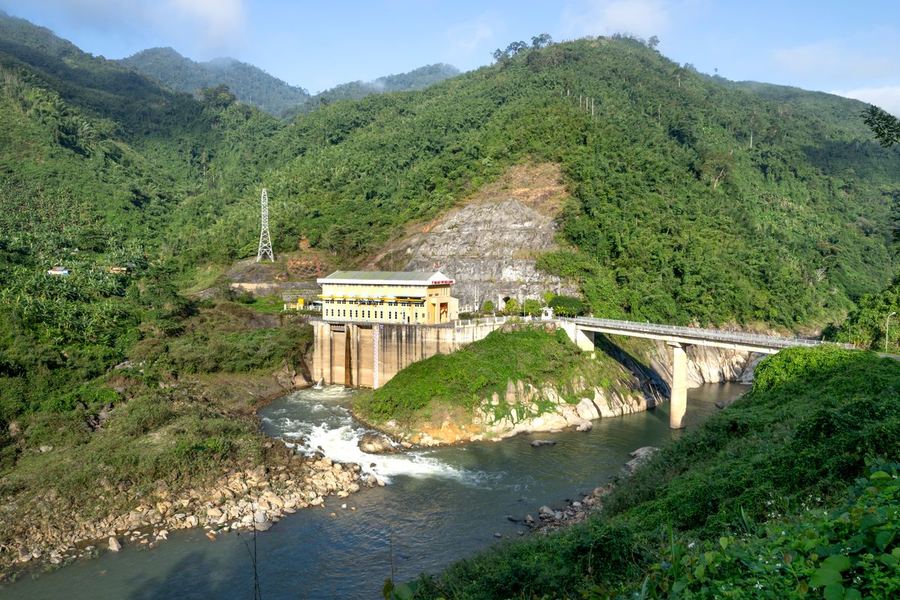
Pu'er (the old Simao) is the original home of Pu'er tea and a starting point of the Tea-Horse Road, with over a thousand years of tea growing and processing; Pu'er tea (large-leaf sun-dried green tea, post-fermented) is world-renowned. It is also one of China's earliest coffee regions (introduced by missionaries in the late 19th century, planted at scale from the 1950s). Modern industry began with tea, sugar and forestry; the Third Front era left a few supply points. After reform and opening-up Pu'er grew green processing on its tea, coffee, rubber and forestry resources: Pu'er tea and coffee upgraded from raw material to deep processing and branding; Lancang River hydropower (the Nuozhadu and Xiaowan cascade, touching Pu'er) made the city an important clean-energy base; and the national green-economy pilot zone (set up in 2013) pushed the industrialisation of ecology.
In 2025 Pu'er's economy is led by green agriculture and clean energy. The full tea and coffee chains (growing, primary making, refining, deep processing, branded trading) rank among the nation's largest; the Pu'er tea industry's aggregate output keeps expanding, and coffee (Pu'er grows over half the nation's beans) is seeing deep processing and exports grow. Clean energy (Lancang hydro, solar) outputs steadily; forest-product chemicals (rosin, rubber processing) and biopharmaceuticals (dendrobium, poria) are scaling up; tourism (the Jingmai Mountain ancient tea forests, a World Heritage site, and the Tea-Horse Road) advances alongside. Pu'er is building the national green-economy pilot demonstration zone.
The Pu'er tea consortium (TAETEA-family raw-material bases and refining plants), the Pu'er coffee consortium (growing, primary processing, deep processing, export), Lancang River hydro operators (Nuozhadu and others), forest-chemical and rubber processors, and the Jingmai Mountain tea-forest tourism operators.
Pu'er's maintenance demand centres on tea and coffee processing plus hydro. Tea refining (fixation, rolling, drying, sifting, pressing) and coffee processing (pulping, fermentation, drying, roasting, grading) involve large equipment counts with strong seasonality — upkeep and automation-upgrade demand is concentrated. Electromechanical overhauls on the Lancang hydro cascade are large-volume, on defined cycles, at a high bar; forest-chemical plant (rosin distillation, rubber processing) needs specialist maintenance; tourism facilities (hotels, scenic-area M&E) are steady work. Our focus: tea and coffee line upkeep and automation upgrades, hydro electromechanical overhauls, and forest-chemical plant upkeep.
Every administrative division under Yunnan is inside our service range. Click through for each area's industrial history and maintenance market analysis:
The industrial history, 2025 industry update, leading enterprises and market analysis on this page are written in-house by the Industrial Equipment Services Division. Data sources: the Yunnan Provincial Bureau of Statistics' 2025 bulletin on national economic and social development and 2025 economic performance releases from each prefecture-level city and prefecture, plus public material from the Yunnan Provincial Department of Industry and Information Technology on green aluminium and new energy batteries; wartime relocation and Third Front history follows published local gazetteers and historical literature. For image use and disclaimers see the site-wide "Image Use & Disclaimer" page.
One call to confirm the schedule and you deal directly with Engineer Man: 18002209253 (same number on WeChat).
 Scan to add Engineer Man on WeChat
 Guangzhou Yujihang Computer Technology Co., Ltd. · www.accpc.com.cn
 Guangzhou Henghuan Technology Co., Ltd. · www.hhrobotics.cn
 Nanchong Henghuan Robotics Co., Ltd. · www.hhrobots.cn