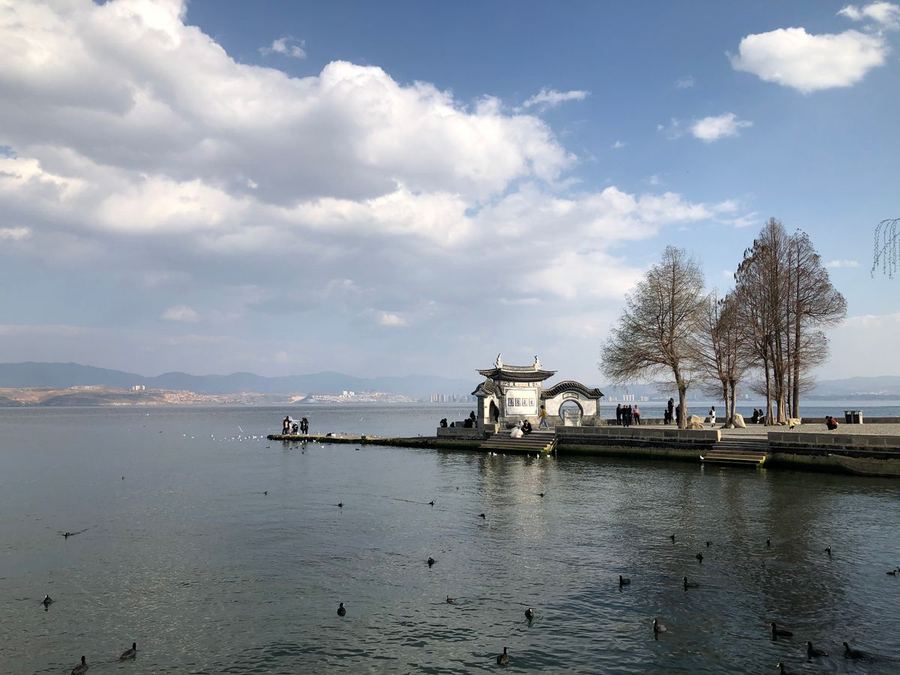
A major province of green energy and non-ferrous metals. In 2025 provincial GDP reached CNY 3,276.578 billion, up 4.1%; above-scale industrial value added rose 4.5%, with the non-ferrous sector up 14.2% and contributing 31.5% of that growth. Clean-power installed capacity and generation rank among the nation's top, green aluminium output broke CNY 200 billion, and the new-energy battery materials industry is growing fast — Yunnan is a key pole on China's green-manufacturing map.
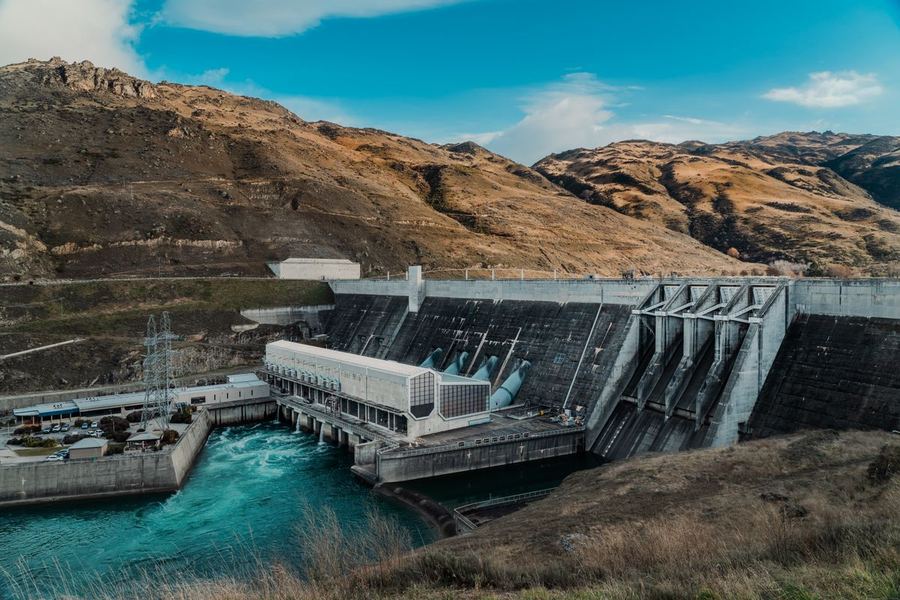
The industrial history of Yunnan is a story driven by defence industry and natural resources, now turning green and intelligent. Here it is, stage by stage:
In the 1870s the Yunnan Machinery Bureau was set up in Kunming to copy guns and ammunition, opening Yunnan's modern machine industry. The Gejiu tin mines had been worked since the Qing, and in the late Qing the Gejiu Mining Merchants' Bureau was established; tin became Yunnan's most important export industry, and the name "tin capital" was born. The Yunnan-Vietnam Railway opened in 1910, making Kunming one of the earliest rail-connected border provincial capitals, with mines, power plants and repair shops springing up along the line. In 1912 the Shilongba hydroelectric station at Kunming began generating — the first hydropower station designed and built by the Chinese themselves, placing Yunnan at the starting point of China's electric-power industry.
During the war of resistance a batch of state-owned factories — the Central Machine Works, the Central Electrical Apparatus Factory, the Ordnance Administration's 22nd Arsenal (optical equipment) — relocated to Kunming, making Yunnan an important rear-area base for machinery, electrical goods and ordnance. The Burma Road and later the Hump airlift made Kunming the hub of China's overseas supply route, and vehicle repair, assembly and warehousing boomed. The southward move of the National South-West Associated University brought Yunnan a cohort of top engineering talent, whose influence ran through the province's industrial and scientific-education systems for decades after the war.
The Third Front programme rolled out from 1964; the Guiyang-Kunming Railway (opened 1966) and the Chengdu-Kunming Railway (opened 1970) opened Yunnan's outward rail routes, and the Third Front siting placed a batch of defence and heavy-industry projects in the province: the Kunming Optical Instrument Plant (the Yunguang family), the Yunnan Machine Tool Plant, Anning Steel (Kunsteel's expansion), the Dongchuan Mining Bureau, technical upgrading at the Gejiu tin mines, and the Xuanwei and Xiaolongtan coal mines were built in succession. Yunnan thereby formed an industrial structure weighting non-ferrous metals, steel, machinery and optical instruments equally — many of those old plants remain provincial backbones today.
After reform and opening-up Yunnan built the nation's most important tobacco-industry base on its leaf resources; Hongtashan, Hongyun Honghe and other firms long contributed a large share of provincial revenue and industrial output, while non-ferrous metals (tin, copper, lead-zinc, aluminium), phosphorus chemicals (Anning and around Kunming) and hydropower (the Manwan, Dachaoshan and Xiaowan cascade stations) kept expanding. Tourism and bio-resource development (Pu'er tea, natural rubber, flowers) became new industry calling cards, and Yunnan's industry moved gradually from "tobacco alone" towards diversity.
Since the 13th Five-Year Plan Yunnan has played its "green-energy card", with hydro-led clean power pulling electrolytic aluminium and silicon PV to cluster in central and western Yunnan: the green-aluminium industry grew from nothing to CNY 200.284 billion of output in 2025; new-energy battery materials (lithium iron phosphate, lithium salts) scaled up fast on the province's phosphate and clean-energy advantages, with industry value added up 75.9%. The China-Laos Railway opened in 2021, making Kunming a radiation centre facing South and South-East Asia. Clean power accounts for about 87.6% of provincial generation — green manufacturing is the brightest backdrop of Yunnan's industry, and it brings large volumes of upkeep and commissioning demand at new installations.
In 2025 provincial GDP reached CNY 3,276.578 billion, up 4.1% in real terms; above-scale industrial value added rose 4.5%, with mining up 7.1% and manufacturing up 4.6%. Non-ferrous value added grew 14.2%, contributing 31.5% of provincial above-scale industrial growth; green aluminium output hit CNY 200.284 billion and new-energy battery industry value added rose 75.9%; non-tobacco, non-energy industry grew 8.1% with a 72.9% contribution rate — the de-"tobaccofication" of the structure is showing clear results. Above-scale industrial generation reached 459.605 billion kWh, up 4.2%, of which hydro was 329.716 billion kWh, up 5.6%, and solar generation rose 33.7%; clean power is about 87.6% of the total. Permanent population was 46.44 million, urbanisation 55.02%.
Yunnan Aluminium and the Shenhuo Aluminium family (green aluminium), Yunnan Tin Group (global tin leader), Yuntianhua Group (phosphorus chemicals and fertiliser), Yunnan Copper / Chinalco's Yunnan base (electrolytic copper and copper processing), LONGi's and Tongwei's Yunnan bases (silicon PV), Kunsteel Holdings (steel), Hongta Group and Hongyun Honghe Group (tobacco), Yunnan Baiyao (pharmaceuticals), Dynanonic and EVE Energy's Yunnan bases (new-energy battery materials), the Yunnan Machine Tool Plant (CY, machine tools), and China Southern Power Grid's Yunnan network (power).
Yunnan's market runs on two threads — "green energy + non-ferrous and phosphorus chemistry". Green aluminium and silicon PV plants are mostly built within the past decade, and their preventive-maintenance systems — potline power supply, rectifier units, vacuum ladle carriers, casting lines, crystal pullers and slicing-grinding-polishing equipment — are still being set up, so demand for Module 01 (systems) and Module 02 (outsourced upkeep) stands out. On-site conditions in non-ferrous smelting and phosphorus chemistry are harsh (heat, dust, corrosion): rotating-equipment overhauls, anti-corrosion maintenance and lubricant selection are steady work. Hydro and wind plants are scattered in remote locations, needing resident inspection teams of full establishment; tobacco and food lines are highly automated, leaving wide room for packaging-line retrofits and data acquisition (Module 08). We staff resident service by project schedule, with forward spares points towards Kunming, Qujing, Yuxi, Honghe and Chuxiong, and an emergency mechanism for rush parts.
Sichuan, Chongqing, Yunnan and Guizhou each have a dedicated page. Every division under Yunnan is inside our service range — click through for each area's industrial history and maintenance market analysis:
The industrial history, 2025 industry update, leading enterprises and market analysis on this page are written in-house by the Industrial Equipment Services Division. Data sources: the Yunnan Provincial Bureau of Statistics' "2025 Statistical Bulletin on National Economic and Social Development of Yunnan", the provincial government information office's 2025 press conference on economic performance, and public material from the Yunnan Provincial Department of Industry and Information Technology on green aluminium and new energy batteries; modern industrial and Third Front history follows published local gazetteers. For image use and disclaimers see the site-wide "Image Use & Disclaimer" page.
One call to confirm the schedule and you deal directly with Engineer Man: 18002209253 (same number on WeChat).
 Scan to add Engineer Man on WeChat
 Guangzhou Yujihang Computer Technology Co., Ltd. · www.accpc.com.cn
 Guangzhou Henghuan Technology Co., Ltd. · www.hhrobotics.cn
 Nanchong Henghuan Robotics Co., Ltd. · www.hhrobots.cn