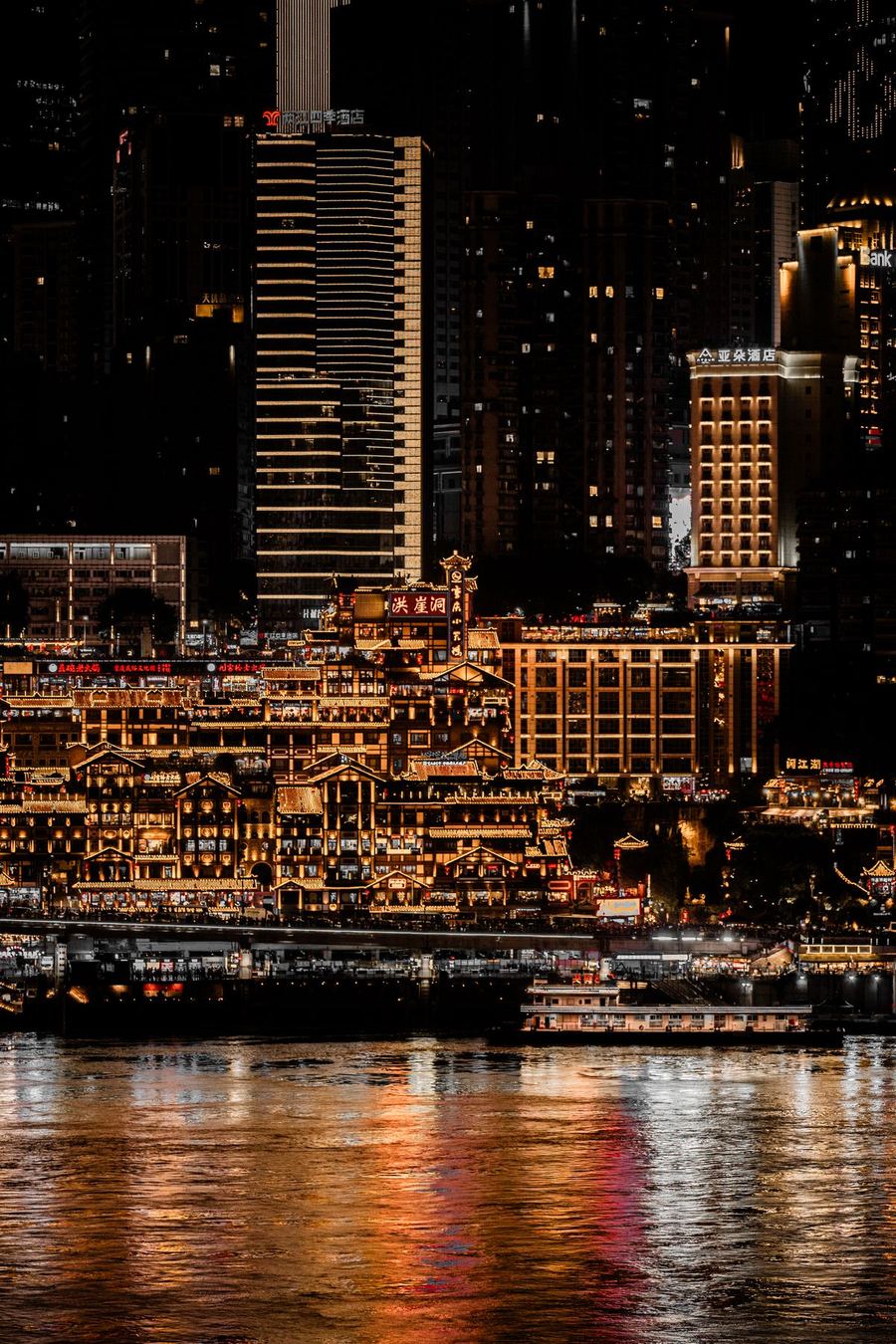
The mountain-and-river city, a nationally important advanced-manufacturing centre. In 2025 the municipality's GDP reached CNY 3,375.793 billion, up 5.3%; vehicle output totalled 2.7877 million units, up 9.7%, of which 1.2961 million were NEVs, up 36%. The "33618" modern manufacturing cluster system is taking shape fast, with five traditional strengths — laptops, vehicles, motorcycles, chemicals-pharma and equipment — advancing alongside new energy, new materials and intelligent manufacturing, building the Chengdu-Chongqing twin-city economic circle together with Sichuan.
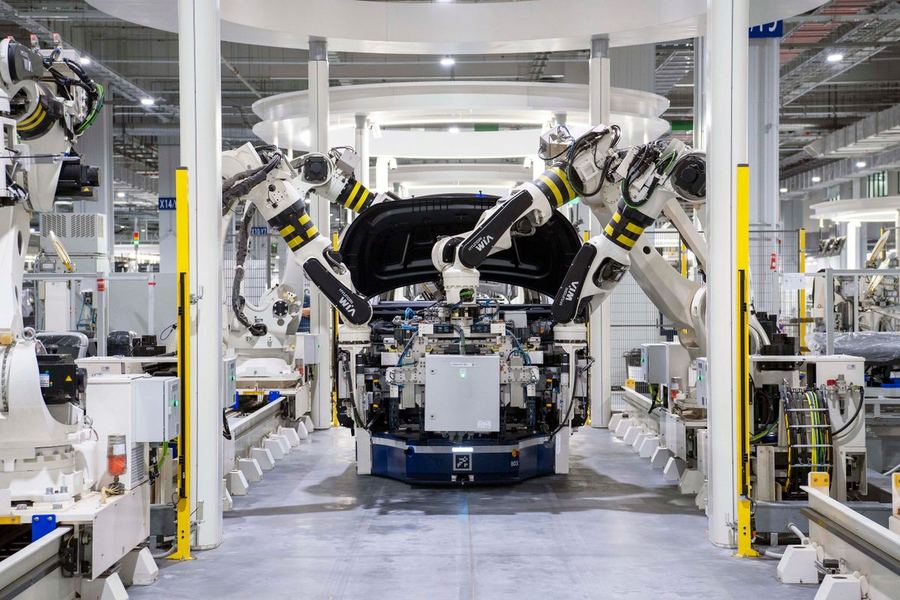
The industrial history of Chongqing is a story driven by defence industry and natural resources, now turning green and intelligent. Here it is, stage by stage:
Chongqing opened as a treaty port with a customs house in 1891, becoming the earliest trading port on the upper Yangtze; foreign trading houses, match factories, silk-reeling and weaving mills lined the river, and Chuanjiang steamship routes tied Chongqing to Wuhan and Shanghai. During the late-Qing New Policies the city set up modern industrial and mining enterprises such as the Copper Yuan Bureau, electricity and waterworks began, and machinery-repair workshops appeared in Jiangbei and Nan'an. The commercial capital and modern transport that the treaty port brought gave late-Qing Chongqing the embryo of a south-west industrial and commercial centre.
In 1937 the Nationalist Government moved its capital to Chongqing, and this mountain city became the political and industrial nerve centre of wartime China. Large numbers of ordnance and basic-industry installations were sited here: the Ordnance Administration's 21st Arsenal (the relocated Jinling Arsenal), the 20th Arsenal, and the Steel Plant Relocation Committee (the Hanyang Iron Works and Daye ore equipment moved west to Dadukou — the forerunner of Chongqing Iron & Steel). Over a thousand private factories moved into eastern Sichuan, and textile, machinery, chemical and smelting capacity expanded sharply. To escape air raids, plants were tunnelled into the hills and dispersed — forming Chongqing's distinctive "cave factory" pattern. Over eight years of resistance Chongqing contributed a large share of the rear area's ordnance and steel output, and laid the industrial foundation for the decades that followed.
From 1964 the Third Front programme designated Chongqing the centre of the conventional-ordnance base among the "two bases and one line". Backbone enterprises — Changan Machine Works, Jianshe Machine Tool Plant, Jialing Machine Factory, Wangjiang Machine Works, Qingshan Industrial — were expanded or newly built, with supporting steel (Chonggang), chemicals, machinery and shipbuilding laid out in step; at Baitao in Fuling, the 816 underground nuclear project excavated a world-class artificial cavern. Third Front-era Chongqing held a complete ordnance chain from small arms, artillery and vehicles to optical instruments and special steels — to this day an important national base for military-civilian integration.
Chongqing became a directly administered municipality in 1997, and the rebuilding of its old industrial base ran in step with enterprise relocation: Chonggang moved to Changshou for environmental reasons, ordnance-group enterprises were restructured, and Changan shifted from defence work to mini-cars and sedans, growing into a national vehicle leader. Around 2008 Chongqing used a "vertical integration" model to bring in laptop brands and contract manufacturers, building the world's largest notebook production base; Liangjiang New Area was established, with vehicles and electronic information as twin drivers. Traditional clusters — motorcycles (Loncin, Zongshen, Lifan), general machinery, chemicals-pharma (the Changshou chemical park) — kept upgrading.
Construction of the Chengdu-Chongqing twin-city economic circle began in 2020, and by 2025 the two economies together broke CNY 10 trillion. With the "33618" modern manufacturing cluster system as its main thread, Chongqing built 2.7877 million vehicles (1.2961 million NEVs, up 36%), and Seres with its AITO series became the emblem of intelligent connected NEVs; leaders such as Changan, BOE, the Chemical-Pharma Holdings Group and Chongqing Machinery & Electronics pull the component and materials supply chain. From Dadukou steel to Liangjiang New Area's vehicles and panels, from the 816 cavern to the Western (Chongqing) Science City, Chongqing's industry has made the leap from wartime ordnance to intelligent manufacturing.
In 2025 the municipality's GDP reached CNY 3,375.793 billion, up 5.3% in real terms. Vehicle output totalled 2.7877 million units, up 9.7%, of which NEVs were 1.2961 million, up 36% — the intelligent connected NEV industry is scaling up fast; motorcycle output stays in the nation's first tier. Within the "33618" cluster system, pillars — electronic information (laptops, panels, power semiconductors), equipment, materials, consumer goods, software — grew steadily, and the biopharma and new-materials clusters expanded. Above-scale industry citywide kept growing, with district and county parks at Changshou, Fuling, Jiangjin and Yongchuan carrying most capacity expansion, while the twin-city circle and the New Western Land-Sea Corridor keep amplifying the hub advantage.
Changan Automobile (vehicles and NEVs, under the state ordnance group), Seres Group (the AITO series, intelligent connected NEVs), Chongqing Iron & Steel (Baowu family, Changshou base), BOE's Chongqing base (panels), the Chemical-Pharma Holdings Group (pharma and chemicals), Chongqing Machinery & Electronics Holdings (general equipment and defence), Loncin General and Zongshen Industry (motorcycles and general machinery), the Fuling Zhacai Group (food), the Changshou ETDZ chemical cluster (MDI, gas chemicals), Chongqing Pump Works, and Wangbian Electric (transformers).
Chongqing's market is defined by "OEMs pulling the train, dense supply chains, parks in the districts": the Changan and Seres vehicle systems drive hundreds of component plants, with a huge installed base of stamping, welding, painting and assembly lines and robot workstations — equipment downtime directly hits the vehicle takt, so 24-hour arrival and forward-stocked spares are hard requirements. Laptop and panel lines run new equipment with strict cleanliness demands and short maintenance windows; rotating equipment, pipe racks and anti-corrosion maintenance in the Changshou and Fuling chemical parks are a traditional overhaul market; motorcycle-component and general-machinery plants run long-lived equipment with steady refurbishment and retrofit demand. Working from our Yilong base in Nanchong, integrated Sichuan-Chongqing transport makes same-day contact with the main urban area and on-schedule arrival in districts routine — we can take on outsourced upkeep across the vehicle supply chain, chemical plant overhauls, and commissioning of equipment delivered into Chongqing.
Sichuan, Chongqing, Yunnan and Guizhou each have a dedicated page. Every division under Chongqing is inside our service range — click through for each area's industrial history and maintenance market analysis:
The industrial history, 2025 industry update, leading enterprises and market analysis on this page are written in-house by the Industrial Equipment Services Division. Data sources: the Chongqing Municipal Bureau of Statistics' 2025 releases on the city's economic performance and public material from the Chongqing Municipal Commission of Economy and Information Technology on the "33618" modern manufacturing cluster system; wartime relocation and Third Front history follows published Chongqing local gazetteers. For image use and disclaimers see the site-wide "Image Use & Disclaimer" page.
One call to confirm the schedule and you deal directly with Engineer Man: 18002209253 (same number on WeChat).
 Scan to add Engineer Man on WeChat
 Guangzhou Yujihang Computer Technology Co., Ltd. · www.accpc.com.cn
 Guangzhou Henghuan Technology Co., Ltd. · www.hhrobotics.cn
 Nanchong Henghuan Robotics Co., Ltd. · www.hhrobots.cn