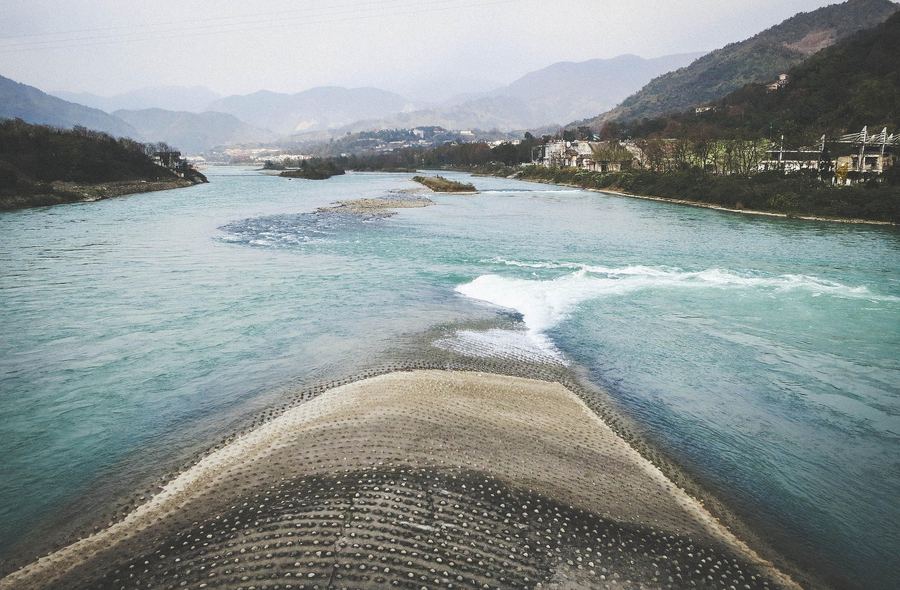
The Land of Abundance, China's strategic heartland. In 2025 the province's GDP reached CNY 6,766.534 billion, up 5.5% — holding steady in the nation's top five and first in the central-west, with above-scale industrial value added up 6.5% and 20,088 above-scale industrial enterprises. Six leading industries advance together: electronic information, equipment manufacturing, food and textiles, energy and chemicals, advanced materials, and medicine and health. This is our home-base province — resident engineers, first call on service resources.
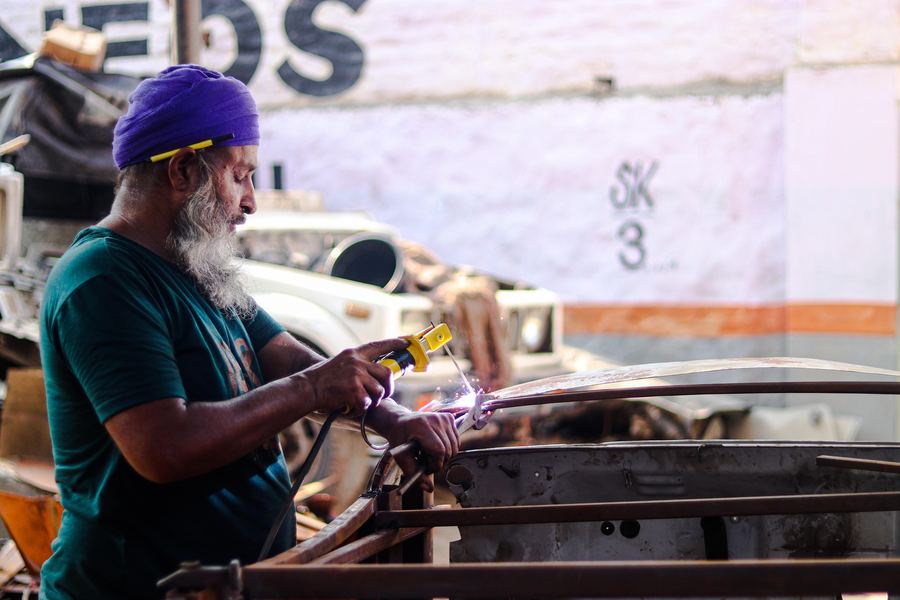
The industrial history of Sichuan is a story driven by defence industry and natural resources, now turning green and intelligent. Here it is, stage by stage:
Sichuan's modern industry began with the Self-Strengthening Movement. In 1877 (the third year of Guangxu), Sichuan Governor-General Ding Baozhen set up the Sichuan Machinery Bureau in Chengdu to make guns, cannon and munitions — the first modern machine works in the south-west. In the same era Zigong's salt fields built large-scale salt chemistry on tubular-well technology and natural-gas boiling; the distilleries of Luzhou and Yibin shipped nationwide down the Yangtze; Neijiang's sugar industry spread the name "Sweet City"; and the two ports of Chengdu and Chongqing gathered modern light-industry factories — matches, textiles, printing. The opening of steamship navigation on the Chuanjiang pushed Sichuan's handicraft workshops to the threshold of machine production.
After full-scale war of resistance broke out in 1937, coastal and riverside factories moved inland en masse, and Sichuan (including Chongqing as it then was) became the industrial core of the rear area. The National Resources Commission and the Ordnance Administration laid out steel, ordnance, machinery, electrical and chemical enterprises across Sichuan and Chongqing; equipment from the Hanyang Iron Works moved west to Dadukou to form the Steel Plant Relocation Committee. State-owned and private firms such as the Central Radio Apparatus Factory, Yuhua Mill and Shenxin No. 4 Mill relocated to Chengdu, Chongqing, Yibin, Luzhou and Wanxian. The relocation brought equipment, skilled workers and management systems: for the first time Sichuan had modern industry spanning metallurgy, ordnance, machinery, textiles and chemicals — and a complete industrial skeleton and technical talent pool survived into the post-war era.
From 1964 the state built out the Third Front around the "two bases and one line" (the Panzhihua steel base, the conventional-ordnance base centred on Chongqing, and the Chengdu-Kunming Railway), and Sichuan was one of the provinces that drew the most concentrated investment. Aviation (Factory 132 Chengfei, Factory 420 Chengfa), electronics (the Hongming Radio Apparatus Factory, Factory 780 — forerunner of Changhong), heavy equipment (the Second Heavy Machinery Plant, Dongfang Electric Machinery, Dongfang Turbine), the nuclear industry (the Ninth Academy relocated to Zitong, CNNC Jianzhong's fuel-element plant) and conventional ordnance (the Changjiang crane and excavator works, the Nanshan Machine Factory and others) were built in succession, the "mountain-backed, dispersed, concealed" siting embedding cutting-edge capacity into Sichuan's hills and rivers. The programme left Sichuan a full-spectrum heavy-industry system rare in the country — still the industrial bedrock of Deyang's heavy equipment, Mianyang's science city, Chengdu's aviation and electronics, and Yibin's nuclear fuel.
After reform and opening-up, Third Front enterprises converted to civilian production: Changhong moved from military radar to colour TVs and became a national home-appliance icon; Jialing motorcycles and Changan Automobile (part of Sichuan before Chongqing became a municipality) drove the motorcycle and vehicle industries. The Chengdu High-tech Zone was established in 1988, and electronic information shifted from defence supply to civilian complete machines and components. Construction of Mianyang Science City began in 2000, accelerating the industrialisation of research-institute resources. The "5·12" mega-earthquake of 2008 badly damaged Dongfang Turbine's Hanwang works at Mianzhu; the whole plant was relocated and rebuilt in Deyang's Bajiao New District, writing an industrial-rebirth record of "two years to rebuild, ten years to leap ahead".
In 2020 the Central Commission for Financial and Economic Affairs deployed the Chengdu-Chongqing twin-city economic circle; the two economies together broke CNY 10 trillion, and Sichuan became a main recipient of inland opening-up and industrial relocation. In 2025 the province built 1.151 million vehicles — over one million for the first time, up 29.6%; industrial-robot output rose 45.9%, lithium-ion cells 45.1%, and value added in power batteries and vanadium-titanium grew 28.4% and 16.0% respectively. Natural gas output of 72.88 billion cubic metres and hydro generation of 381.63 billion kWh both ranked first nationally, with clean energy underpinning green aluminium, green silicon and data centres. From Chengdu's trillion-yuan electronic-information cluster to Yibin the power-battery capital, Deyang's world-class generation equipment and Panzhihua's vanadium-titanium magnetite utilisation — no western province matches Sichuan's industrial layers and depth.
In 2025 the province's GDP reached CNY 6,766.534 billion, up 5.5% in real terms — 0.5 percentage points above the national average; above-scale industrial value added rose 6.5%, with 33 of the 41 major industrial categories growing, and there were 20,088 above-scale industrial enterprises. Value added in the six leading industries grew 6.8%, and in green low-carbon leading industries 7.8%. By product: vehicle output reached 1.151 million units, up 29.6%, crossing the one-million mark for the first time; industrial robots totalled 9,461 sets, up 45.9%; lithium-ion cell output rose 45.1%; LCD panels 21.6%; natural gas reached 72.88 billion cubic metres and hydro generation 381.63 billion kWh — both still first nationally. The combined Chengdu-Chongqing economy broke CNY 10 trillion, making the twin-city circle a key growth pole driving high-quality development in the west.
Tongwei (PV silicon and cells, among Sichuan's top-100 enterprises), Wuliangye Group (Yibin, revenue over CNY 195 billion), Changhong Holdings (Mianyang, revenue over CNY 150 billion), Dongfang Electric Group (Deyang, generation equipment across five lines), Sinomach Heavy Equipment (Deyang Erzhong, large castings and forgings), Chengdu Aircraft Industrial Group (Chengfei, fighter aircraft), Sichuan CATL (Yibin, CATL's power-battery base), BOE's Chengdu/Mianyang bases, Intel's Chengdu plant, CNNC Jianzhong (Yibin, nuclear fuel elements), New Hope Group (agri-food), Luzhou Laojiao and Langjiu (Sichuan liquor), Pangang Group (vanadium-titanium steel), and Chengdu Hangli (aero-engine MRO).
Sichuan is our home-base market: we are registered in Yilong, Nanchong, in this very province, with resident engineers, and all 21 prefectures and cities fall inside a 24-hour service radius. Across the province's 20,088 above-scale enterprises, equipment ages span three generations — the Third Front era, reform-era technical upgrading, and new-century builds — producing three coexisting streams of demand: overhaul and refurbishment of Third Front and rebuild-era equipment (Deyang heavy equipment, Panzhihua metallurgy, Zigong chemicals); outsourced preventive maintenance and equipment networking at new capacity (Yibin power batteries, Leshan-Meishan PV, Suining lithium); and high-precision rapid response on electronics and aviation lines (Chengdu, Mianyang). Meanwhile, commissioning demand from out-of-province equipment suppliers delivering into Sichuan keeps growing with industrial relocation — a stable order source for Module 06 (installation, commissioning and field service). Our playbook in Sichuan: run province-wide maintenance rounds from the Nanchong base, form teams on the spot for difficult faults and overhauls, and package automation retrofits with management-system consulting for growing factories.
Sichuan, Chongqing, Yunnan and Guizhou each have a dedicated page. Every division under Sichuan is inside our service range — click through for each area's industrial history and maintenance market analysis:
The industrial history, 2025 industry update, leading enterprises and market analysis on this page are written in-house by the Industrial Equipment Services Division. Data sources: the Sichuan Provincial Bureau of Statistics' "2025 Statistical Bulletin on National Economic and Social Development of Sichuan", the provincial government information office's 2025 press conference on economic performance, and public material from the Sichuan Provincial Department of Economy and Information Technology; Third Front and modern industrial history follows published material from the Sichuan Provincial Local Chronicles Office and the Panzhihua China Third Front Construction Museum. For image use and disclaimers see the site-wide "Image Use & Disclaimer" page.
One call to confirm the schedule and you deal directly with Engineer Man: 18002209253 (same number on WeChat).
 Scan to add Engineer Man on WeChat
 Guangzhou Yujihang Computer Technology Co., Ltd. · www.accpc.com.cn
 Guangzhou Henghuan Technology Co., Ltd. · www.hhrobotics.cn
 Nanchong Henghuan Robotics Co., Ltd. · www.hhrobots.cn